Eight low spin golf balls compared on spin off the driver, feel and how much control each one keeps into the green.
Every ball in this list is in stock on Amazon right now, and every claim below comes from the manufacturer. The field runs from a 16 dollar dozen to a 55 dollar tour ball, and the constructions run from two pieces to five, so the question is not which ball spins least but where you want the spin removed: off the driver only, or through the whole bag.
Low spin golf balls: the eight picks at a glance
Low spin means two different products. A tour ball like the AVX or the Chrome Soft X LS lowers long game spin while keeping a urethane cover for greenside control. A two-piece ionomer ball like the Vice Drive or the Honma D1 lowers spin everywhere, which straightens the drive and takes the check out of the wedge shot.
Below you get the short version first: three picks for the most common cases, then the full table with all eight, then every ball in detail with specs, strengths and weaknesses.
- The one built specifically to spin lessTitleist AVX
- Low spin for a fast swingCallaway Chrome Soft X LS
- Low off the driver, high off the wedgeTaylorMade TP5x
- The cheap way to take spin outVice Drive


| Ball | Construction | Cover | Spin profile | Best for |
|---|---|---|---|---|
| Titleist AVXbest overall | Multi-layer with a thin casing | Soft urethane | Low flight and low long game spin | Players who want low spin without losing greenside bite |
| Callaway Chrome Soft X LSfor fast swings | Hyper Elastic SoftFast core | Tour cover | Fine-tuned lower spin profile | Better players who lose drives to spin |
| TaylorMade TP5xmost spin separation | Five layer progressive | Cast urethane | Low off the driver, high off the wedges | One ball for the whole bag |
| Srixon Z-Star XVfastest tour ball here | Three piece, FastLayer DG Core 2.0 | Thin premium urethane | Maximum speed with tour wedge spin | High swing speed players |
| Bridgestone Tour B Xreactive cover | REACTIV iQ smart cover | Urethane | Low off the tee, high on approach | Golfers who want the cover to decide |
| Honma D1lowest spin core | Low spin rubber core | Surlyn | Low spin through the bag | Straighter drives on a budget |
| Mizuno RB 566softest feel | High energy soft feel core | Ionomer | Low spin with added hang time | Mid and slower swing speeds |
| Vice Drivebest budget | Two piece | Cut-resistant ionomer | Low spin, longer roll | Low to medium club head speed |
The eight low spin golf balls in detail
- Profilelow flying, low spinning, very soft feel
- Corehigh-gradient, high speed core
- Casingthin, high-flex casing layer for lower long game spin
- Coversoft urethane
- Dimples346 quadrilateral dipyramid catenary design
- Coloryellow, one dozen
Best for: Golfers who want less spin off the tee but still expect the ball to stop on the green
The AVX is the ball in the Titleist lineup built for this exact request. Where the Pro V1 family is tuned around trajectory and greenside spin, the AVX is tuned down: lower flight, lower long game spin, and a softer feel than either of them.
The engineering is in the casing layer. A thin, high-flex layer between core and cover is what strips spin out of driver and long iron shots, while the soft urethane cover on the outside keeps the friction that makes a wedge shot check. That combination is why this ball costs tour money. If your miss is a drive that climbs and falls short, this is the most direct fix on the list.
Pros
- Titleist describes this ball as low flying and low spinning outright, which almost no other tour ball claims
- The thin high-flex casing layer is the specific part that takes spin out of long game shots
- A soft urethane cover keeps greenside spin, so you are not trading the short game for straighter drives
- The 346 dimple design is built for a piercing flight, which is what a low spin ball needs in wind
Cons
- At around 50 dollars a dozen it is the most expensive ball in this list
- Low flight is a disadvantage on soft greens where you need the ball to land steeply
- Yellow is not to everyone's taste, though the same ball is sold in white
- CoreHyper Elastic SoftFast core
- Spin profilefine-tuned lower spin, LS stands for low spin
- AerodynamicsTour Aero design
- AlignmentTriple Track
- TechnologyPrecision Technology for tighter dispersion
- Packone dozen, white
Best for: Better players with speed who want to bomb the driver without the ball ballooning
The X LS is the low spin member of the Chrome Soft family, and Callaway is direct about who it is for: players who already generate speed and want maximum distance from a lower spin profile off the tee.
The construction is a Hyper Elastic SoftFast core wrapped in Callaway's tour package, with the Tour Aero dimple design keeping the flight consistent across conditions. The practical benefit of a low spin ball at high speed is not just carry, it is dispersion, because a ball spinning less also curves less when the face is a degree open. Triple Track lines are the bonus on the green.
Pros
- LS is Callaway's designation for the low spin version of the Chrome Soft X, so the intent is in the name
- Callaway aims Precision Technology at dispersion, which is the actual payoff of taking spin out
- Triple Track alignment lines are a real aid on putts, not just a paint job
- At around 16 dollars a dozen this listing is by far the cheapest tour ball here
Cons
- Callaway themselves say it is especially suited to better players, so slower swings may lose height
- This is the 2022 model, and stock of older years comes and goes
- A low spin tour ball punishes a swing that already delivers too little spin

- Constructionfive layer progressive
- CoreSpeed Wrap core
- Spin designlargest speed gradient, low spin off driver and long irons
- Short gamehigh spin off the wedges
- Covercast urethane
- Packone dozen, 2024 model
Best for: Golfers who want one ball that behaves differently at each end of the bag
The TP5x is the answer to the obvious problem with low spin balls: you want less spin off the driver and more off the wedge, and those are opposite requirements. TaylorMade's solution is five layers with the largest speed gradient in the range, so the driver compresses more of the ball than a wedge does.
In practice that means the ball spins less on the shots where spin costs you distance and accuracy, and more on the shots where it saves you strokes. The 2024 version adds a Speed Wrap core that TaylorMade tuned for a softer sound, which addresses the common complaint about the firmer X model. This is the most technical ball in the list and the one that asks the most of your swing speed.
Pros
- Five layers exist to separate driver spin from wedge spin, which two-piece balls cannot do
- TaylorMade states the low spin claim for driver and long iron specifically, not as a general slogan
- The Speed Wrap core is the newer, softer sounding version, so it is not a hard-feeling distance ball
- A cast urethane cover puts it in the same class as the AVX and the Z-Star XV around the green
Cons
- At around 45 dollars a dozen it is a tour price for a tour ball
- The X model is the firmer of the TP5 pair, so slower swings may prefer the standard TP5
- Five layers only pay off at speeds high enough to compress them

- Constructionpremium three piece
- CoreFastLayer DG Core 2.0, soft center with firmer edges
- Coverextra thin premium urethane with Biomass
- CoatingSpin Skin plus for wedge and iron friction
- Dimples338 Speed Dimple pattern
- Packone dozen, white
Best for: High speed players who want maximum ball speed off the driver and irons
The XV is the version of the Z-Star built for players who already have speed. The core is the same FastLayer idea Srixon uses across the range, a gradual transition from a soft center to firm edges, but the whole ball is tuned firmer so a fast swing gets speed rather than mush.
Where it differs from a straight distance ball is the cover. An extra thin premium urethane skin plus the Spin Skin coating means the friction on wedge and iron shots stays tour level, so the low long game spin does not cost you the approach. If you swing hard and lose drives to a ball that climbs, this is the Srixon to try.
Pros
- Srixon builds the XV specifically for high-speed players, where the firmer construction turns speed into distance
- A soft center with firmer edges gives the low spin a fast swing needs without a hard feel
- Spin Skin plus adds friction on top of the grooves, so wedge spin survives the firm construction
- The 338 Speed Dimple pattern is aimed at wind, which is where high spin balls suffer most
Cons
- At around 55 dollars a dozen it is the most expensive ball in this list
- The XV is the firmer of the Z-Star pair and it needs speed to work
- Thin urethane covers scuff faster than ionomer, which matters if you play cart paths

- Cover technologyREACTIV iQ, reacts to the force of impact
- Off the teerebounds quickly for velocity and distance
- On approachstays on the face longer for spin and soft feel
- AerodynamicsDual Dimple technology
- Model2022 Tour B X, white
- Packone dozen
Best for: Golfers who want the ball rather than the swing to decide how much it spins
Bridgestone attacks the low spin problem from the cover rather than the core. REACTIV iQ responds to how hard it is struck: a driver hits it hard, the cover rebounds quickly and turns the impact into speed rather than spin. A wedge hits it softly, the cover stays on the face longer and the ball grips.
The X in the name marks the firmer of the Tour B pair, which is the one to pick if you have the swing speed to compress it. Add Dual Dimple aerodynamics aimed at drag and you have a ball that is quietly doing the same job as the AVX by a different method, with a bit more spin on the tee shot and a bit more bite on the approach.
Pros
- REACTIV iQ changes behavior by impact force, which is a different route to the same low spin goal
- The X model is the firmer Tour B, aimed at players with speed rather than at soft feel
- Dual Dimple technology is aimed at reducing drag, which suits a lower spinning flight
- Bridgestone publishes both sides of the trade openly: distance off the tee, control on approach
Cons
- At around 46 dollars a dozen it sits at the top of the price range here
- This is the 2022 model, so newer generations exist alongside it
- A reactive cover is a compromise by design, and a dedicated low spin ball spins less off the tee

- Corelow spin rubber core
- Coverdurable Surlyn
- Dimplesextended flight 368 dimple pattern
- Alignmentdual-line alignment aid, thin and thick lines
- ApprovalUSGA and R and A conforming
- Packone dozen, white
Best for: Golfers whose drives curve and who would trade greenside spin for a straighter ball
The D1 takes the blunt approach: put a low spin rubber core inside a durable Surlyn cover and let the ball go straight. There is no casing layer trickery and no reactive cover, which is why a dozen costs about 21 dollars.
That makes it the right tool for a specific golfer, the one whose scorecard is ruined by slices and hooks rather than by approach shots that fail to hold. The 368 dimple pattern is built to reduce drag and extend carry, and the dual-line alignment aid is a genuinely useful detail: the thin lines set the face, the thicker one sets the target. What you give up is the checking wedge shot.
Pros
- Honma names the low spin rubber core as the central feature rather than burying it in the copy
- A Surlyn cover is the durable option, so a dozen lasts noticeably longer than urethane
- The dual-line alignment aid uses different line widths for face direction and target direction
- Around 21 dollars a dozen puts it in the same bracket as the Vice Drive
Cons
- Low spin through the whole bag means wedge shots run out rather than checking
- Surlyn feels firmer and clicks louder off the putter than urethane
- A distance ball at heart, so better players will find the short game one-dimensional

- Corehigh energy soft feel core
- DimplesMicro and D-Dimple design for added hang time
- Coverionomer for greenside feel and durability
- Target speedmid to low ball speeds
- Model2024 RB 566, white
- Packone dozen
Best for: Mid and slower swing speeds that need help keeping the ball in the air
Mizuno built the RB 566 around a problem most low spin balls ignore. When you remove spin, you also remove lift, and a golfer with a moderate swing speed can end up with a ball that never gets airborne properly. The Micro and D-Dimple design exists to add hang time at exactly those speeds.
The rest is straightforward: a high energy core tuned for soft feel rather than maximum speed, and an ionomer cover that trades greenside spin for durability. It is the friendliest ball here for a mid handicap player who wants a low spin flight without the harsh feel that usually comes with it.
Pros
- The Micro and D-Dimple pattern is aimed specifically at mid and low ball speeds, which most dimple designs are not
- A soft feel core makes a low spin ball playable for golfers who dislike the click of a distance ball
- An ionomer cover survives a full season, unlike thin urethane
- Around 22 dollars a dozen, which is budget pricing for a named brand
Cons
- Ionomer means less greenside spin than any urethane ball in this list
- Built around hang time rather than speed, so fast swings get little from it
- The 566 sits below the RB Tour models, so it is not a tour ball in any sense
- Constructiontwo piece
- Corecut-resistant soft core
- Dimples368 dimple design
- Flightlonger roll and softer feel
- Target playerlow to medium club head speed
- Packone dozen
Best for: High handicap golfers and anyone who loses several balls a round
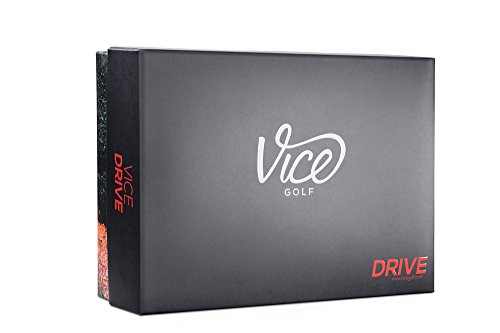
The Drive is the entry ball in the Vice range and the simplest product in this list. Two pieces, a tough soft core, a 368 dimple cover, and a stated target of low to medium club head speed. There is no casing layer and no reactive cover because there is no room for one at this price.
What that buys is exactly what a high handicap golfer needs: less sidespin, so the ball curves less, and more roll, so a shorter carry still finishes in a reasonable place. Around the green it behaves like a distance ball, meaning it lands and runs. If you are losing three balls a round, that trade is easy to make.
Pros
- Around 18 dollars a dozen, the cheapest way to put a low spin ball in play
- Vice states the target explicitly as low to medium club head speed, so there is no guessing
- A cut-resistant core is the practical feature when your ball meets cart paths and trees
- Longer roll turns a modest carry into a respectable total distance
Cons
- Two-piece construction gives you almost no greenside spin
- Longer roll also means less control on firm greens and downhill approaches
- Package design varies, so the box you get may not match the picture
Checklist: What makes a great low spin golf ball
- Spin Rate: A key criteria to look for is the ball's spin rate. A lower spin ball is optimal as it provides controlled precision, maintains longer distances and ensures smoother performance on the green.
- Durability: The ball's construction and the quality of materials used contribute to its durability. High-quality golf balls typically feature Multi-layer construction or 2-piece construction and come in fray-resistant materials, providing longevity for sustained use.
- Speed and Control: A good low spin golf ball should promote faster speeds and greater control. An optimized level of friction, advancements in core technology, and a well-designed dimple pattern could enhance these aspects further.
- Suitability: It is important to consider the suitability of the golf ball to your style of play and swing speeds. Some balls are particularly beneficial for players with above-average swing speeds, and some are suited to players with low to medium swing speeds.
- Visibility: Consider golf balls that offer visibility on the course. Options like those featuring ClearPath Alignment Systems or unique colors can help enhance the visibility of the ball.

FAQ
Why are low spin golf balls beneficial?
Low spin golf balls provide controlled precision, maintain longer distances, and ensure smoother performance on the golf course, enhancing your overall game.
What factors ideally enhance the performance of low spin golf balls?
Factors such as an optimized level of friction, advancements in core technology, and a well-designed dimple pattern can significantly enhance the performance of low spin golf balls.
What attributes should I consider when choosing a low spin golf ball?
Consider the golf ball's spin rate, durability, speed, control, suitability to your style of play, swing speeds, and visibility on the course.