Windsurfing equipment list with all 19 items. The rig takes four: board, sail, mast and boom. Harness, wetsuit, PFD and water shoes complete it.
A windsurfer is two things bolted together: a board that floats and a sail rig that drives it. The rig is the sail, the mast and the boom, held to the board by a mast foot, and the sailor adds a wetsuit, a harness, a buoyancy aid and water shoes on top. The table below lists all nineteen items with what each one does and who supplies it.
- Windsurfing equipment includes the board and which main feature?
- The sail rig, meaning the sail, the mast, the boom and the mast foot that connects the rig to the board. Board plus rig is the entire craft, and everything else on the list is clothing or safety gear.
- Does windsurfing equipment include a rudder?
- No. A fin under the tail keeps the board tracking straight, and steering comes from tilting the rig forward or back, which moves the center of effort against the fin.
- What force moves a windsurf board forward?
- The wind. The sail works as a wing and produces lift, and the mast foot passes that pull into the board. There is no engine and no paddle involved.
- What equipment do beginners need for windsurfing?
- A wide, high volume board, a small sail of roughly 3 to 5 square meters, a wetsuit and a buoyancy aid. Schools rent the whole set, so the first purchase is usually the wetsuit.

Windsurfing Equipment at a Glance
Ten items belong to the sailor, and the first four of them are the board and the rig. Four more are what a school or a coach keeps on the beach, and five describe the spot itself.
| Item | What it does | Who supplies it |
|---|---|---|
| Windsurf boardhard or inflatable | Carries the sailor, volume in liters decides how forgiving it is | Player |
| Sail | The engine, sized in square meters to the wind and the sailor | Player |
| Mast | Holds the sail up and bends to shape it, matched to the luff length | Player |
| Boom | The bar the sailor holds, wraps the sail and steers the rig | Player |
| Wetsuit or drysuit | Water takes body heat far faster than air, even in summer | Player |
| Harness | Hooks into the boom lines so the pull goes into the hips, not the arms | Player |
| Life jacket or buoyancy aid | Keeps the sailor afloat after a fall, away from the board | Player |
| Water shoes | Grip on the board and protection from stones, shells and urchins | Player |
| Sun protectionsunscreen and lip balm | Reflection off the water doubles the exposure on a long session | Player |
| Rash guard or UV clothing | Covers the skin the wetsuit leaves open and stops boom rub | Player |
| Rescue board or boat | Reaches a sailor who has drifted downwind and cannot get back | Coach |
| Repair kitresin, cloth, tape | Seals a hole in the board before water gets into the core | Coach |
| First aid kit | Cuts from fins and skegs are the common injury on a beach | Coach |
| Instructional materials | Beach models and wind charts for teaching points of sail on land | Coach |
| Accessible water area | Shallow launch, side onshore wind and no obstacles downwind | Facility |
| Equipment storage | Racks for boards and mast tubes, out of the sun | Facility |
| Changing rooms and lockers | Getting in and out of a wet neoprene suit needs a dry room | Facility |
| Rental service | Boards and sails in several sizes, so the kit matches the day | Facility |
| Safety and rescue service | Watch on the water, a boat and a radio while sessions run | Facility |
Equipment for Windsurfers
#1 Windsurf Board

The windsurf board is a fundamental piece of equipment for the sport, acting as the platform upon which windsurfers balance while navigating the water. Its design, which varies based on skill level and conditions, is essential for controlling direction and speed.
Spatium Inflatable Windsurf Board
Board and rig in one set
- Board sizes350 by 76 by 15 cm, also 325 by 84 by 15 cm
- Materialmilitary grade PVC drop stitch
- Sail included5.0 square meters, luff 400 cm, boom 184 cm
- Mast400 cm, three sections
- Wind rangeabout 11 to 15 knots with the 5.0 sail
#2 Sail

The sail is crucial for harnessing the wind's power and propelling the windsurf board forward. Its size and shape affect maneuverability and speed, making it vital for participants to select a sail that matches their skill level and the prevailing wind conditions.
Spatium Windsurfing Sail 4.0
Small sail with mast and boom
- Size4 square meters, 43.06 square feet
- Luff340 cm
- Boom length156 cm
- Mast340 cm, fiberglass, three sections
- Clothpolyester with a clear window
#3 Mast
The mast is a key component that supports the sail and connects it to the board. Its length and flexibility influence the sail's performance, and hence, the overall control and responsiveness of the windsurfing equipment.
Epic Gear SDM Epoxy Mast 310
Standard diameter, 310 cm
- Length310 cm
- DiameterSDM, the standard diameter fitting
- Materialepoxy composite
- Sectionstwo piece, joins in the middle
- Usesails with a 310 cm luff
#4 Boom
Attaching to the mast, the boom allows windsurfers to hold and maneuver the sail. It must be strong yet lightweight and adjustable to accommodate different arm lengths, ensuring a comfortable and efficient stance.
#5 Wetsuit or Drysuit

A wetsuit or drysuit provides thermal insulation, protecting windsurfers from cold water and weather conditions. Their streamlined design also offers a degree of buoyancy and protection against abrasion, making them essential for participant safety and comfort.
O'Neill Reactor-2 3/2mm
Back zip full wetsuit
- Thickness3 mm body, 2 mm arms and legs
- Entryback zip with a water resistant closure
- Neopreneultra stretch, seamless paddle zones
- Chestwind resistant smoothskin panel
- Size shownXL, chest 42.5 to 47 inches
#6 Harness
A harness is used for connecting the rider to the rig through a hook, enabling better control and reducing arm fatigue during prolonged sessions. It's essential for efficiently transferring wind power from the sail to the rider's body.
Mystic Star Hybrid Harness
Waist harness with seat part
- Backanatomical backplate with covered side parts
- BarAce spreader bar with a protector
- Closurebattle belt waist closure
- Seatremovable seat part
- Interiorsoft neoprene, non slip print
#7 Life Jacket or Personal Flotation Device (PFD)

Safety comes first, and a life jacket or PFD is non-negotiable for staying afloat in case of falls. Required by law in many areas, it's a vital piece of safety gear for windsurfers of all levels.
Onyx MoveVent Dynamic Vest
Approved paddle vest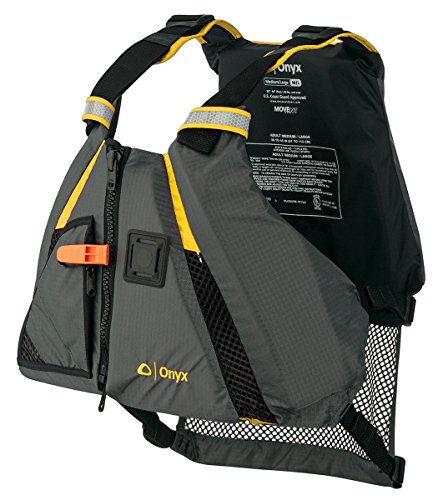
- ApprovalUS Coast Guard and Transport Canada
- Ventilationmesh panels front and back
- Fitadjustable side belts and shoulder straps
- Armholeslarge, cut for paddling and sailing
- Extraszippered pocket, built in whistle, reflective accents
#8 Water Shoes

Water shoes protect feet from sharp objects and rough surfaces. They offer grip on the board and insulation in cold water, enhancing safety and comfort for the windsurfer.
SEEKWAY Water Shoes
Quick dry aqua sock
- Solethick rubber with a toe cap and 3D non slip tread
- Upperelastic spandex vamp with air holes
- Drainageholes in outsole and insole
- On and offslip on, no laces
- Usewindsurfing, sailing, snorkeling and beach
#9 Sun Protection
Sun protection, including sunscreen, sunglasses, and a hat, is vital to shield windsurfers from harmful UV rays during long hours on the water, reducing the risk of sunburn and long-term sun damage.
#10 Rash Guard or UV Protective Clothing
A rash guard or UV protective clothing prevents skin irritation caused by the harness or board and offers additional sun protection. These garments are designed to be quick-drying and comfortable for optimal performance on the water.
Boladeci Rash Guard
UPF 50 plus long sleeve
- ProtectionUPF 50 plus against UVA and UVB
- Fabriclightweight breathable polyester, quick drying
- Stretchslight elasticity for free movement
- Sleeveslong
- Caremachine washable
Equipment for Coaches and Teams
#1 Safety Equipment
Safety equipment, such as a rescue board or support boat, is vital for instructors to quickly and effectively respond to emergencies. Along with communication devices, these tools are integral for ensuring the safety of participants during lessons and ensuring compliance with safety regulations.
#2 Repair Kit
A repair kit is essential for coaches to perform quick fixes on equipment, minimizing downtime during sessions. It usually contains tools and spare parts for common issues with windsurfing boards, sails, and other gear, allowing for rapid on-the-spot repairs and continuous learning and fun.
Ding All Epoxy Repair Kit
Resin, cloth and hardener
- Resin4 oz Silmar 250A UV polyester sanding resin plus hardener
- Clothfiberglass, 6 by 27 inches
- Includedsanding pad, 2 measuring cups, 6 mixing sticks
- BonusSun Cure epoxy fiberfill for small dings
- Finishnon tacky, sands smooth
#3 First Aid Kit

A first aid kit is crucial for addressing minor injuries and health issues that may arise during windsurfing sessions. Stocked with medical supplies like bandages, antiseptics, and ice packs, it ensures the well-being of participants and staff, promoting a safe and responsible sporting environment.
#4 Instructional Materials
Instructional materials, including curriculum guides and technique books, are key for instructors to provide structured and effective teaching. They support lesson planning, skill progression, and provide a visual aid for students, enhancing the overall learning experience out on the water.
Equipment for Facilities
#1 Accessible Water Area
An accessible water area such as a lake, sea, or large river is vital for windsurfing, providing the space necessary for riders to harness the wind and navigate through the water. It serves as the primary venue for both practice and competition, making it the cornerstone of any windsurfing facility.
#2 Storage for Equipment
A secure storage space protects expensive windsurfing equipment such as boards, sails, and masts from the elements and potential theft. Proper storage extends the life of the equipment and keeps it organized and ready for use, ensuring efficient operations and participant satisfaction.
#3 Changing Rooms and Lockers
Changing rooms and lockers provide privacy and security for participants to change into their gear and store personal belongings. These facilities enhance comfort and convenience for windsurfers, encouraging repeat visits and a more enjoyable overall experience at the windsurfing site.
#4 Rental Services
Rental services offer participants the opportunity to try windsurfing without investing in their own equipment. By providing a selection of boards and sails for different skill levels and conditions, facilities can cater to a broader audience and encourage more people to enjoy the sport.
#5 Safety and Rescue Services
Safety and rescue services are essential to promptly address any accidents or emergencies on the water. Trained personnel, along with rescue equipment such as boats or jet skis, ensure participant safety and provide peace of mind, making the facility a trusted environment for windsurfing activities.

FAQ
What is the equipment you need to play Windsurfing?
A windsurf board, a sail, a mast, a boom, and a mast base are the equipment you need to play Windsurfing. Proper attire including a wetsuit, life jacket, and harness are also important.
What is the most important equipment in Windsurfing?
The windsurf board and sail are the most important equipment in Windsurfing, allowing you to harness the wind and navigate the waters effectively. Without these, windsurfing is not possible.
What is a recommended list of Windsurfing equipment for beginners?
Here's a recommended list of Windsurfing equipment for beginners: a stable, wide windsurf board, a smaller, manageable sail, a mast, a boom, a mast base, a wetsuit, a life jacket, and a beginners' harness. These provide a good balance between stability and learning potential.