Water skiing equipment list with all 17 items: slalom, trick or jump skis, a PFD, tow rope and handle, wet suit, helmet, gloves and goggles.
Seven of them belong to the skier, and apart from the skis that block is protective gear: a vest, a suit, a helmet, gloves and eye protection. Five belong to the coach and the boat, among them the tow rope, a rescue line and a camera for technique work, and five describe the site, from calm water to a slalom course, a jump ramp and somewhere to change.
- What equipment do you need for water skiing?
- Skis, a Coast Guard approved vest, a tow rope with a handle and a boat to pull you. Everything else on the list, the suit, helmet, gloves and eye protection, makes a long session comfortable rather than possible.
- What PPE is used in water skiing?
- A US Coast Guard approved Type III vest, a water sports helmet, gloves and a wet or dry suit. The vest is the one item that is required by law on most waters, and impact rated helmets are standard for jump and trick skiing.
- What water ski gear does a beginner need?
- A pair of combo skis with adjustable bindings, a vest that fits snugly and a 75 foot rope with a padded handle. Combo skis are wider and more stable than a single slalom ski, so you can learn to get up on two before dropping one.
- Do you need a wet suit for water skiing?
- In water under about 70 degrees Fahrenheit, yes. A 2mm spring suit covers most summer lake conditions, and a full suit takes over when the season stretches into spring and fall.

Water Skiing Equipment at a Glance
Seven items are the skier's own, five come with the coach and the boat, and five belong to the site. Only the first block goes in your bag.
| Item | What it does | Who supplies it |
|---|---|---|
| Water skiscombo, slalom, trick or jump | Carries you on the surface, the shape follows the discipline | Player |
| Life jacket or PFD | Coast Guard approved flotation that keeps a stunned skier face up | Player |
| Tow rope and handle | Links you to the boat, 75 feet is the standard recreational length | Player |
| Wet suit or dry suit | Holds body heat once the water drops below about 70 degrees | Player |
| Helmet | Impact protection for jump, trick and any high speed fall | Player |
| Gloves | Stops the handle tearing the palms over a long set | Player |
| Sunglasses or goggles | Cuts the glare off the water and keeps spray out of your eyes | Player |
| Safety and rescue equipmentthrow bag, spare vest | Reaches a skier in the water without putting the boat over them | Coach |
| Video camera | Records the pass so technique can be reviewed on the bank | Coach |
| Coaching boatwith wake control | Ballast and speed control give a flat, repeatable wake | Coach |
| First aid kit | Cuts, rope burns and knocks are the routine injuries on the dock | Coach |
| Team uniforms or wet suits | Identifies the club at events and keeps the squad warm | Coach |
| Calm and open waterways | Flat water with room to fall, away from traffic and swimmers | Facility |
| Slalom courses | Buoys set to tournament spacing for timed slalom passes | Facility |
| Jump ramps | Fixed ramp on the water for the jump event | Facility |
| Docking and storage area | Somewhere to tie up, load skis and store gear between sessions | Facility |
| Changing and shower facilities | Getting out of a wet suit and warming up after a cold set | Facility |
Equipment for Water Skiers
#1 Water Skis
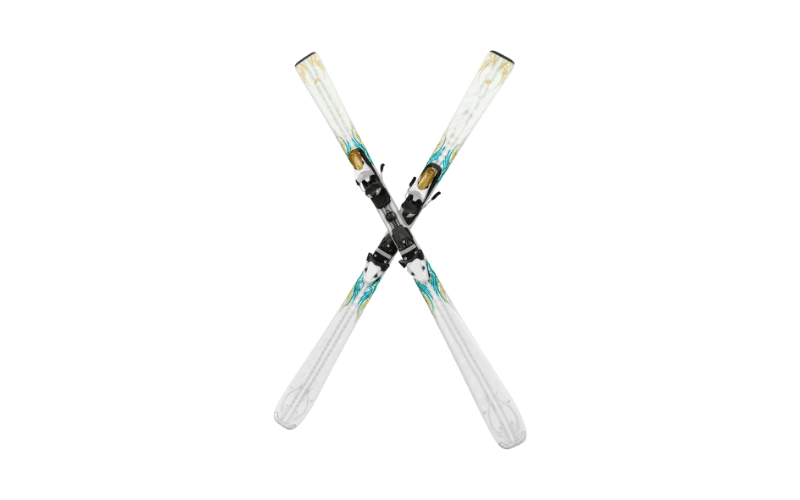
Water skis are the foundation of the sport, enabling participants to glide across the water's surface. They vary in design, with slalom for single-ski maneuvers, trick for stunts, and jump for leaping exercises, making them essential for specialized techniques and overall performance.
O'Brien Celebrity 68 inch Combo
Combo skis, adjustable bindings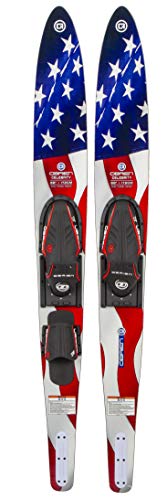
- Length68 inches, a pair of combo skis
- BindingsX-7 adjustable, fits US men 4.5 to 13
- Rear footpadded rear toe plate for the drop knee position
- Hulldual tunnel for control and stability
- Shapeperformance side cut for easier turning
#2 Life Jacket or Personal Flotation Device (PFD)

A life jacket or PFD is a non-negotiable safety element for skiers, ensuring buoyancy and protection in the water. It's crucial for skier safety, helping to prevent drowning and providing a measure of impact protection in falls.
O'Neill Superlite USCG Vest
Type III, low bulk
- ApprovalUS Coast Guard Type III
- Foampolyethylene core, low bulk and quick drying
- Shell100 percent polyester with overlock stitching
- Drainageengineered drain holes
- Closurefour buckles with quick release
- Armholescut wide to reduce chafing
#3 Tow Rope and Handle
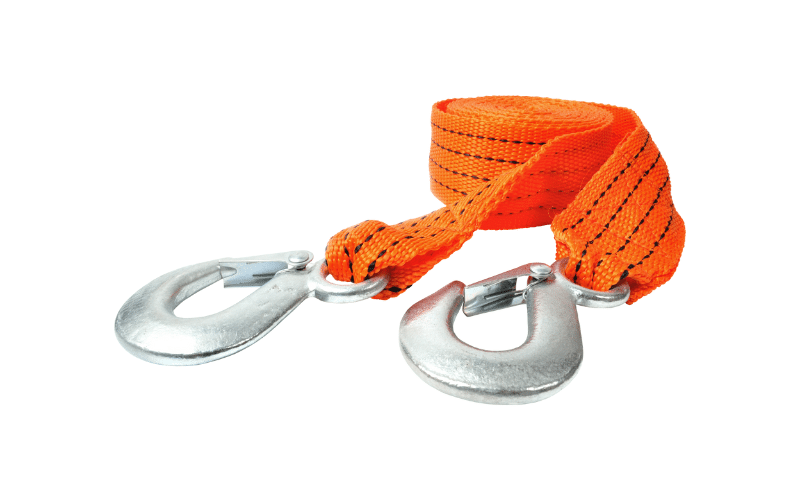
The tow rope and handle connect the skier to the boat, transferring the power necessary for movement. A quality rope and comfortable handle are pivotal for control and the skier's ability to perform tricks and navigate the water safely.
Airhead Water Ski Rope
75 feet, one section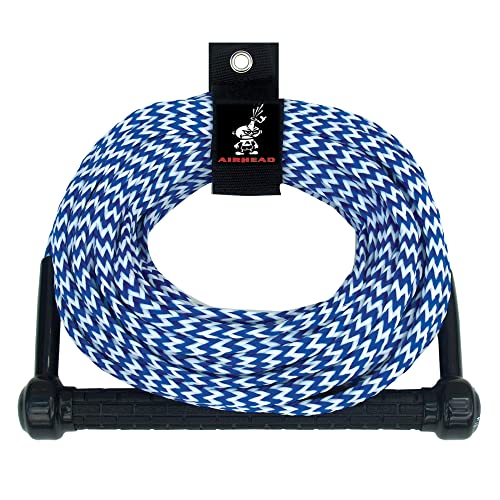
- Length75 feet, the standard recreational length
- Sections1
- Handle12 inch aluminum core with molded finger protectors
- Rope16 strand, 1500 pound tensile strength
- TreatmentUV treated against sun fade
- Extrarope keeper included for tangle free storage
#4 Wet Suit or Dry Suit
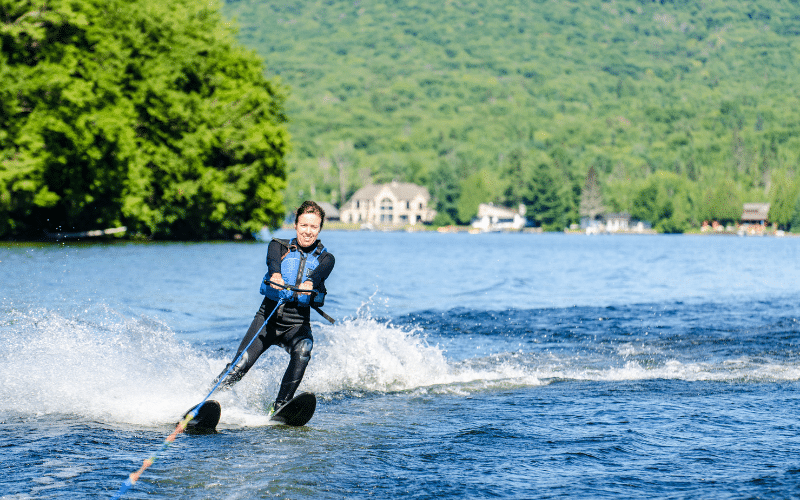
Wet suits and dry suits are vital for comfort and protection in various water temperatures. They shield the skin from abrasions and cold conditions, helping maintain body warmth and allowing skiers to enjoy longer sessions on the water.
O'Neill Reactor-2 2mm Spring
Short sleeve spring suit
- Thickness2mm, short sleeve spring cut
- Entryback zip with a water resistant closure
- Neopreneultra stretch, soft and flexible
- Seamsseamless paddle zones for shoulder mobility
- Insulationwind resistant smoothskin panels
- SizingLarge fits a 40.9 to 43.3 inch chest
#5 Helmet

Helmets are especially important for competitive jumpers and racers to protect the head during high-speeds and aerials. It adds a critical layer of safety, potentially preventing severe head injuries during spills or collisions.
Triple Eight Halo Water Helmet
Water liner, ABS shell
- Shellhigh density ABS, meets CE EN 1385
- Foamdual density EVA, headliner and crown
- Linertriple layer Sweatsaver Halo, moisture wicking and removable
- Fitadjustable chin strap with a side release buckle
- Sizesfive, from 20.1 up to 24 inches head circumference
#6 Gloves
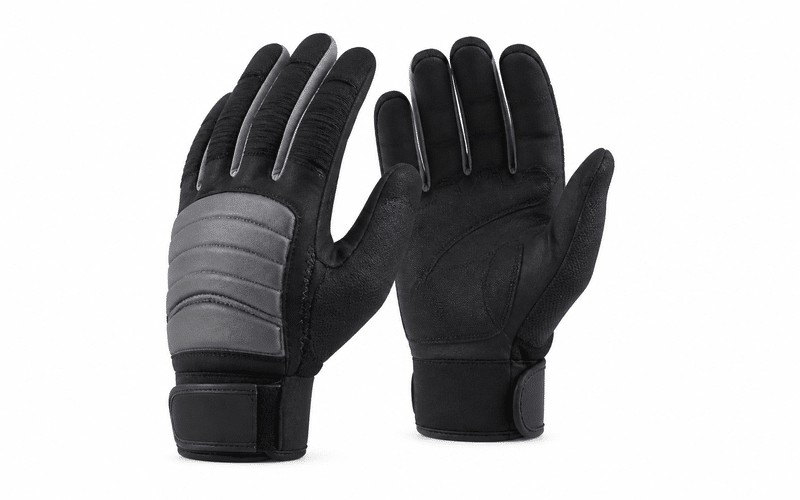
Water skiing gloves provide a better grip on the handle, reduce the risk of blisters, and protect the hands from strain. They contribute to increased comfort and endurance, allowing for longer and more effective skiing sessions.
Connelly Waterski Promo
Amara palm, size L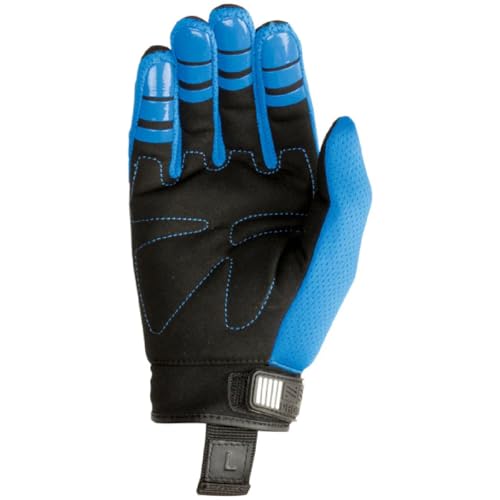
- Palmfull Amara fabric across palm, fingers and thumb
- Gripsilicone laminated fingertips
- Knucklesneoprene panel for a performance fit
- WristTPU injected strap with hook and loop
- Adjustment2 inch back of hand strap
#7 Sunglasses or Goggles
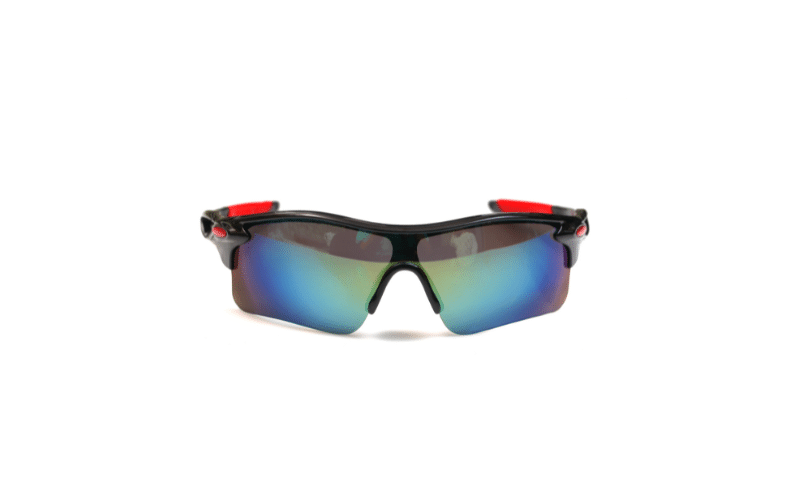
Sunglasses or goggles protect the eyes from the sun's glare and water spray, which is essential for clear vision when skiing. They can prevent eye fatigue and enhance focus, making them useful accessories for any skier.
KastKing Merced Floating
Floats, polarized
- FrameTPX front with EMS temples, floats on water
- Lenses0.75mm polarized TAC, glare reduction
- CoatingPuriVex, scratch resistant and repels oil and water
- Frame buildimpact resistant and UV stable
- Includedmolded hard case and a microfiber pouch
Equipment for Coaches and Teams
#1 Safety and Rescue Equipment

Safety and rescue equipment, including throw ropes, is essential for coaches to ensure quick response during emergency situations. They play a vital role in skier safety and can be a lifeline for athletes in distress.
Scotty 0793 Rescue Throw Bag
50 feet of floating rope
- Rope50 feet of braided MFP polypropylene, floats
- Diameter9/32 inch, 550 pound test
- Bagbright orange nylon and polyester, self draining
- Visibility3M reflective exterior band
- Carryadjustable strap
#2 Video Camera

A video camera is a powerful tool for coaches, enabling them to analyze technique and provide constructive feedback. It's invaluable for reviewing performances, making it a necessary piece of equipment for athlete development.
GoPro HERO13 Black
Waterproof to 33 feet
- Video5.3K at 60 frames per second
- Photo27 megapixels
- Waterproofto 33 feet without a housing
- Slow motionburst slo-mo down to 13x normal speed
- LensesHB-Series lens mods with auto detection
- IncludedEnduro battery, curved adhesive mount, mounting buckle, USB-C cable
#3 Coaching Boats with Specific Wake Control
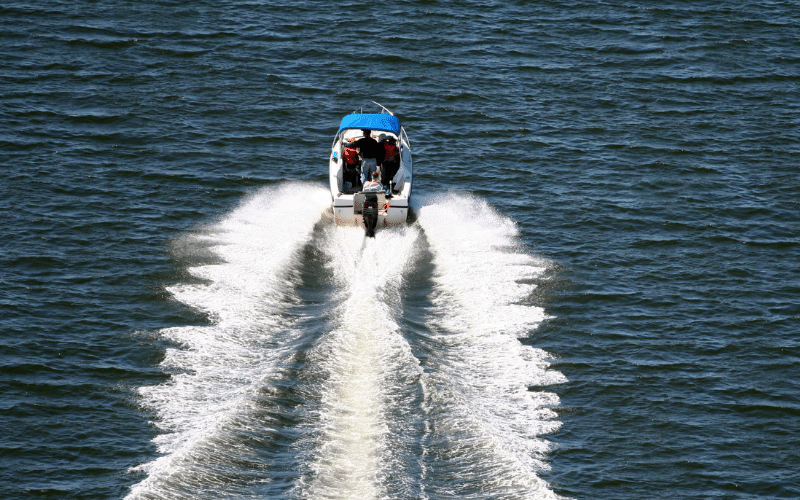
Coaching boats equipped with wake control are imperative for training, as they create ideal conditions for skiers to practice and refine their skills. They ensure a consistent environment, which is crucial for athletes learning and perfecting techniques.
#4 First Aid Kit

A first aid kit is a fundamental requirement for coaches and teams to handle minor injuries on site. It's a basic health and safety provision for prompt attention to cuts, scrapes, and other minor accidents that can occur during water skiing activities.
#5 Team Uniforms or Wetsuits

Team uniforms or wetsuits not only provide protection and identification during competition but also foster team unity and spirit. They are essential for teams to visually differentiate and display a professional appearance.
Equipment for Facilities
#1 Calm and Open Waterways

Calm and open waterways are vital for the safety and effectiveness of water skiing. They provide the necessary space for skiers to perform maneuvers without obstruction and ensure a smooth, consistent surface for all skiing activities. These water conditions are essential for training and competition standards.
#2 Slalom Courses
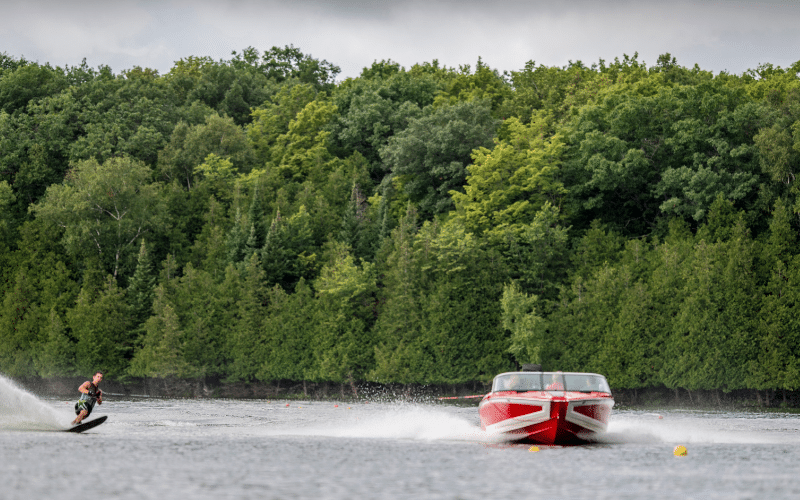
Slalom courses with proper buoys and configurations challenge skiers' precision and skill, making them indispensable for facilities that cater to competitive water skiing. They enable skiers to practice and refine their techniques, and provide a standardized course for fair and regulated competition.
#3 Jump Ramps
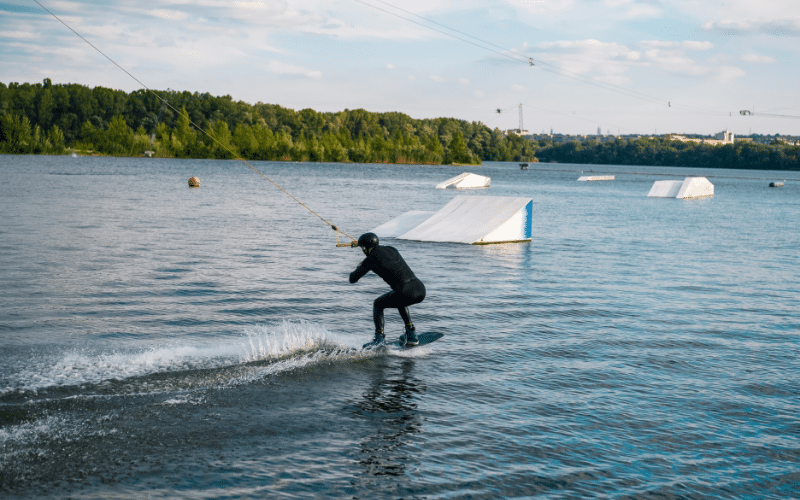
Jump ramps are key structures for competitive jump skiing, offering athletes the platform to perform aerial tricks and long-distance jumps. These ramps must be engineered carefully for performance and safety, making them a critical feature for facilities hosting advanced water skiing events.
#4 Docking and Storage Area for Boats and Equipment
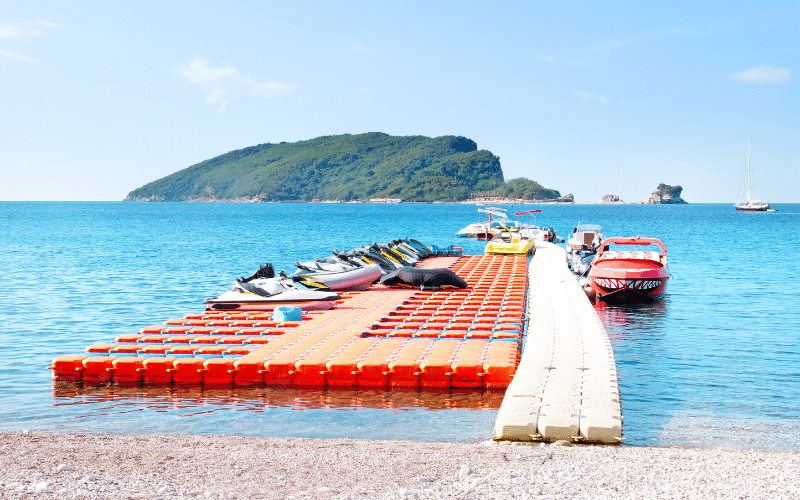
Dedicated docking and storage areas are essential for organizational efficiency and protection of costly equipment. They provide easy access for boats and a secure environment for storing water skis, life jackets, and other gear, contributing to the smooth operation of water skiing activities.
#5 Changing and Shower Facilities
Changing and shower facilities are important for the comfort and hygiene of all participants. They allow skiers and other water enthusiasts to change into and out of wet gear in privacy and rinse off after activities, promoting comfort and well-being, crucial for a full day of water sports.

FAQ
What is the equipment you need to play Water Skiing?
Water skis, a tow rope, a life vest, and a boat are the equipment you need to play Water Skiing. These essential items enable you to ride on the water safely and effectively.
What is the most important equipment in Water Skiing?
The life vest is the most important equipment in Water Skiing, providing safety by keeping you afloat in case of a fall or when you are not skiing.
What is a recommended list of Water Skiing equipment for beginners?
Here's a recommended list of Water Skiing equipment for beginners: a pair of beginner-level water skis, a comfortable life vest, a sturdy tow rope, gloves, and a helmet. This gear helps ensure safety and ease of learning.