The rodeo equipment list starts with seven things a competitor wears: cowboy hat, boots, chaps, gloves, a protective vest and helmet, lasso and saddle.
Six items go on the rider before the go: hat, boots, protective vest, helmet, chaps and gloves. Two more depend on the event, a lariat for the roping and a saddle for the riding, and the remaining nine belong to the coach and to the rodeo grounds. The table below lists all seventeen with the purpose of each one.
The people behind the sport are covered in our article on the best rodeo coaches.
- What equipment do you need for rodeo?
- A hat, boots, gloves, chaps and a protective vest, plus the rope or the saddle for the event entered. The arena, the chutes and the stock belong to the rodeo grounds.
- What do beginners need for rodeo?
- Boots, gloves, a protective vest and a helmet come first, then a lariat or a saddle once the event is chosen. Practice pens usually lend the rest until a rider knows which event to enter.
- What does the rodeo facility provide?
- The arena and its footing, the bucking and roping chutes, the timing system, the spectator seating and the holding pens for the stock. Competitors bring only what they wear and rope with.

Rodeo Equipment at a Glance
Eight items are the competitor's own, four belong to the coach or the team, and five are part of the grounds. Everything a beginner has to buy sits in the first block.
| Item | What it does | Who supplies it |
|---|---|---|
| Cowboy hat | Keeps sun and rain out of the eyes in an open arena | Player |
| Bootsriding heel | Holds the stirrup, the heel stops the foot from sliding through | Player |
| Protective vest | Shock padding over chest, ribs and tailbone in the rough stock events | Player |
| Helmetfor bull riding | Padded shell and face cage against a horn or a hoof | Player |
| Rodeo chaps | Leather over the legs against rope burn, horns and the chute rail | Player |
| Gloves | Grip on rope and rein, no rope burn on the riding hand | Player |
| Lassofor roping events | The loop thrown at the steer, diameter and lay decide the throw | Player |
| Saddlefor riding events | Seat and stirrups that keep the rider with the horse | Player |
| Practice equipmentmechanical bull, roping dummy | Lets the throw and the ride be drilled without live stock | Coach |
| First aid kit | Rope burns, cuts and hard landings get treated at the arena | Coach |
| Video equipment | Records the run so the ride can be reviewed afterward | Coach |
| Team uniforms | Identifies the team, expected at sanctioned events | Coach |
| Arena with proper footing | Graded dirt that takes the impact and keeps stock from slipping | Facility |
| Chutes for animal release | Holds animal and rider until the gate is pulled | Facility |
| Seating for spectators | Set behind the arena fence, out of reach of loose stock | Facility |
| Scoreboard and timing system | Times the roping and barrel runs and shows the score | Facility |
| Livestock holding pens | Keeps stock separated and calm before and after the run | Facility |
Equipment for Rodeo Competitors
#1 Cowboy Hat

The cowboy hat is not only iconic but also functional, shielding competitors from the sun and improving visibility. Its durable design contributes to a rider's safety and, in some events, can even be used as part of the competitor's score if it stays on.
Stetson 3X Oak Ridge
Wool felt, cattleman crease
- Felt3X wool felt
- Crown4 1/4 inches, cattleman style
- Brim4 inches wide
- Hat bandleather with a 3-piece buckle
- Colorchocolate
- Made inUSA
#2 Boots

Purpose-built rodeo boots are vital for safety and performance, offering stability and protection. High-quality boots help maintain a solid grip in stirrups, protect against livestock trampling, and support quick dismounts, which are often crucial in rodeo events.
Ariat Sport Wide Square Toe
Full grain leather western boot
- Upperfull grain leather
- Toewide square toe
- Liningsynthetic air mesh
- Footbedlightly cushioned
- Shaftmulticolored stitching
#3 Protective Gear (vest, helmet for bull riding)

Protective vests and helmets are non-negotiable essentials in the high-impact sport of rodeo, especially in bull riding. They absorb shock, distribute impact, and shield vital organs and the head from direct contact with the animals, significantly reducing the risk of severe injury.
HILASON Rodeo Safety Vest
Padding at chest, ribs and tailbone
- Protectioncompartmentalized shock-absorbing padding at chest, ribs, back and tailbone
- Closurefront zipper with laced side adjustment
- Shouldershook and loop fasteners
- Cutshorter front panels, elongated lower back
- Fitunisex, men and women
#4 Rodeo Chaps

Chaps guard the rider's legs against rope burns, livestock brushing, and other hazards encountered in the arena. They're also a custom piece, often personalized with vibrant designs, contributing not only to protection but also to the flare and pageantry of the sport.
Weaver Leather Shotgun Chaps
Full length, full grain leather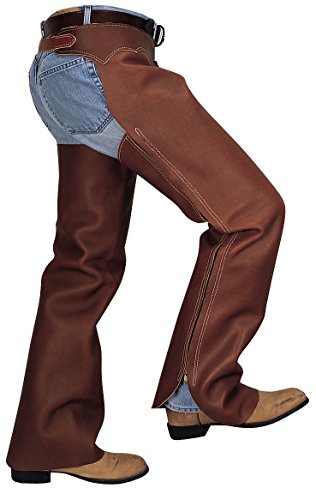
- Styleshotgun cut, full length leg
- Leatherfull grain oil tanned
- Zippersfull length on each leg
- Closurebuckle at the back, tie at the front
- Colorbrown
#5 Gloves

Gloves provide riders with a better grip on ropes and reins while also protecting their hands from abrasions and blisters. Essential for events like roping and riding, they are a critical piece of gear for a competitor to maintain control and precision during an event.
EPT Premium Bull Riding Glove
Single glove, riding hand
- Leathercalf skin
- Palmreinforced patch
- Wristbuilt-on strap
- Seamouter seam stitching
- Sizes5.0 to 10.5, left or right hand
#6 Lasso (for roping events)

A lasso is an indispensable tool in timed roping events, designed to be both durable and flexible. With good weight and balance, it allows the roper to throw a precise loop that is key to successfully capturing livestock and achieving a fast time.
Weaver Equine Ranch Rope
7/16 inch by 30 feet
- Size7/16 inch diameter, 30 feet long
- Materialwaxed nylon
- Laymedium lay
- Burnerrawhide burner included
- Colornatural
#7 Saddle (for riding events)

The saddle is the foundational gear for riding events, tailored to encourage balance, grip, and proper positioning. A quality rodeo saddle helps the rider maintain a secure seat during the bucking and turning of a bronc or bull, aiding in competitor safety and performance.
Barrel Saddle Set with Tack
Saddle plus headstall and reins
- Leathergenuine leather, hand-tooled with hair-on cowhide accents
- Treereinforced fiberglass
- Seatdeep padded seat
- Includedsaddle, headstall, breast collar, reins
- Seat sizes8 to 17 inches
Equipment for Coaches and Teams
#1 Practice Equipment

Practice equipment such as mechanical bulls and roping dummies is indispensable for a rodeo team's training. These tools simulate real-life scenarios allowing competitors to safely practice and perfect their techniques, ensuring they're competition-ready and adept at handling live animals.
AJ Tack Steer Head Roping Dummy
Full size, 20 inch horns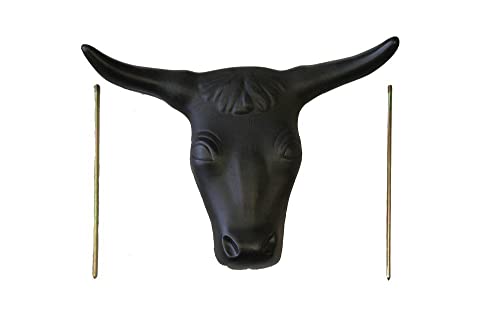
- Horn spread20 inches
- Materialheavy-duty polyethylene
- Mountingtwo 14 inch steel rods for a hay or straw bale
- Scalefull size steer head
- Built foradult and older youth ropers
#2 First Aid Kit

A comprehensive first aid kit is crucial for any rodeo team, providing immediate medical attention for riders and staff during mishaps. Stocked with bandages, ointments, and splints, it ensures a quick response to injuries, contributing to the safety and well-being of all participants.
#3 Video Equipment for Performance Analysis

High-quality video equipment is key for coaches to analyze and improve team performance. Recording and reviewing practices and rodeo events helps pinpoint areas for improvement, enhances technique, and strategizes competitive approaches, ultimately refining the skills of team members.
#4 Team Uniforms

Team uniforms not only enhance the visual appeal of the competitors but also promote unity and professional representation of the team. Uniforms foster a sense of belonging and pride among team members while allowing spectators to easily identify and support their favorite competitors and teams.
Equipment for Facilities
#1 Arena with Proper Footing

An arena with proper footing is important for rodeo events, ensuring safety for both livestock and competitors. The right surface reduces slipping risks, absorbs shock, and minimizes injuries, providing a reliable foundation for the rigorous demands of rodeo performance.
#2 Chutes for Animal Release

Chutes are essential for controlled release of livestock during rodeo events. They provide a safe and efficient means of managing animals before they enter the arena, contributing to the smooth operation of rodeo competitions and the safety of both animals and riders.
#3 Seating for Spectators

Ample and comfortable spectator seating is vital for audience enjoyment and engagement. It allows fans to view the action up close, fostering an exciting atmosphere and encouraging support for the competitors and the sport of rodeo.
#4 Scoreboard and Timing System

A scoreboard and timing system are crucial for displaying scores and times to competitors and spectators. Accurate and immediate feedback is essential for fair competition and enhances the spectator experience by keeping fans informed and engaged with the event proceedings.
#5 Livestock Holding Pens

Livestock holding pens are necessary for organizing and containing animals before and after their participation in events. These pens ensure the welfare of the animals, streamline event logistics, and help maintain a safe environment for all involved in rodeo activities.

FAQ
What is the equipment you need to play Rodeo?
Protective gear, cowboy boots, gloves, and a hat are the equipment you need to play Rodeo to ensure safety and adhere to the standards of the sport.
What is the most important equipment in Rodeo?
A protective vest and helmet are the most important equipment in Rodeo, providing essential safety to riders from potential injuries during events.
What is a recommended list of Rodeo equipment for beginners?
Here's a recommended list of Rodeo equipment for beginners: a protective vest, riding gloves, cowboy boots, a long-sleeve shirt, denim jeans, and a western-style helmet. This gear offers basic protection and comfort.