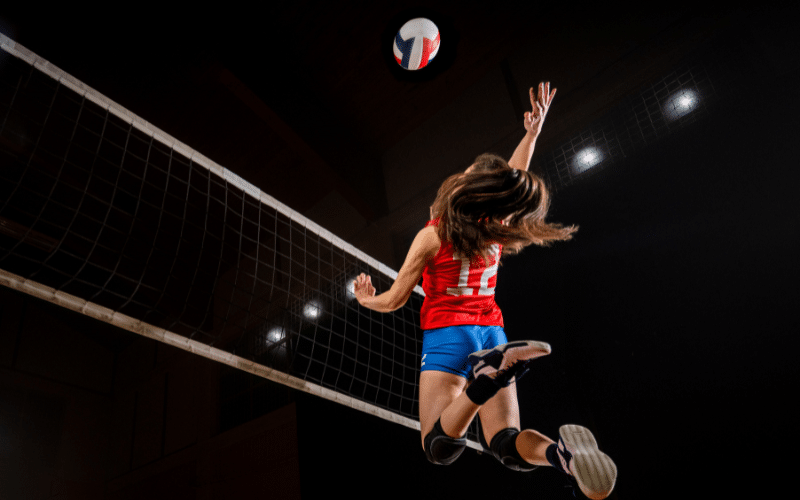
Volleyball equipment list with all 19 items: ball, volleyball shoes, knee pads, jerseys, ankle braces and the water bottle players bring.
Six items belong to the player, six to coaches and teams such as whistles, a blocking net and a ball cart, and seven to the hall itself, from net and poles to scoreboard and team benches. The table below lists all nineteen with the purpose of each one and who is expected to bring it.
- What equipment do you need for volleyball?
- A ball, court shoes, knee pads and a jersey. The court, the net and the poles belong to the hall, so a beginner buys four things.
- What equipment is used in volleyball?
- The ball is the only piece of play equipment; everything else either protects the player (knee pads, ankle braces) or belongs to the venue (net, poles, antennae, scoreboard, referee stand).
- What are the facilities in volleyball?
- An indoor court of 59 by 29.5 feet with a free zone around it, a net at just under 8 feet for men and about 7 feet 4 inches for women, plus benches, a scoreboard and locker rooms.
- What does a beginner need first?
- Knee pads and non-marking court shoes. Clubs lend out balls, but nobody lends knee pads, and the floor contact starts on day one.

Volleyball Equipment at a Glance
Six items are the player's own, six belong to the coach or the team, and seven are part of the hall. Everything a beginner has to buy sits in the first block.
| Item | What it does | Who supplies it |
|---|---|---|
| Volleyball | Size 5, the only piece of play equipment in the sport | Player |
| Volleyball shoes | Gum sole for the block jump and the sideways stop, non-marking for the hall | Player |
| Knee pads | Takes the floor contact on a dive, worn by every position | Player |
| Jerseys | Moisture-wicking shirt with the number, required in league play | Player |
| Water bottle | Sets run long and time-outs are short, so drinking happens at the bench | Player |
| Ankle bracesoptional | Lace-up support after a sprain, the most common volleyball injury | Player |
| Whistles | Starts and stops every rally, both in the match and in drills | Coach |
| Training aidsball machine, blocking nets | Fixed blockers at the net for repeated hitting and coverage drills | Coach |
| First aid kit | Ankle and finger injuries are treated at the bench | Coach |
| Tactics board | Shows rotation, serve receive and the switch after the serve | Coach |
| Team uniforms | Matching set with libero contrast, checked before league matches | Coach |
| Ball cart | Holds the practice balls so a feeding drill never stops | Coach |
| Volleyball court | 59 feet by 29.5 feet, with a free zone around all four sides | Facility |
| Nets and poles | Just under 8 feet for men, about 7 feet 4 inches for women | Facility |
| Scoreboard | Rally point score, set count and the time-outs taken | Facility |
| Bench for teams | Substitutes and staff sit on the side of the scorer's table | Facility |
| Bleachers or seating area | Set back behind the free zone so play is not blocked | Facility |
| Locker rooms | Changing, showers and storage, standard in every club hall | Facility |
| Cleaning supplies for court | A mop run between sets, because sweat on the floor is what causes slips | Facility |
Equipment for Volleyball Players
#1 Volleyball

At the heart of the game, a volleyball is designed for optimal handling, striking, and durability. Whether in practice or competition, it is critical for players to familiarize themselves with the ball's feel and responsiveness to master their skills.
Tachikara SV-18S Indoor
Official size 5 indoor ball
- Sizeofficial size 5, 260 to 280 grams
- Covercomposite leather, soft touch
- Constructionsingle unit, bonded layers
- Bladdernylon wound
- Useindoor club and school play
#2 Volleyball Shoes
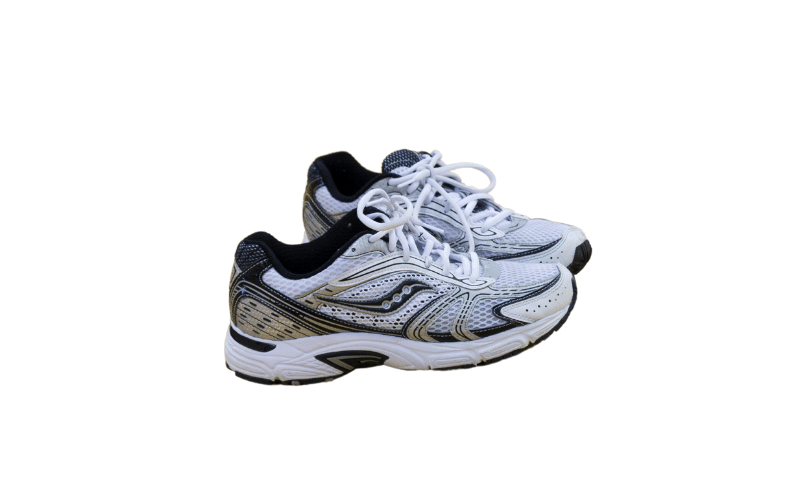
Volleyball shoes are engineered to support the unique movements of the sport, providing stability, shock absorption, and traction on the court. Specialized soles contribute to swift and safe directional changes, vital for player performance and injury prevention.
ASICS Upcourt 6
Entry level indoor court shoe
- Upperbreathable mesh underlays
- Solegum rubber court outsole
- Weightlightweight build for flexibility
- Socklinersolution dyed, lower water use in production
- Fitruns small, order half a size up
#3 Knee Pads
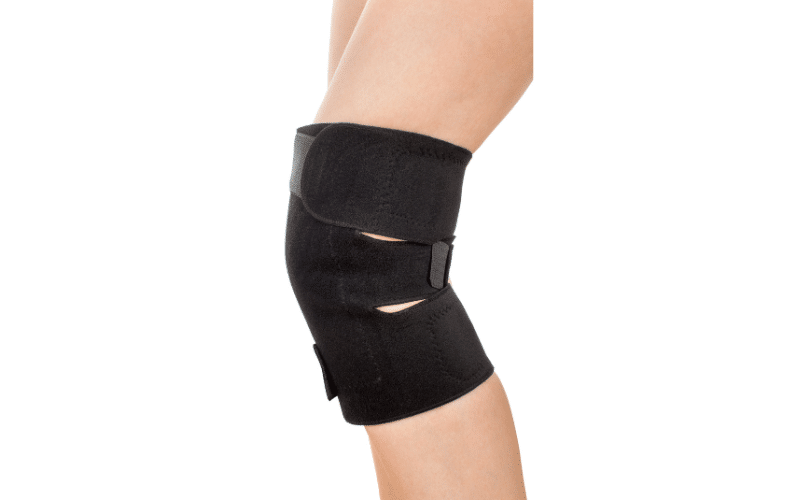
Knee pads are vital protection gear for volleyball players, cushioning the impact from dives and falls. Their use minimizes the risk of knee injuries and allows for more aggressive play when reaching for low balls or defending against spikes.
Mizuno T10 Plus Kneepad
One size, sold as a pair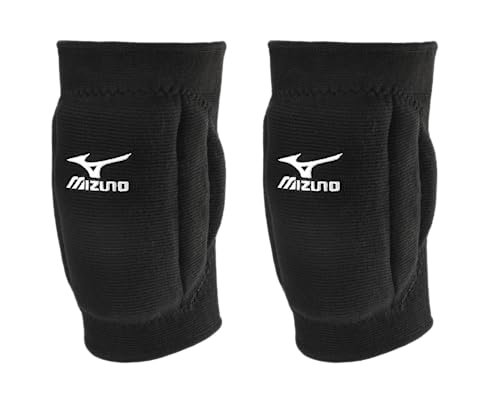
- Paddinghigh density foam over the kneecap
- Sizingknee circumference 12 to 17.5 inches, one size
- Fabric68 percent polyester, 20 percent rayon, 12 percent elastic
- Contents2 pads per pack
- Fitunisex, adult
#4 Jerseys
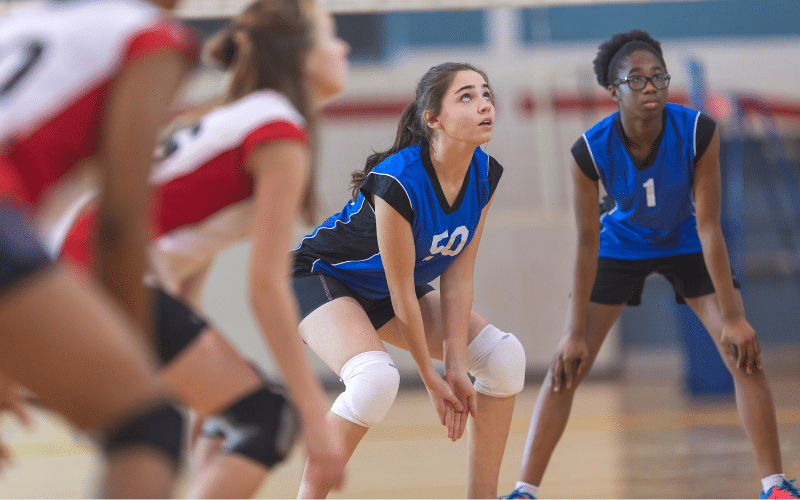
Jerseys keep volleyball players cool and comfortable through a match. They are typically made of moisture-wicking fabric to handle sweat and allow for freedom of movement. Jerseys also display team colors and player numbers, an integral part of team identity.
Mizuno Balboa 6 Jersey
Short sleeve match jersey
- Cutathlete specific pattern for arm movement
- Hemcurved shirttail, hemmed bottom
- Seamsflatlock, flat against the skin under a pad
- Panelscontrast inserts at the sides
- Sleeveshort
#5 Water Bottle

Hydration is key in volleyball, just as in any sport. A water bottle enables players to manage fluid intake, ensuring they stay hydrated before, during, and after matches to maintain energy levels and concentration.
#6 Ankle Braces (optional)

Ankle braces are recommended for players who need extra support or those with a history of ankle injuries. They offer additional stability during quick, multi-directional movements and can be a preventive measure during high-impact gameplay.
Med Spec ASO Ankle Stabilizer
Lace up with figure-8 straps
- Supportfigure-8 straps plus lace closure
- PaddingCoolFlex tongue and padding
- Shellballistic nylon boot
- Fitbilateral, works on left or right
- Wearsized to fit inside a court shoe
Equipment for Coaches and Teams
#1 Whistles
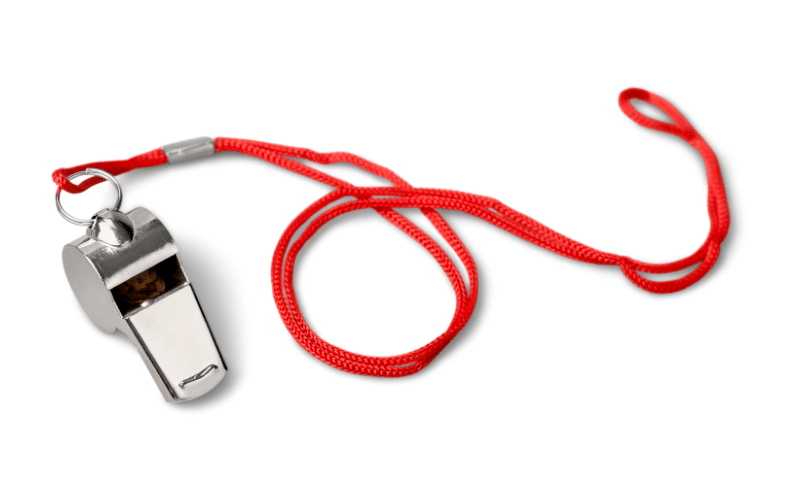
Whistles are crucial for volleyball coaches to conduct effective practices and oversee matches. They provide a clear and audible signal that can quickly capture attention, control drills, manage substitutions, and enforce game rules, being an indispensable tool for clear communication in noisy gym environments.
#2 Training Aids

Training aids such as volleyball machines and blocking nets are invaluable for developing players’ skills. These tools allow for repetitive and targeted practice, enhancing precision in serving, spiking, and blocking, ultimately elevating the team's performance during games.
Tandem Sport Quad Blocker
Four blocker units for the net
- Contents4 separate blocker units
- Mountingclamps anywhere along the net, no tools
- Topfoam padded blocking surface
- Usehitting placement, blocking and coverage drills
- Setupcan be used singly or in pairs
#3 First Aid Kit

A comprehensive first aid kit is essential for every team to promptly address injuries and health emergencies. Stocked with items such as bandages, ice packs, and antiseptics, it ensures player well-being and minimizes game interruptions due to minor medical issues.
#4 Tactics Board

A tactics board is vital for coaches to outline strategies and review positioning. This visual aid helps in pre-game briefings and time-outs, allowing players to understand their roles and the team's game play, which can be pivotal for successful in-game execution.
#5 Team Uniforms

Team uniforms not only unify players visually but also comply with regulations. Uniforms promote team identity and spirit while ensuring players are dressed for high performance and safety, with proper fit and materials suitable for the sport's demands.
#6 Ball Cart
A ball cart is essential for organized and efficient practice sessions, ensuring a steady supply of volleyballs available at arm's reach. It eliminates delays in drills that can arise from chasing after balls, thereby maximizing practice time and focus for players and coaches alike.
Tachikara BIK-SP Ball Cart
Portable open frame cart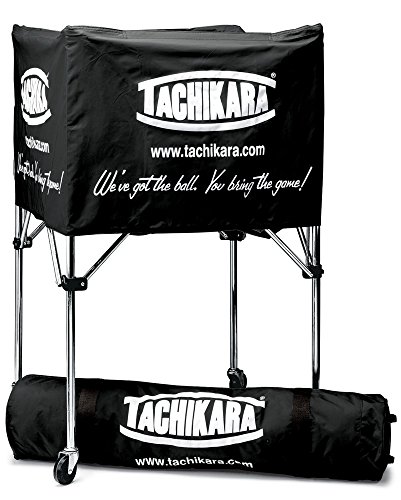
- Frameopen design, balls stay visible and reachable
- Assemblyno tools required
- Mobilityrolls between courts and into storage
- Capacityholds a full practice set of balls
- Usevolleyball, basketball and other ball sports
Equipment for Facilities
#1 Volleyball Court
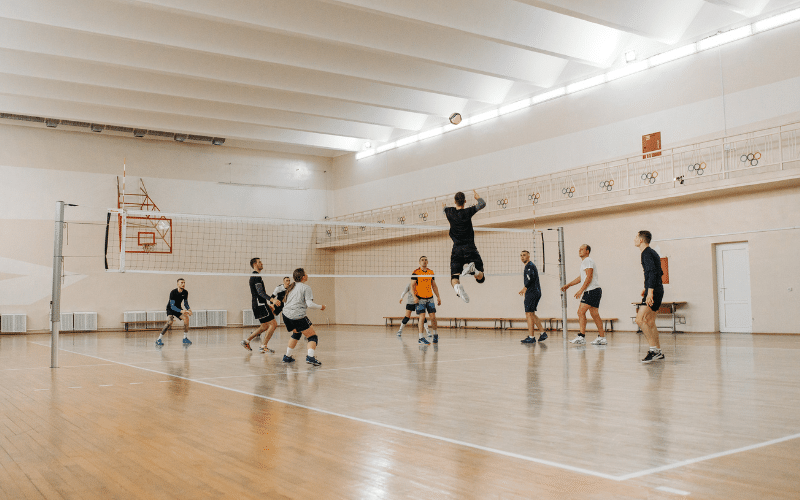
The volleyball court is where the heart of the game takes place. It's marked with lines defining the boundaries for in and out-of-play. Correct court dimensions ensure the game is played according to standardized rules, allowing players to execute strategies and maneuvers that are critical to competitive volleyball.
#2 Nets and Poles
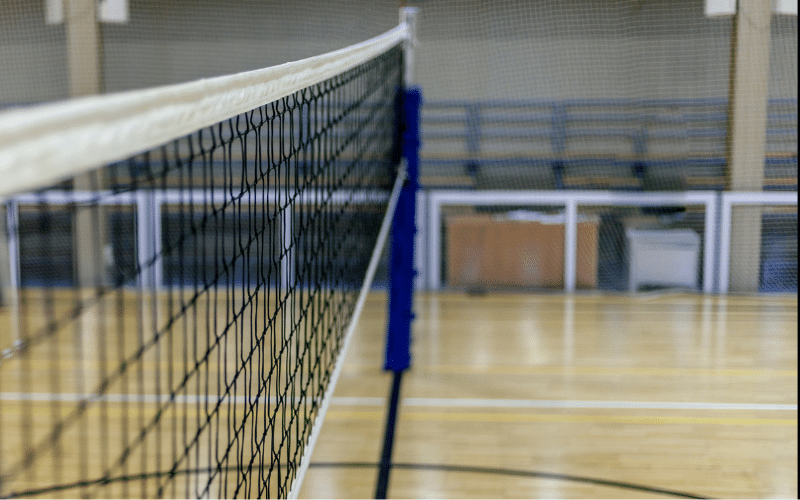
Nets and poles are essential for dividing the court and creating a barrier that players must negotiate their shots over. The net's height and tension must be appropriate to the age and skill level of the players, which is crucial for fair play and to maintain the integrity of the sport.
Park and Sun Spectrum Classic
Portable regulation net system
- Net32 feet long, 3 feet high, sleeved slip-on
- Poles2 inch aircraft aluminum with push-button height locking
- Heightsofficial men, women and coed settings
- Guylines5/16 inch with pull-down handles, 4 steel ground stakes
- Included30 by 60 foot boundary line on a cord winder, carry bag
#3 Scoreboard
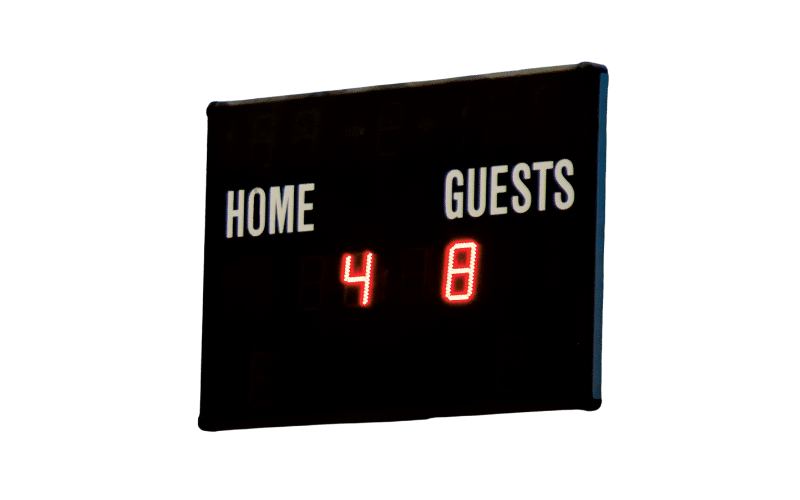
An easily visible scoreboard allows players, coaches, and spectators to keep track of the game's progress, scores, and remaining time. This provides a reference for strategies, rotations, and the pacing of the game, while enhancing the competitive atmosphere and spectator experience.
#4 Bench for Teams
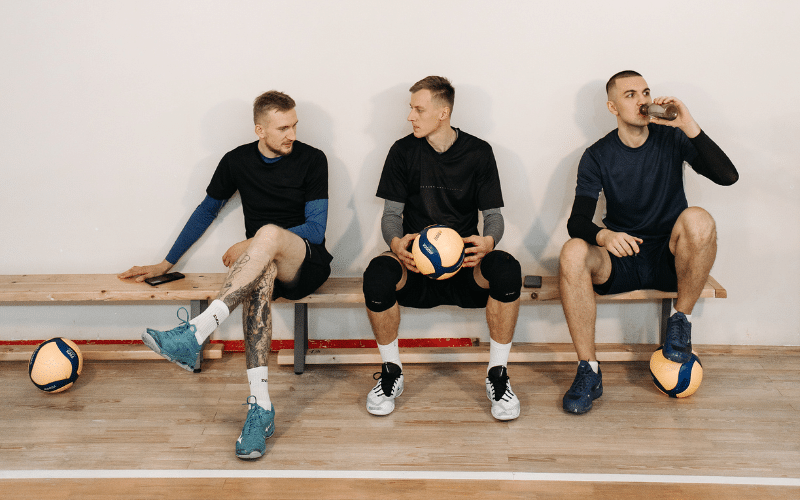
Team benches provide a space for athletes to rest, confer with coaches, and prepare mentally for their rotation into the game. It's essential for team dynamics, as it serves as the hub for players to support their teammates and stay engaged during the match.
#5 Bleachers or Seating Area
Bleachers or seating areas accommodate spectators, allowing fans to comfortably watch and support their teams. These facilities are vital for fostering an enthusiastic and engaging environment, which can greatly enhance the atmosphere of a volleyball match.
#6 Locker Rooms
Locker rooms are an essential facility for teams to securely store personal items, change into uniforms, and hold private team discussions. They provide a space for athletes to focus and prepare before matches and decompress after competition.
#7 Cleaning Supplies for Court
Cleaning supplies like mops, sweepers, and disinfectants are necessary to maintain the safety and appearance of the court. A clean surface helps prevent slips and injuries, ensuring the wellbeing of players and the smooth operation of games and practices.
Knowing what equipment is essential, you might also be interested in the most important volleyball tournaments where this equipment is put to the test.

FAQ
What is the equipment you need to play Volleyball?
A volleyball, a net system, knee pads, and appropriate shoes are the equipment you need to play Volleyball. These items are essential for gameplay and player safety.
What is the most important equipment in Volleyball?
The volleyball itself is the most important equipment in Volleyball, as it is essential for all aspects of playing the game, from serving to scoring points.
What is a recommended list of Volleyball equipment for beginners?
Here's a recommended list of Volleyball equipment for beginners: an official size volleyball, comfortable court shoes, knee pads, athletic clothes, and a water bottle for hydration.