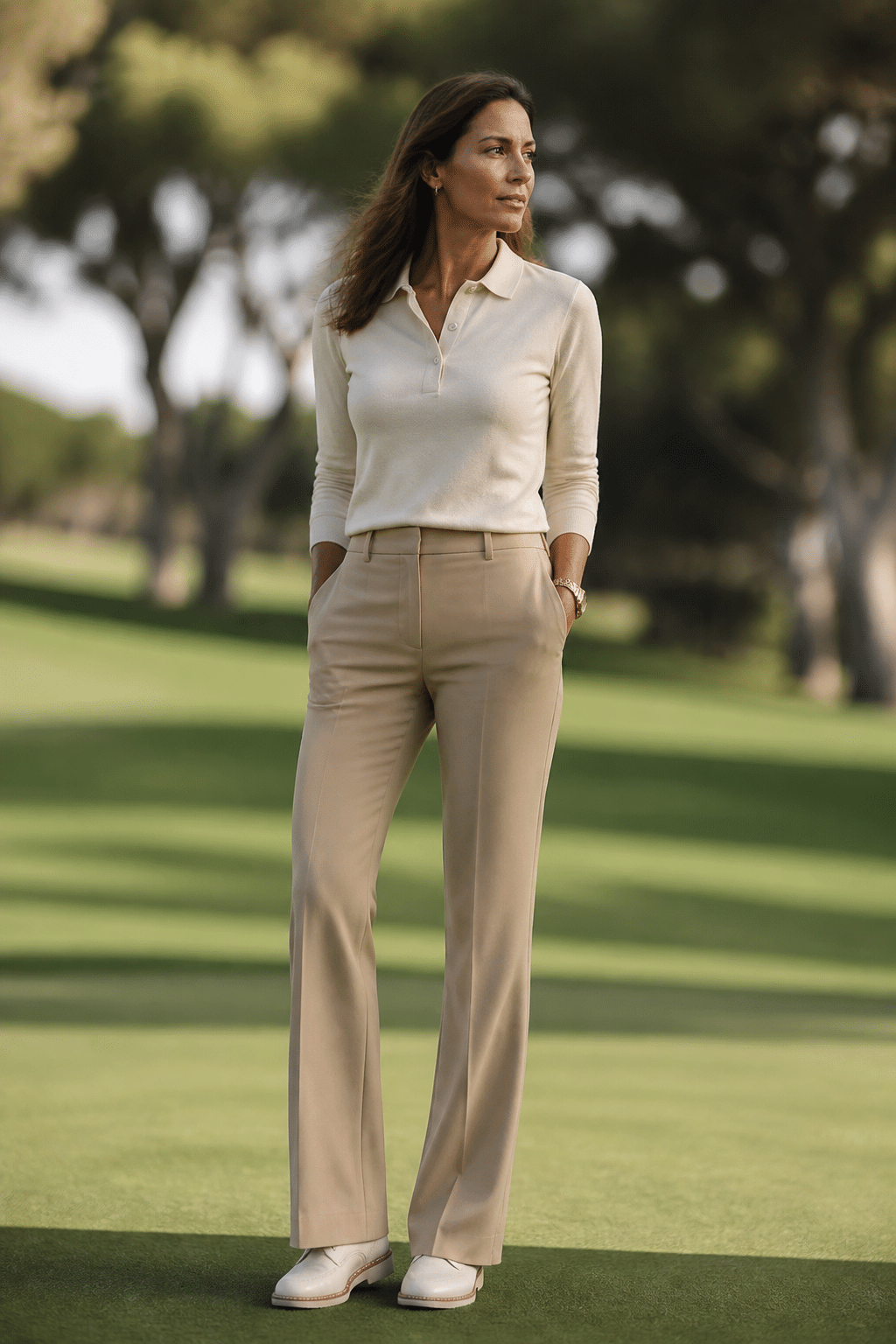
Old money style on a golf course has almost nothing to do with money and everything to do with restraint. It is the absence of logos, the absence of neon, and clothes that look like they were bought once and have been worn every summer since.
The palette is narrow on purpose: cream, camel, navy, white, forest green and the occasional stripe. Fabric matters more than cut, because the whole effect rests on things hanging properly rather than clinging. No visible branding anywhere, nothing performance marketed, and no more than two colours in an outfit. It overlaps heavily with the preppy list, and the country club edit is the same instinct at a specific kind of club.
If you want the effect for real, buy fewer pieces in better fabric and wear them out. Our guide to the best golf apparel covers what survives that treatment.
A cream polo with camel trousers. The quietest outfit in this entire folder and probably the most elegant. No pattern, no logo, nothing shouting, and it works at any club in the world.
A navy polo above white trousers. As traditional as golf clothing gets, and the reason it never dates is that nothing about it was ever fashionable in the first place.
A white polo with a pleated cream skirt. Pleats and pale neutrals together are the visual shorthand for this whole category, and they move properly through a swing.
A fine gauge navy sweater with a white collar showing. The collar peeking out is the detail that does all the work here, and a chunky knit would ruin it.
A camel cardigan over cream trousers. Cardigans read as inherited where jackets read as bought, which is the entire distinction this style is built on.
A forest green polo with beige trousers. Deep green is the most traditional colour in golf outside navy, and it has been quietly out of fashion long enough to look permanent.
A wide striped polo with a white skort. Wide, calm stripes rather than fine ones, and only two colours in the stripe. Three colours tips it into sportswear.
A cream sweater vest over a white collared shirt. The most photographed shape in this category, and it works because it covers the torso and leaves the arms clean.
White trousers with a cream cardigan. Two shades of almost the same colour, which is a harder thing to pull off than contrast and looks better when it works.
A navy blazer over a white polo and trousers for the clubhouse afterwards. Not for playing, and having something in the boot that is not technical is the point.
A cream polo with a forest green skirt. Green below is rarer than green above and it sits beautifully against a course without ever disappearing into it.
Beige trousers with a striped fine gauge sweater. The stripe is the only pattern in the outfit and it sits above the waist, which is the right place for it.
A white skort with a navy sweater vest. Sleeveless knitwear is the most specific garment in this category and the one that dates least, because it never trended.
Cream trousers with a pale blue collared shirt. Blue is the only colour allowed to be soft here, and a proper shirt rather than a polo is the more traditional choice.
A houndstooth skirt with a cream polo. Houndstooth is tartan's quieter relative and it works for the same reason: it is old enough that nobody reads it as a trend.
A beige polo with white trousers. Two neutrals, no contrast, and the whole thing rests on the trousers hanging properly. This is where fabric weight earns its money.
A forest green sweater with a white collar showing. The most traditional autumn combination in the game and it has looked exactly like this for eighty years.
Cream, camel and one leather belt, from hat to shoe. Buying into one narrow palette means every piece works with every other one, which is the actual luxury.