Flag football takes American football, removes the tackling and the blocking, and shrinks the roster to five or seven players a side.
What is left is the part most people watch for anyway, which is route running, coverage and the throw.
The sport joins the Olympic programme in Los Angeles in 2028, so these positions are about to become far more familiar.
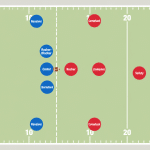
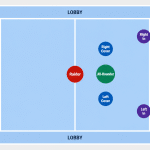
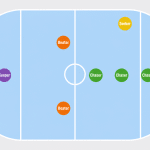
- The Quarterback throws on every play and cannot usually run past the line unless the ball has been handed off.
- The Center snaps the ball and then becomes an extra receiver.
- The Receivers win the game, because everything comes down to getting open.
- The Rusher is the only defender allowed to attack the quarterback, and only from a set distance behind the line.
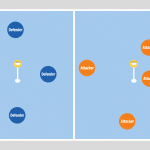
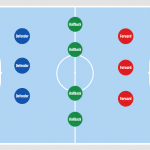
- Defenders pull a flag instead of tackling, which makes angles and footwork more important than size.
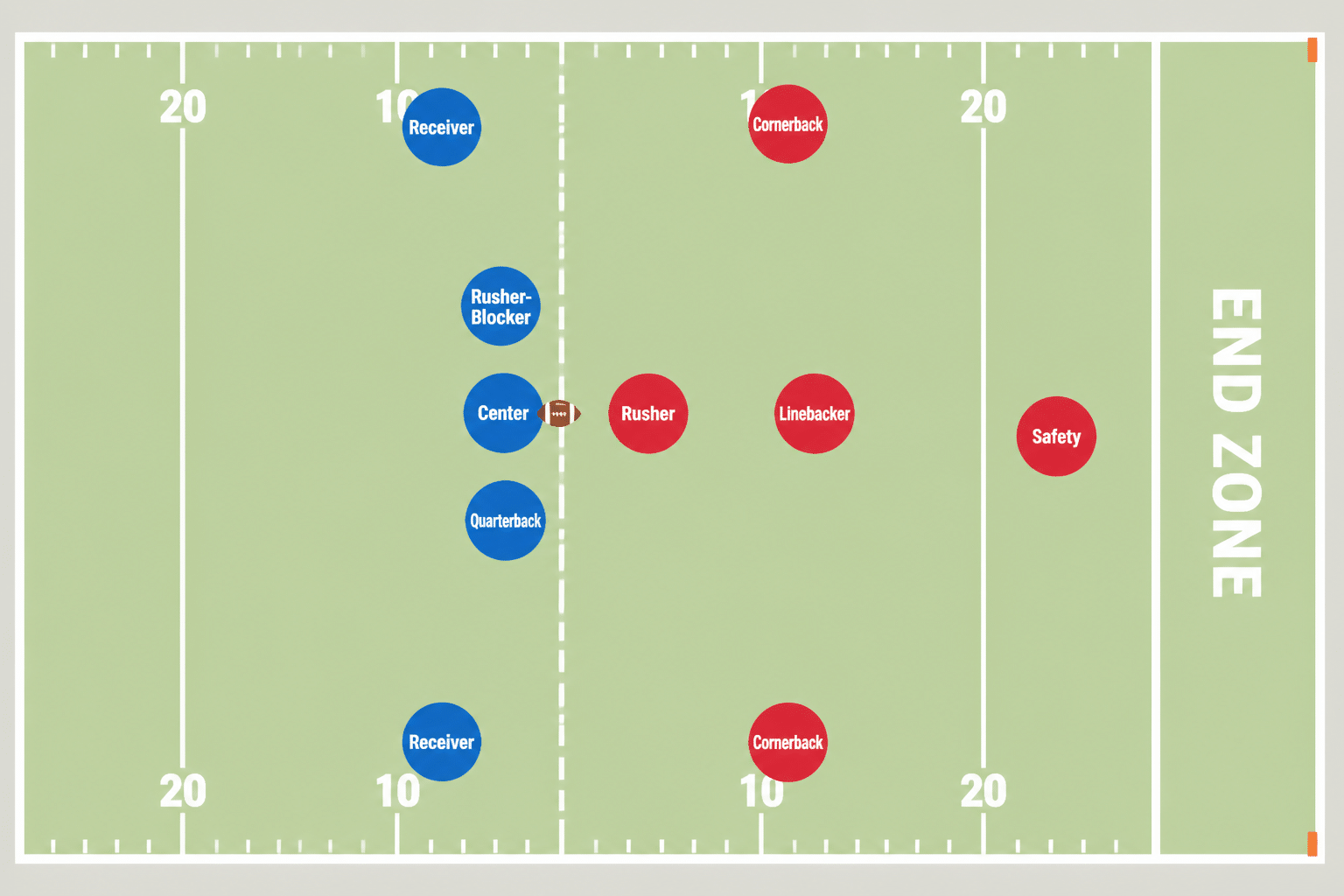
#1 Quarterback
The quarterback receives the snap on every play and is the only player who touches the ball every down. They read the coverage, decide which receiver has the best matchup and release the ball before the rusher arrives, which in most rule sets means within about seven seconds.
Rules vary on running. In most leagues the quarterback may not run the ball across the line of scrimmage unless it has first been handed off and pitched back, which is why the position is almost pure passing. A quarterback who can throw accurately on the move is worth twice one who can only throw from a set position.
Key Characteristics or Skills:
- Quick release, because there is no offensive line to buy time.
- Accuracy at ten to twenty five yards, the range where most flag plays live.
- Pre snap reading of man coverage against zone.
- Pocket movement, since escaping the rusher is legal even when running the ball is not.
#2 Center
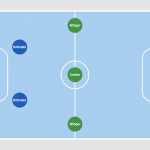
The center snaps the ball between their legs to the quarterback and then releases immediately into a route. There is no blocking in flag football, so the center is a receiver who happens to start the play with the ball in their hands.
Because the center is the closest eligible receiver to the quarterback, they are the safety valve on almost every play. When the rusher gets home fast, the quick pass to the center over the middle is what saves the down.
Key Characteristics or Skills:
- A clean, repeatable snap under pressure.
- Instant transition from snapping to running a route.
- Short area quickness for slants and drag routes.
- Reliable hands in traffic, because the throw comes fast and flat.
#3 Receiver
Receivers line up wide or in the slot and run the routes the play calls for. With no pads and no contact, separation comes entirely from footwork, tempo changes and reading whether the defender is playing man or zone.
After the catch the receiver is trying to keep their flags away from the defender rather than run through them, which changes the running style completely. Spinning, cutting back and protecting the hips are the moves that matter, and stiff arms and blocking are not allowed.
Key Characteristics or Skills:
- Sharp cuts at the top of the route with no wasted steps.
- Reading man against zone coverage in the first two steps.
- Elusive running after the catch that keeps the flags away from hands.
- Catching in stride, since every yard counts on a short field.
#4 Rusher
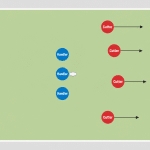
The rusher is the only defender permitted to attack the quarterback, and they must start a set distance behind the line of scrimmage, usually seven yards. They can only cross that line once the ball is snapped, which gives the quarterback a guaranteed window.
A good rusher does not just run in a straight line. Timing the snap, taking an angle that cuts off the quarterback’s escape route and knowing when to drop into coverage instead of rushing are what turn the position from a sprint into a tactic.
Key Characteristics or Skills:
- Explosive first step from the seven yard mark.
- A pursuit angle that closes the escape lane rather than the shortest path.
- Discipline to stay behind the line until the snap.
- The awareness to peel off and cover when the quarterback scrambles.
#5 Cornerback
Cornerbacks cover the outside receivers, either man to man or in a zone. Without contact they cannot jam a receiver at the line, so everything depends on mirroring footwork and staying square long enough to react to the break.
The pull is the hardest part of the job. Grabbing at a flag too early leaves the defender off balance, and missing it can turn a short gain into a touchdown, because in flag football there is nobody behind to clean up a miss.
Key Characteristics or Skills:
- Backpedal and hip turn without losing ground.
- Recovery speed after a receiver wins the break.
- A clean two handed flag pull at full speed.
- Discipline against double moves, since there is no contact to disrupt the route.
#6 Safety
The safety plays deepest and is the last defender between the receiver and the end zone. They read the quarterback’s eyes, break on the throw and clean up anything that gets past the corners.
On a small field the safety is also the communicator. They can see the whole offensive formation before the snap, which makes them the player who calls out motion, adjusts the coverage and warns the corners which side has an extra receiver.
Key Characteristics or Skills:
- Deep coverage reads from the quarterback’s shoulders.
- Closing speed over twenty yards.
- Communication before the snap.
- A sure flag pull in space, because a miss is usually a score.
#7 Linebacker
The linebacker covers the middle of the field, taking away the slants, drags and quick passes to the center that make up so much of a flag offence. In 5 on 5 this is often the defender who is not rushing on a given play.
Linebackers also handle the run in leagues that allow handoffs. Because the ball carrier cannot be tackled, defending a run means taking a good angle and pulling the flag in the gap rather than filling it with the body.
Key Characteristics or Skills:
- Short area coverage in a crowded middle.
- Reading a handoff and taking the correct angle to the ball carrier.
- The versatility to rush on some downs and drop on others.
- A high, clean pull at the hip rather than a grab at the shirt.
Flag Football Positions by Format
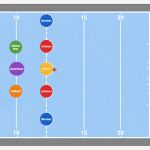
Flag football is not one game with one roster. The 5 on 5 format is the one used at the Olympics and in most international competition, while 7 on 7 is common in American leagues and adds two more players to each side.
| Format | Offence | Defence |
|---|---|---|
| 5 on 5 | Quarterback, Center, two Receivers, one Rusher-Blocker or third Receiver | One Rusher, two Cornerbacks, one Safety, one Linebacker |
| 7 on 7 | Quarterback, Center, three Receivers, a Running Back and a fourth Receiver | One or two Rushers, two Cornerbacks, one or two Safeties, two Linebackers |
| 4 on 4 | Quarterback, Center and two Receivers | One Rusher and three defenders in coverage |
Rules also vary on whether running plays are allowed, whether the quarterback may cross the line and how many downs a team gets to reach midfield. Always check the league rule sheet before building a playbook around a position.
Hybrid Positions
Running Back
Only used in formats that allow handoffs. Takes the ball behind the line and looks for a lane, protecting the flags rather than seeking contact.
Slot Receiver
A receiver lined up inside the outside man. Has a two way release and is usually the quickest player on the offence.
Blitzer
Any defender who rushes on a given down. In 5 on 5 the identity of the rusher often changes play to play to disguise the pressure.
Motion Man
The receiver who is moving at the snap. Legal in most rule sets, and the simplest way for an offence to find out whether the defence is in man or zone.
Flag football keeps the passing game and throws out the trenches. For the full eleven a side version with all the positions that blocking creates, see our guide to American football positions and roles.
FAQ
What positions are there in flag football?
On offence flag football has a quarterback, a center and two or more receivers, plus a running back in some formats. On defence there is a rusher, cornerbacks, a safety and a linebacker, with the exact number depending on whether the game is 5 on 5 or 7 on 7.
How many players are on a flag football team?
Most flag football is played 5 on 5, which is the Olympic format, though 7 on 7 and 4 on 4 are also common. Rosters usually carry a few extra players for rotation.
What is the best position for a beginner in flag football?
Receiver is the best position for a beginner in flag football, because the job is mostly running to open space and catching, while quarterback and rusher both require timing that takes longer to learn.
Conclusion
Flag football is a small game with big consequences for each position, because there are no extra bodies to hide behind.
The quarterback and the rusher fight a private duel on every snap, timed by the rule book rather than by an offensive line.
Receivers and defensive backs decide most games, and the margin between them is footwork rather than strength.
The center is the most underrated player on the field, snapping the ball and then running the route that bails the offence out.
With the sport heading to the Olympics in 2028, these five or seven jobs are about to be the version of American football most of the world actually knows.