Australian rules is played eighteen a side on an oval that can be two hundred metres long, which is more players on more grass than any other football code.
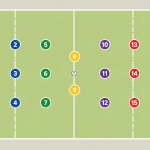
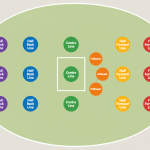
The positions are traditionally grouped into five lines running across the ground from one goal to the other, plus three followers who go where the ball goes.
Modern game plans move players constantly, but the lines are still how teams are selected and how commentators describe them.
- The Full Back Line defends the goal square and takes the hardest defensive marks.
- The Half Back Line starts the run out of defence and is where most modern rebound comes from.
- The Centre Line is the midfield, the engine room where possession is won.
- The Half Forward Line presses the opposition defence and creates the second chance.
- The Full Forward Line kicks the goals, and the followers, including the ruckman, contest every stoppage.
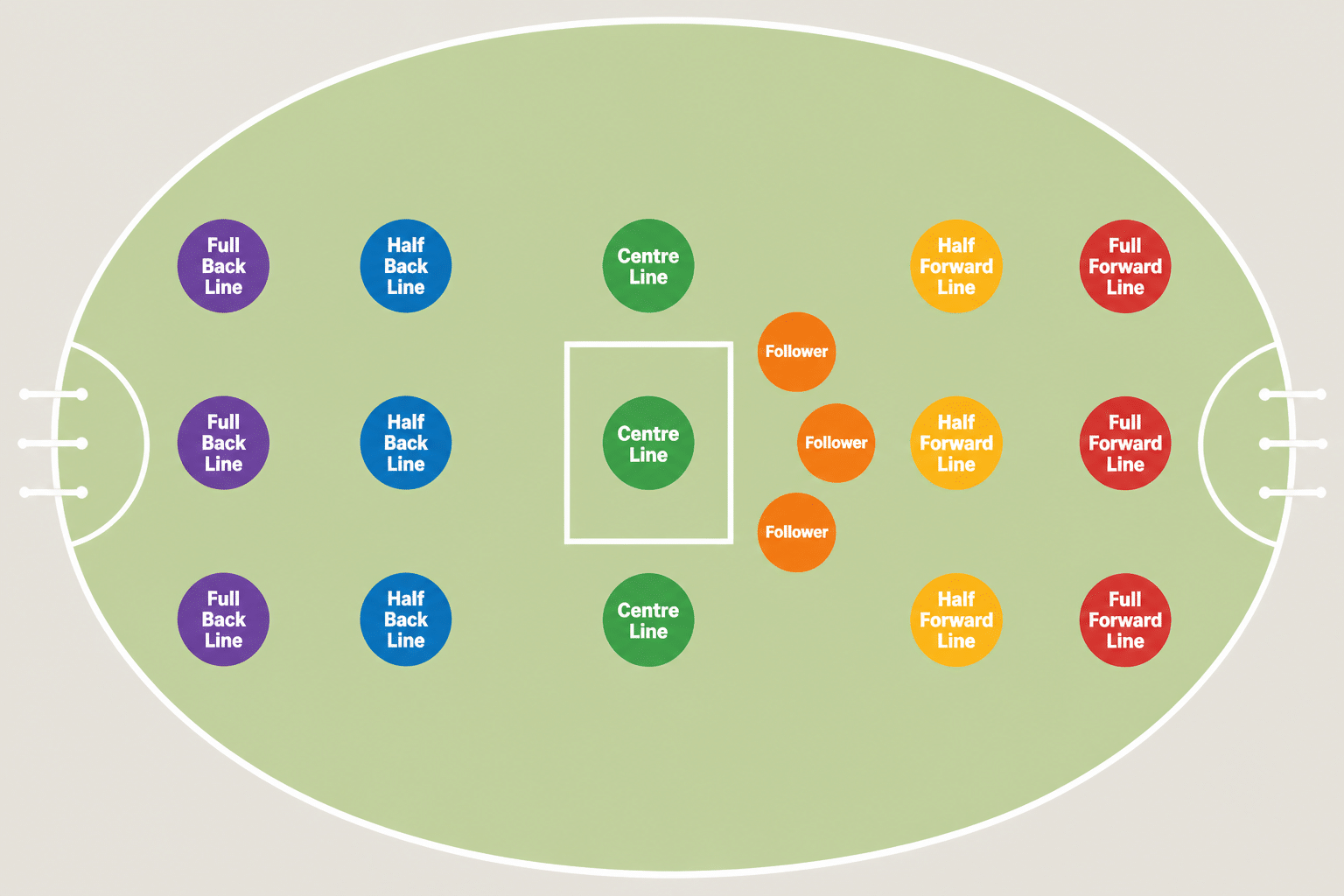
#1 Full Back Line
- 🏆 Notable Full Backs: Stephen Silvagni, Dustin Fletcher and Alex Rance
Three players make up the last line: a full back in the middle and two back pockets either side. Their first job is simple and unforgiving, which is to stop the opposition forwards from marking the ball inside scoring range.
The full back usually takes the biggest opponent, while the back pockets pick up smaller, quicker forwards who play at ground level. After the mark or the spoil, the same three players have to turn defence into attack with a kick out from the goal square, so a clean disposal is as valuable as the contest itself.
Key Characteristics or Skills:
- One on one marking against a taller opponent.
- Spoiling with the fist when the mark is not on.
- Reading the flight of a long kick from fifty metres away.
- Composure on the kick out, which restarts play under pressure.
#2 Half Back Line
- 🏆 Notable Half Backs: Andrew McLeod, Bob Murphy and Jordan Dawson
The half back flanks and the centre half back sit in front of the full back line. This is where the modern game changed most: half backs used to defend, and now they generate a large share of a team’s attacking play.
A half back intercepts the kick coming in, then runs and carries the ball forward, bouncing it every fifteen metres, before hitting a target on the wing. Centre half back is still a defensive post and one of the toughest positions on the ground, because the player must beat the opposition’s best marking forward in the air.
Key Characteristics or Skills:
- Intercept marking, which means reading the ball instead of the man.
- Running power to carry the ball and get back into position.
- Accurate long kicking to a leading target.
- Decision making in the first three seconds after a turnover.
#3 Centre Line
- 🏆 Notable Midfielders: Chris Judd, Patrick Dangerfield and Erin Phillips
The centre and the two wings make up the centre line, and together with the followers they form what everyone now calls the midfield. This is where the ball is won and where the game is usually decided.
Midfielders rotate through the bench constantly because the running load is enormous, often more than twelve kilometres in a match. The centre starts inside the centre square at every bounce, while the wings work the long corridors between the arcs and link defence to attack.
Key Characteristics or Skills:
- Endurance far beyond any other line on the field.
- Clean hands in a stoppage, where the ball arrives at knee height in traffic.
- Both handball and kick disposal under immediate physical pressure.
- Two way running, because a midfielder defends as well as attacks.
#4 Half Forward Line
- 🏆 Notable Half Forwards: Wayne Carey, Cyril Rioli and Christian Petracca
The centre half forward and the two half forward flanks operate between fifty and eighty metres from goal. Centre half forward is often called the hardest position in the game because the player must mark against a specialist defender in open space.
The flanks are usually the smaller, faster forwards. Their defining job in the modern game is pressure: chasing, tackling and forcing hurried kicks so the ball stays in the forward half. A half forward who does not tackle is not selected, however well they kick.
Key Characteristics or Skills:
- Leading patterns that create space for a kick to land in.
- Contested marking above the shoulders for the taller players.
- Relentless tackling pressure from the smaller ones.
- Goal sense from outside fifty, where the angles are hard.
#5 Full Forward Line
- 🏆 Notable Full Forwards: Tony Lockett, Jason Dunstall and Lance Franklin
The full forward in the goal square and the two forward pockets either side are the scorers. A full forward is measured in goals, and the great ones have kicked more than a hundred in a season.
The pockets play the crumbs. When a marking contest breaks down, the ball hits the ground in a crowd, and a small forward who arrives first can snap a goal from an impossible angle. Most teams now pair one tall target with two small crumbing forwards for exactly that reason.
Key Characteristics or Skills:
- Set shot accuracy from fifty metres out and from the boundary.
- Strong hands in a two on one marking contest.
- Ground level speed and snap kicking for the pockets.
- Body work to win front position before the ball arrives.
#6 Followers: Ruck, Ruck Rover and Rover
- 🏆 Notable Ruckmen: Dean Cox, Nic Naitanui and Max Gawn
The three followers do not have a fixed post. The ruckman contests every bounce and every throw in, jumping to tap the ball down to a teammate, and is usually the tallest player on the ground at around two hundred centimetres.
The ruck rover and rover work at the ruckman’s feet. They read the tap, gather the ball in traffic and get it out to a runner. In current team sheets the three followers are simply listed as midfielders, but the roles are unchanged: one player wins the ball in the air and two win it on the ground.
Key Characteristics or Skills:
- Standing reach and timing in the air for the ruckman.
- Following up at ground level after the tap, which is the ruckman’s second job.
- Reading a tap before it happens, for the rovers.
- Courage, since the rover picks the ball up with players arriving at full speed.
The Eighteen Traditional Positions
Shirt numbers in Australian rules belong to players, not positions, so the map of the ground is the position names themselves. These are the eighteen traditional posts, still printed on team sheets, listed from the defensive goal to the scoring goal.
| Line | Positions | Main job |
|---|---|---|
| Full Back Line | Back Pocket, Full Back, Back Pocket | Stop the shot and clear the ball from the goal square. |
| Half Back Line | Half Back Flank, Centre Half Back, Half Back Flank | Intercept, then run and carry out of defence. |
| Centre Line | Wing, Centre, Wing | Win the centre bounce and link the two halves of the ground. |
| Half Forward Line | Half Forward Flank, Centre Half Forward, Half Forward Flank | Mark inside fifty and apply forward pressure. |
| Full Forward Line | Forward Pocket, Full Forward, Forward Pocket | Score, and crumb the ball when a mark spills. |
| Followers | Ruck, Ruck Rover, Rover | Contest every stoppage anywhere on the ground. |
Only the centre square positions and the ruckmen are restricted at a centre bounce, when four players from each side must start inside the square. Everywhere else on the oval, players may stand wherever the coach wants them.
Hybrid Positions
Tagger
A midfielder given one job: to follow the opposition’s best ball winner everywhere and stop them getting the ball. A pure role player, and a thankless one.
Interceptor
A tall defender freed from a direct opponent so they can read the ball in flight and mark in front of the contest. The most valuable defensive role in the modern game.
Small Forward
A quick forward under one hundred and eighty centimetres who plays at ground level, tackles constantly and kicks goals from the crumbs.
Utility
A player rotated between all three parts of the ground during a game. With only four players on the interchange bench, versatility earns selection.
Australian rules and Gaelic football are close enough that the two codes play a hybrid international series against each other. For the fifteen a side Irish game, see our guide to Gaelic football positions and roles.
FAQ
What are the 18 positions in Australian rules football?
The eighteen positions are full back, two back pockets, centre half back, two half back flanks, centre, two wings, centre half forward, two half forward flanks, full forward, two forward pockets, and the three followers who are the ruck, ruck rover and rover.
What is the hardest position in AFL?
Centre half forward is usually called the hardest position in AFL, because the player has to win contested marks against a specialist tall defender in open space, and the ruck is the most physically demanding.
Do AFL players stay in their positions?
No. AFL players start in their listed positions at each centre bounce, but the game is played across the whole oval, midfielders rotate through the bench constantly and defenders regularly run the length of the ground.
Conclusion
Australian rules spreads eighteen players over the largest field in team sport, and the six traditional lines are the map that makes it readable.
Defence starts at the goal square, but the run that wins games usually starts at half back.
The midfield decides possession, the half forward line decides whether the ball stays there, and the full forward line decides the score.
The followers belong to no line at all, which is exactly why the ruckman and the rovers are so often the best players on the ground.
Watch one centre bounce and you can see the whole structure set up in three seconds, before it dissolves into the run and carry that makes the game what it is.