49 soccer terms defined, from nutmeg and panenka to park the bus, clean sheet and stoppage time, each explained in a single line.
Soccer terminology travels further than the sport’s own rulebook: half of it turns up in commentary, the other half in the stands. The words related to soccer below cover the laws, the positions and the tactics, and the words associated with soccer culture, the ones fans invented, are here as well. When a commentator uses something unfamiliar, the soccer glossary further down gives you the one-line version.
Must-Know Soccer Terms, Phrases and Slang:
- Nutmeg
- Hat-trick
- Tiki-taka
- Clean sheet
- Panenka
- Derby
- Offside
- Wall pass
- Yellow card
- Stoppage time
- Free kick
- Penalty kick
- Red card
- Set piece
- Striker
- Sweeper
- Through ball
- Volley
- Winger
- Brace
- Cap
- Dribble
- Extra time
- Goal kick
- Hand ball
- Marking
- Own goal
- Pitch
- Referee
- Substitution
Soccer Glossary: Every Term A to Z
| Term | What It Means |
|---|---|
| Assist | The final pass or touch that sets up a goal for a teammate. |
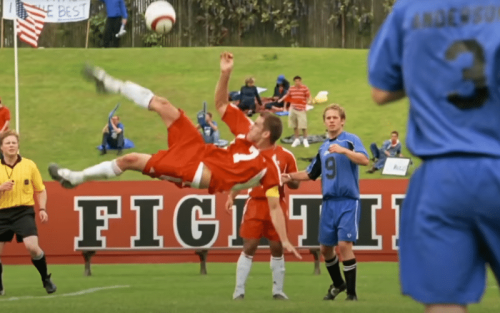
| Bicycle kick | A shot struck with the body in the air and the legs scissoring overhead, played backward over the head. |
| Box | The penalty area. Fouls by the defending team inside it are punished with a penalty kick. |
| Brace | Two goals by one player in a single match. |
| Cap | One appearance for a national team. A player's cap count is the shorthand for international experience. |
| Clean sheet | A match finished without conceding. Credited to the goalkeeper and the defense together. |
| Corner kick | The restart from the corner arc, awarded when a defender last touches the ball over their own goal line. |
| Counter-attack | Breaking forward at speed the moment possession is won, before the opponent can reorganize. |
| Cross | A ball delivered from wide into the penalty area for teammates to attack. |
| Derby | A match between local rivals. The fixture that carries the most weight in a club's season. |
| Dribble | Moving the ball with short controlled touches while keeping it away from opponents. |
| Extra time | Two further periods, usually 15 minutes each, played when a knockout match is level after full time. |
| Formation | How a team arranges its outfield players, written back to front, such as 4-4-2 or 4-3-3. |
| Free kick | The restart awarded after a foul, taken direct at goal or indirect via a teammate. |
| Goal kick | The restart from inside the goal area when the attacking team puts the ball over the goal line. |
| Goalkeeper | The one player allowed to handle the ball inside their own penalty area. Also keeper, or goalie. |
| Hand ball | Deliberately playing the ball with hand or arm, punished with a free kick or a penalty. The goalkeeper is exempt inside their own area. |
| Hat-trick | Three goals by one player in a single match. |
| Header | Playing the ball with the head, whether to clear, to pass or to score. |
| Kick-off | The restart from the center circle that begins each half and follows every goal. |
| Man of the match | The player judged best on the day. Named after the final whistle by broadcasters or officials. |
| Marking | Staying tight to an opponent to deny them the ball or to close them down the moment they get it. |
| Nutmeg | Playing the ball through an opponent's legs and collecting it on the other side. |
| Offside | Being nearer the opponent's goal line than both the ball and the second-to-last defender when a teammate plays the ball forward. |
| Own goal | Putting the ball into your own net, which counts for the other team. |
| Panenka | A penalty chipped softly down the middle as the goalkeeper dives away. Named after Antonín Panenka, who scored one in the 1976 European Championship final. |
| Park the bus | Pulling almost the whole team behind the ball to defend a result, with no intention of attacking. |
| Penalty kick | A free shot from the penalty spot against the goalkeeper alone, awarded for a foul inside the penalty area. |
| Pitch | The field of play. Dimensions vary within the range the laws allow. |
| Pressing | Chasing the ball high up the field as a unit, to win it back close to the opponent's goal. |
| Red card | A sending-off for violent conduct, a serious foul or a second yellow. The team plays on a player short. |
| Referee | The official who applies the laws, manages the game and issues cards, supported by assistants on the touchlines. |
| Screamer | A goal struck from distance with real power, usually into the top corner. |
| Set piece | A rehearsed routine from a dead ball, such as a corner, a free kick or a long throw. |
| Sitter | A chance so easy it should have been scored, and often was not. |
| Stoppage time | The minutes added at the end of each half to cover injuries, substitutions and other delays. |
| Striker | The forward whose main job is scoring, playing on the shoulder of the last defender. |
| Substitution | Replacing a player on the field with one from the bench, within the limit the competition allows. |
| Sweeper | A defender playing behind the back line to clear anything that gets through. Largely replaced by modern zonal systems. |
| Through ball | A pass threaded between defenders into space for a runner to chase. |
| Throw-in | The two-handed restart from behind the touchline after the ball has gone out on the side. |
| Tiki-taka | A possession style built on short passing and constant movement, made famous by Barcelona and the Spanish national team. |
| VAR | Video assistant referee. Officials reviewing footage of goals, penalties, red cards and mistaken identity, who advise the referee on the field. |
| Volley | Striking the ball out of the air before it bounces. |
| Wall | The line of defenders standing together to block part of the goal at a free kick. |
| Wall pass | The one-two: pass to a teammate, run past the defender, take the return in space. |
| Winger | An attacker playing wide, who takes on defenders down the flank and delivers crosses. |
| Woodwork | The frame of the goal, posts and crossbar. A shot off the woodwork is one that hit it and stayed out. |
| Yellow card | A caution for a serious foul or unsporting behavior. Two in one match make a red. |

#1 Nutmeg
A skillful move where a player passes the ball through an opponent’s legs and regains possession. It is a sign of creativity and can be quite embarrassing for the player who gets ‘nutmegged.’
#2 Hat-trick
Achieved when a player scores three goals in a single game. It is a significant feat that highlights a player’s offensive prowess, celebrated by fans and players alike.
#3 Tiki-taka
A style of play characterized by short passing and movement, maintaining possession, and working the ball through various channels. It became famous through the Spanish national team and Barcelona FC’s successful implementations.
#4 Clean sheet
Refers to a game in which the goalkeeper, along with the defense, has not allowed the opposing team to score any goals. It is a testament to a team’s defensive strength and goalkeeping prowess.
#5 Panenka
A cheeky penalty kick technique where the player gently chips the ball into the net as the goalie dives to the side. It is named after Antonín Panenka, who famously used this method in the 1976 UEFA European Championship final.
#6 Derby
A match between two rival teams from the same city or area, often highlighted by intense passion, fervent fan support, and heightened emotions. It is one of the most eagerly anticipated fixtures in a team’s season.
#7 Offside
A violation occurring when a player is positioned closer to the opponent’s goal line than both the ball and the second-to-last opponent (including the goalkeeper) at the moment the ball is passed to them. Offside is intended to prevent players from “goal-hanging” or waiting near the opponent’s goal for a pass.
#8 Wall pass
Also known as a one-two pass, this is a collaborative move where one player passes the ball to a teammate and immediately moves into open space to receive the return pass. The wall pass is effective for breaking through tight defensive lines.
#9 Yellow Card
Issued by the referee to penalize players for serious foul play or unsporting behavior on the soccer field. Receiving two yellow cards in a game leads to a red card and ejection from the match.
#10 Stoppage Time
Additional minutes added to the end of each half to compensate for lost playing time due to injuries, substitutions, or other delays. It keeps the game fair by accounting for interruptions during regular play.
#11 Free Kick
Awarded to a team following a foul by the opposing team, it’s a direct or indirect attempt to score or pass the ball without interference from opponents. It can be a critical moment for creating scoring opportunities.
#12 Penalty Kick
A direct free kick from the penalty spot, awarded when a foul punishable by a free kick occurs within the penalty area. A one-on-one opportunity for the attacking player to score against the goalkeeper.
#13 Red Card
The ultimate sanction by the referee for severe infractions, violent conduct, or receiving a second yellow card. It results in the immediate ejection of the offending player and leaves their team shorthanded.
#14 Set Piece
A planned sequence of play, usually resulting from a free kick, corner kick, or throw-in, where teams execute pre-arranged movements to create scoring opportunities against the opposition’s defense.
#15 Striker
A forward position in soccer, primarily responsible for scoring goals. Strikers are characterized by their ability to finish attacking plays by shooting effectively, quick decision-making in the final third, and constant threat to the opposition’s goal.
#16 Sweeper
A defensive role typically positioned behind the main line of defenders. The sweeper’s job is to clear the ball if opponents break through the defensive line and to organize the back line. This role is less common in modern tactical setups but was once crucial in systems prioritizing robust defense.
#17 Through Ball
A pass threaded between defenders to a teammate in order to advance towards the opponent’s goal. It’s a crucial skill for playmakers, leading to goal-scoring opportunities when executed with precision.
#18 Volley
A technique where a player strikes the ball before it hits the ground. Considered difficult to master, volleys can result in spectacular goals due to the power and unpredictability they often carry.
#19 Winger
A player situated on the sides of the pitch, who specializes in running down the flanks, crossing the ball into the opponent’s penalty area, and assisting or scoring goals. Known for their speed and agility.
#20 Brace
The term used when a player scores two goals in a single game. Though less celebrated than a hat-trick, a brace still signifies a significant contribution to the team’s offensive efforts.
#21 Cap
This refers to an appearance a player makes for their national team. The number of caps a player has is often used as a measure of their experience at the international level.
#22 Dribble
The skill of using short, controlled touches to move the ball along the pitch while avoiding opposition players. Dribbling is essential for maintaining possession and creating offensive plays.
#23 Extra Time
An additional period played at the end of a game if the score is tied and a winner needs to be determined, usually in knockout stages. Extra time consists of two halves, often 15 minutes each.
#24 Goal Kick
A “goal kick” is awarded to the defending team when the ball crosses their goal line without a goal scored and last touched by the attacking team. It’s taken from within the goal area.
#25 Hand Ball
A “hand ball” occurs when a player intentionally touches the ball with their arm or hand, leading to a free-kick or penalty for the opposing team, unless committed by the goalkeeper in their own penalty area.
#26 Marking
“Marking” is the defensive technique where a player shadows and stays close to an opponent to prevent them from getting the ball or to disrupt their play when they do have the ball.
#27 Own Goal
An “own goal” happens when a player accidentally puts the ball into their own net, resulting in a score for the opposing team. This can occur during defensive plays gone awry.
#28 Pitch
The “pitch” is the term for the soccer field where the game is played. Its dimensions can vary but need to conform to regulations set by the governing bodies of soccer.
#29 Referee
In soccer, the referee enforces FIFA’s rules, manages play, and issues disciplinary actions like yellow and red cards. Assisted by linesmen and additional officials, their main goals are player safety, fair play, and smooth game flow.
#30 Substitution
The act of replacing one player on the field with another from the bench. Substitutions are used for various strategic reasons, including introducing fresh legs, adjusting tactics, or replacing injured players. Rules around substitutions dictate how many can be made during a match and under what circumstances they can occur.

FAQ
What is it called when a player scores three goals in a game?
A hat-trick. Two goals in a match is a brace, and both terms are used the same way across every league.
What is another name for a soccer field?
The pitch. It is the standard word in British usage and in most commentary worldwide, while field is more common in American English.
What is it called when a player moves the ball down the field?
Dribbling, if the player is carrying the ball with their own touches. Moving it forward by pass is called playing it out or working it forward, and a pass threaded past defenders into space is a through ball.
What is a nutmeg in soccer?
Playing the ball through an opponent’s legs and picking it up behind them. It is a legitimate way past a defender and mildly humiliating for the player it happens to.
What do wall, volley and offside have in common?
All three are soccer terms. A wall is the line of defenders blocking a free kick, a volley is a strike made before the ball bounces, and offside is the law limiting how far ahead of the ball an attacker may be.
What is a soccer supporter called?
A supporter or a fan. Collectively the crowd of a club is its support, and organized groups of them are known as ultras in many countries.
They divide into the laws (offside, free kick, penalty kick, hand ball), positions (striker, winger, sweeper, goalkeeper) and skills (nutmeg, volley, through ball, dribble). The soccer glossary above covers all of them.
What are some soccer terms for beginners?
“Offside,” “Free kick,” and “Penalty kick” are some soccer terms beginners should start with. They encompass important rules and procedures during a match.
What are some funny soccer terms?
“Nutmeg” and “Panenka” are some funny soccer terms. “Nutmeg” refers to kicking the ball through an opponent’s legs, while “Panenka” is a cheeky penalty kick.
What is a famous soccer phrase?
“Bend it like Beckham,” is a famous soccer phrase, coined from David Beckham’s skillful free-kick bending shots, reflecting the art of curving the ball in soccer.