25 Hiking Outfits for Women

The first proper hill I walked, I wore cotton and it rained. Cotton holds water, water takes heat, and by the descent I was colder than I had been at the summit in the wind. That is the whole lesson of hiking clothing and it takes one bad day to learn it.

Everything else follows from it: a base layer that wicks, a mid layer you can remove, a waterproof shell that actually seals, and trousers rather than leggings if there is any chance of scrambling. Layers you can take off matter more than any single warm garment. The running list and the cold weather edit cover the two lists people ask for next.

A shell with taped seams is the difference between a wet walk and a dangerous one. Our guide to the best sports apparel covers the rest of the kit.

1 out of 25 photos
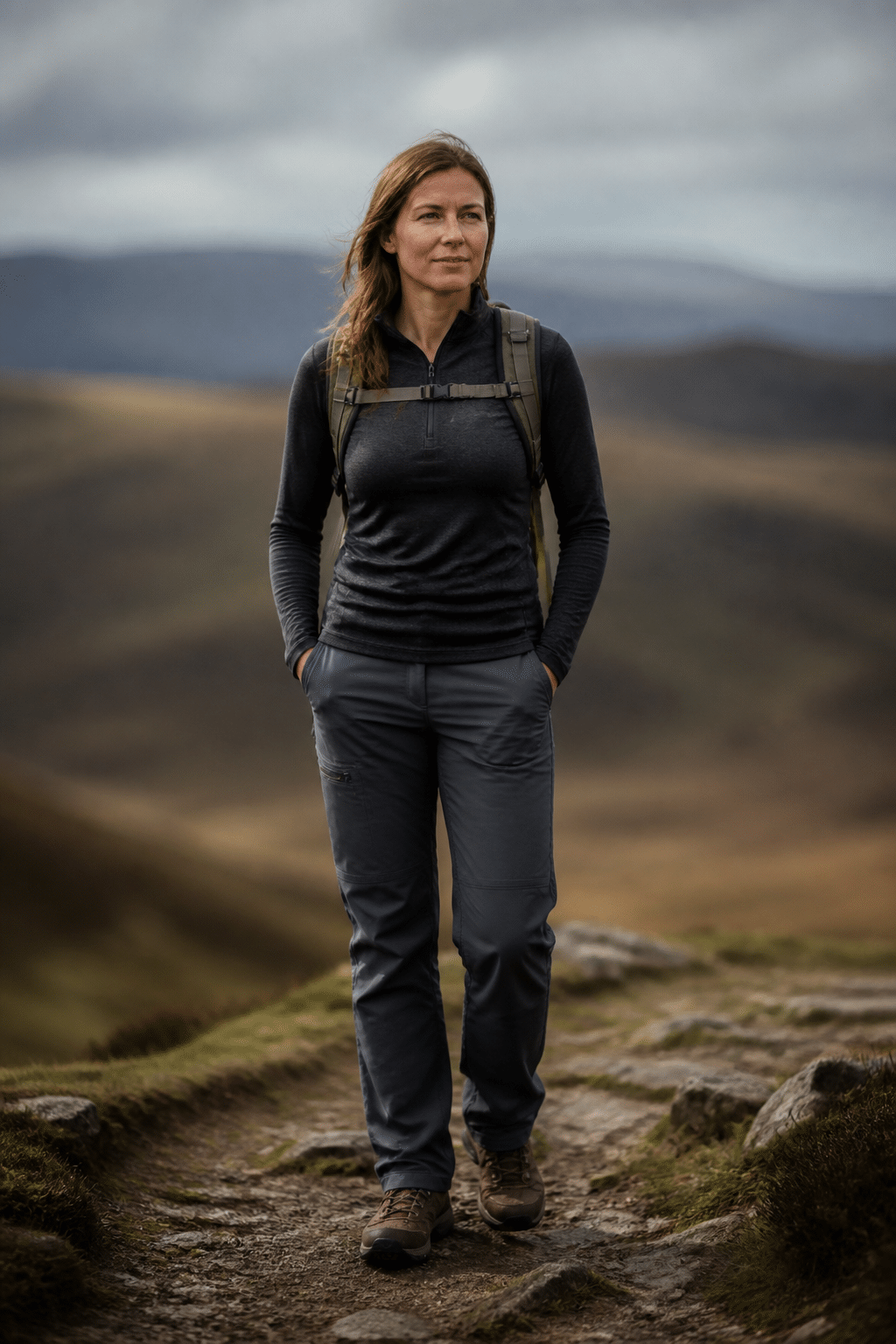
#1: Hiking Trousers with a Base Layer

Hiking trousers with a merino base layer. The most useful two pieces you can own, and merino keeps working when it is damp.
2 out of 25 photos

#2: Fleece over a Long Sleeve

A fleece over a long sleeve base. The mid layer that comes off within twenty minutes of the first climb, every single time.
3 out of 25 photos

#3: Waterproof Shell over Layers

A waterproof shell over a base and a fleece. Taped seams matter more than the brand, and an untaped jacket is a windproof, not a waterproof.
4 out of 25 photos

#4: Leggings with a Longer Tunic

Hiking leggings with a longer tunic top. For a well made path rather than a scramble, and comfortable over a long distance.
5 out of 25 photos

#5: Convertible Trousers with a Tee

Convertible trousers with a technical tee. Unfashionable and genuinely useful when a valley is warm and a ridge is not.
6 out of 25 photos

#6: Navy Shell with Grey Trousers

A navy shell with grey hiking trousers. Neutral, unremarkable and the colours will not date across the ten years a good shell lasts.
7 out of 25 photos

#7: Shorts with Long Socks

Hiking shorts with long socks. For a hot summer walk on a clear path, and the socks handle nettles and ticks both.
8 out of 25 photos

#8: Insulated Jacket over a Fleece

A light insulated jacket over a fleece. The summit layer, worn for twenty minutes at the top and carried the rest of the day.
9 out of 25 photos

#9: Olive Trousers with a Cream Base

Olive trousers with a cream base layer. Warm neutrals, and olive hides the mud that pale trousers announce to everyone.
10 out of 25 photos

#10: Softshell Jacket with Leggings

A softshell jacket with hiking leggings. Breathes far better than a hard shell and it handles everything except sustained rain.
11 out of 25 photos

#11: Merino Base with Trousers and a Gilet

A merino base with trousers and a gilet. Core warmth with the arms free, which suits a steady climb better than a full jacket.
12 out of 25 photos

#12: Bright Shell for Visibility

A bright shell in orange or red. Visibility matters on a hill in poor weather and it matters most if something goes wrong.
13 out of 25 photos

#13: Long Sleeve Sun Top with Trousers

A long sleeve sun top with trousers. Altitude increases sun exposure noticeably and cool air hides it completely until it is too late.
14 out of 25 photos

#14: Black Trousers with a Burgundy Fleece

Black trousers with a burgundy fleece. One colour in the mid layer, which is where colour survives being covered by a shell.
15 out of 25 photos

#15: Waterproof Trousers over Base Layers

Waterproof trousers over base layers. Nobody carries them until the first time they need them, and then they always do.
16 out of 25 photos

#16: Sage Base with Stone Trousers

A sage base layer with stone trousers. Muted, practical and it does not look like technical kit in a village pub afterwards.
17 out of 25 photos

#17: Hat and Gloves with Winter Layers

A warm hat and gloves with winter layers. Extremities go first at altitude and both weigh almost nothing in the pack.
18 out of 25 photos

#18: Grey Leggings with a Waterproof

Grey hiking leggings with a waterproof shell. The lightest arrangement here and the right one for a summer walk with uncertain weather.
19 out of 25 photos

#19: Zip Neck Fleece with Trousers

A zip neck fleece with trousers. The zip is the temperature control on a climb, which is why it beats a crew neck fleece.
20 out of 25 photos

#20: Layered Neutrals for a Long Day

Neutral layers for a full day walk. Three thin layers beat one thick one because you will use all three at different points.
21 out of 25 photos

#21: Navy Fleece with Beige Trousers

A navy fleece with beige trousers. The most common outfit on any hill in Britain and it is common because it works.
22 out of 25 photos

#22: Down Jacket for a Cold Summit

A packable down jacket for a cold summit. Packs to nothing, weighs nothing and it is the layer you are glad of at the top.
23 out of 25 photos

#23: Green Shell with Black Trousers

A green shell with black trousers. Quieter than the bright options and better suited to a low level walk than an exposed ridge.
24 out of 25 photos

#24: Base Layer with a Buff and Trousers

A base layer, a buff and trousers. The buff does five jobs, weighs nothing, and it is the cheapest useful thing in the pack.
25 out of 25 photos

#25: The Three Layer System

Merino base, fleece mid layer, waterproof shell, plus trousers and a hat. This is the whole system and everything else is a variation.