Cold golf is not really about temperature. It is about wind, wet grass and the fact that you stand still for four minutes at a time and then swing hard. Dressing for the standing still is what most people get wrong, and then they overheat by the fourth hole.
The system that works is three thin layers instead of one thick one. A base that moves sweat, a mid layer that traps air, and a shell that blocks wind. Every one of them has to let the shoulder turn, which rules out most of the bulky things that look warmest on the rail. Extremities matter more than the torso: a hat, a glove for the off hand and a spare pair of socks change more than another jumper ever will. The autumn list runs on the same layering logic, and the rain edit deals with the wet version.
The one piece worth paying for is the shell, because a cheap one does not breathe and you end up wet from the inside. Our guide to the best golf apparel covers what holds up.
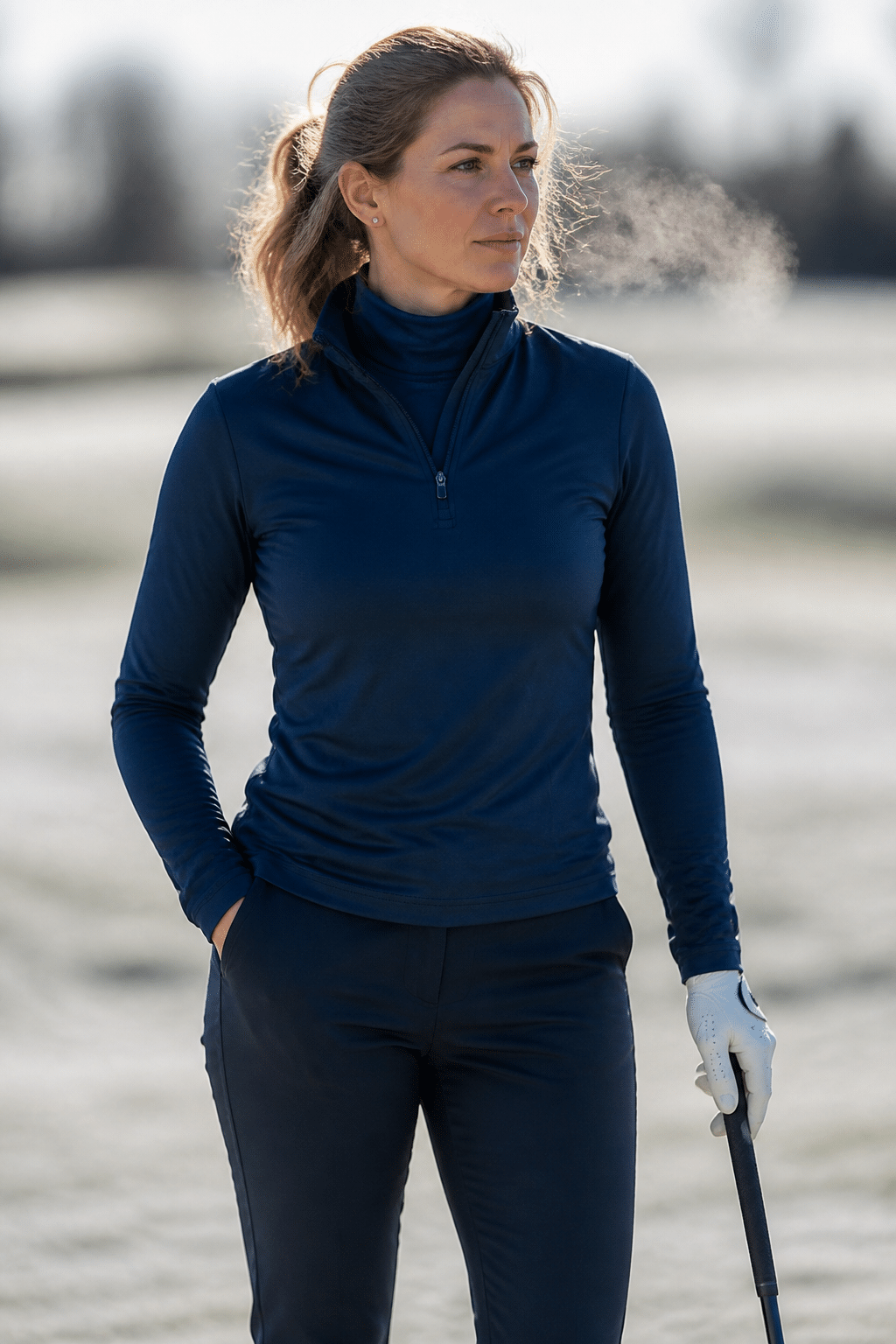
A thin navy base under a quarter zip. This is the foundation of every outfit here: a base that moves sweat away, then a zip you can open at the throat instead of stopping to change.
Fleece lined black leggings with a long line vest. Leggings are warmer than any trouser at the same weight, and the vest keeps the core warm with the shoulders completely free.
A fine gauge cream sweater over navy trousers. Fine gauge rather than chunky: a thick knit binds across the back at the top of the swing and you will feel it every time.
A lightly padded gilet over a long sleeve. The gilet is the single most useful cold weather golf garment there is, and the padding should be thin enough to crush in one hand.
A brushed grey fleece over black trousers. Fleece traps more air per gram than anything else, so it is the mid layer to reach for when the shell is going over the top anyway.
A light waterproof shell over a base and mid layer. Look for articulated sleeves, because a shell cut straight will pull at the shoulder and shorten your backswing without you noticing.
A thin burgundy roll neck with camel trousers. The roll neck covers the throat, which is where heat leaves fastest, and it looks far better than a scarf that has to come off to swing.
A windproof jacket over fleece lined leggings. Wind is what turns eight degrees into four, and a windproof layer does more for comfort than any amount of extra insulation.
Cream base, camel mid, cream shell. Tonal layering means the pieces you take off do not clash with the ones you keep on, which sounds trivial until the fourth hole.
A thermal lined skort over opaque tights. The combination that lets you keep the skort you like into November, and it is warmer than most trousers because there are two layers on the thigh.
An olive puffer vest over a grey base. Down or synthetic both work; what matters is that the collar comes high enough to cover the back of the neck when you look down at the ball.
A charcoal sweater with a collar showing underneath. Almost every club that requires a collar accepts one peeking out of a jumper, which saves wearing a polo you cannot feel anyway.
Navy waterproof trousers with a bright top. Rain trousers are worth owning even if it does not rain, because wet grass soaks a normal trouser to the knee in three holes.
A beanie with a base layer and shell. A quarter of your heat leaves through your head, and a hat is the cheapest, lightest and most effective thing in the entire bag.
A teal quarter zip over black trousers. Colour matters more in winter, when the course is brown and everyone else is in black, and teal is the one that lifts a grey day.
A merino base layer under a normal polo. Merino is the one fabric that stays warm when it is damp, which is exactly the situation you end up in after nine holes of walking.
A heavier cream cardigan over a long sleeve. Cardigans win over jumpers in golf for one reason: you can take one off without pulling it over a visor and a ponytail.
Black base, black trousers, one bright shell. The shell is the piece that gets seen and the piece that gets photographed, so it is the one place a strong colour pays off.
Thermal top with tapered grey joggers. For a winter range session rather than a round, and tapered because a wide leg drags through wet grass and stays wet.
A navy vest over a striped long sleeve. The stripe does the work visually so the vest can stay plain, which is what you want from a piece you will wear thirty times a winter.
A camel jacket cut like a coat for before and after. Not for playing in, and it is worth having something in the boot that is not technical for the two hours around the round.
Fleece lined trousers with a thin base underneath. Two layers on the leg is what actually keeps you warm below the waist, and one thick trouser never does the same job.
A mustard mid layer under a navy shell. The mid layer is the one nobody sees for most of the round and then sees all at once at the turn, which is an argument for colour.
A light quilted jacket over straight leg trousers. Quilting adds warmth without much bulk at the shoulder, which is the compromise every cold weather golf jacket is trying to make.
Base, mid, shell, hat and gloves, all in navy and grey. The complete system in one colour family, so anything can be worn with anything and nothing has to be decided at seven in the morning.