


Water polo rules explained: players and positions, the shot clock, ordinary and exclusion fouls, penalties, the 2 and 6 meter lines and game length.
Water polo is often called the toughest team sport in the world. Players swim several kilometers in a game, may not touch the bottom of the pool, and wrestle for position under the surface where the referees can only see half of what happens. On top of the water, the game follows clear rules about fouls, exclusions and the shot clock.
This guide explains them in the order you see them in a game: the pool, the players, scoring, the shot clock, the three kinds of fouls and how a game is decided. It follows the water polo rules of World Aquatics, the international federation, and points out where US high school and college games differ.
Jump to:
- Water Polo Rules in 60 Seconds
- The Pool and the Lines
- Players and Ball Handling
- Scoring and the Shot Clock
- Ordinary Fouls
- Exclusion Fouls
- Penalty Throws
- Game Length, Timeouts and Ties
- International vs US High School and College
- Tips for Watching Your First Game

Water Polo Rules in 60 Seconds
- Seven players per side in the water: six field players and a goalkeeper.
- One hand only. Field players may hold the ball with only one hand at a time and may not touch the bottom.
- Shoot within the shot clock. An attack has a limited time to take a shot.
- Fouls lead to free throws or exclusions. A serious foul sends a player out for 18 seconds of playing time.
- Four quarters of 8 minutes, running time only while the ball is in play.
The Pool and the Lines
Under the current World Aquatics rules, the field of play is 25 meters between the goal lines and 20 meters wide, and the water has to be at least 2 meters deep. Many US high school and college pools are smaller. Colored marks on the side show the goal line, the 2 meter line, the 6 meter line, the 5 meter penalty line and halfway.
- 2 meter line: an attacker may not be inside it without the ball. Being there ahead of the ball is offside.
- 5 meter line: the spot for penalty throws.
- 6 meter line: a free throw awarded outside it may be shot directly at goal.
Our comparison of a swimming pool and a water polo pool shows how much bigger and deeper the water polo field is.
The field size, the 2, 5 and 6 meter marks, the depth and the goals are listed in our guide to water polo pool dimensions.
Players and Ball Handling
Each team has seven players in the water and up to six substitutes. Field players may only use one hand to hold or throw the ball. They may swim with the ball, push it ahead of them, and play it with any part of the body except a clenched fist. Holding the ball under water while tackled is a turnover. The goalkeeper may use both hands inside the team’s own half.
Scoring and the Shot Clock
A goal is scored when the whole ball crosses the goal line between the posts and under the crossbar, and every goal counts one. Each attack has 28 seconds to shoot. After an exclusion foul or a corner throw, the attacking team gets at least 18 seconds, or the time still left on the clock if that is more. If the shot clock runs out, the ball goes to the other team.
Ordinary Fouls
Most whistles in water polo are ordinary fouls. They lead to a free throw for the other team, which must be taken without delay. Typical ordinary fouls:
- pushing off from an opponent or touching the bottom,
- holding the ball under water when tackled,
- impeding an opponent who does not have the ball,
- touching the ball with both hands, for a field player,
- being inside the 2 meter area ahead of the ball,
- wasting time.
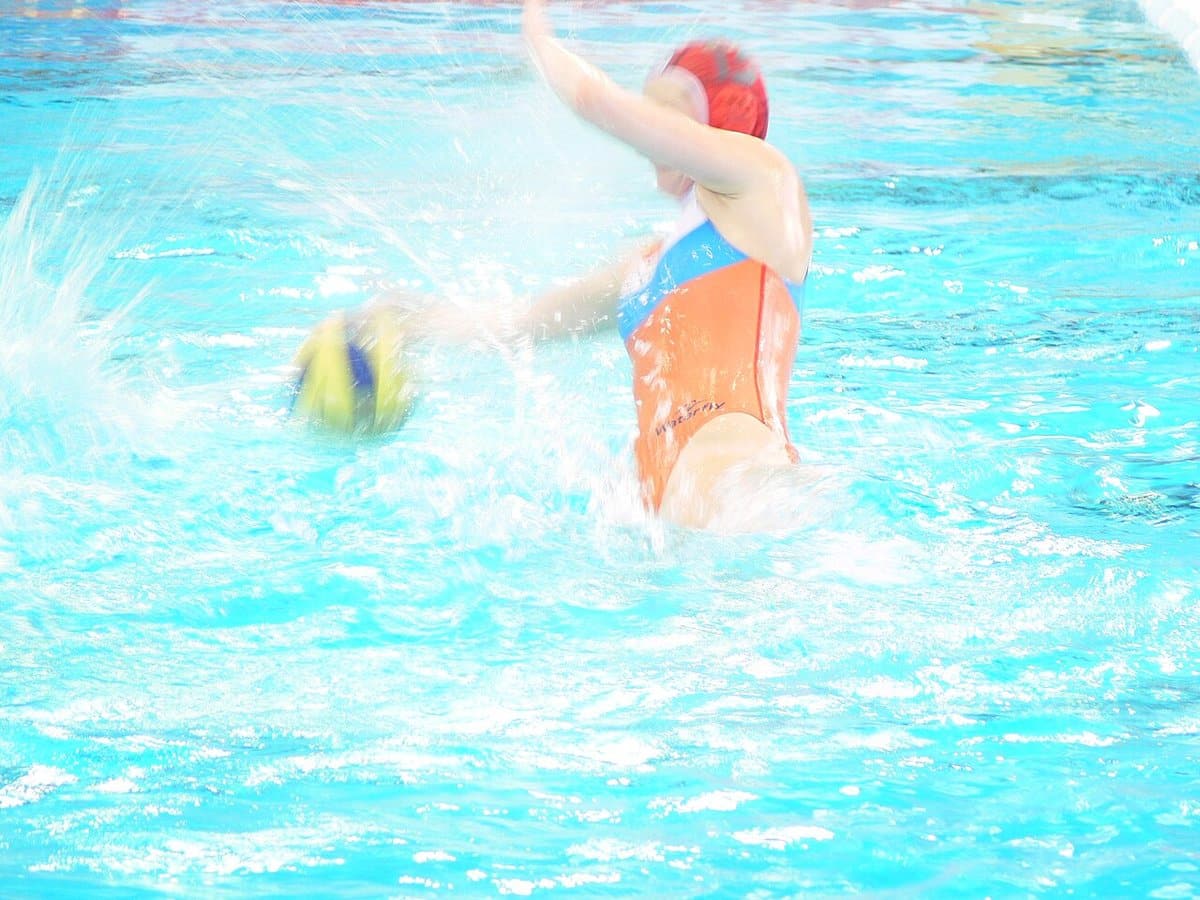
Exclusion Fouls
More serious fouls send the offending player to the re-entry area near the player’s own goal for 18 seconds of playing time, and the team plays one short. The excluded player may return earlier when the team regains the ball or a goal is scored. US college and high school games still use 20 seconds. A player with three personal fouls, counting exclusions and penalties, must leave the game for good and can be replaced.
| Exclusion foul | Example |
|---|---|
| Holding, sinking or pulling back | Holding an opponent who does not have the ball |
| Interfering with a free throw | Blocking or splashing the player taking the throw |
| Splashing | Splashing water in an opponent’s face on purpose |
| Misconduct | Disrespect toward the referees. The player is out for the game, a substitute may enter after the normal exclusion time |
| Violent action | Striking or kicking with intent, ejection and a penalty, the team plays short for four minutes |
Penalty Throws
A penalty throw is awarded when a defender commits a foul inside the 6 meter area that prevents a probable goal. The shooter takes it from the 5 meter line with only the goalkeeper to beat, in one continuous motion after the referee’s whistle.
Game Length, Timeouts and Ties
International games have four quarters of 8 minutes of running time, with the clock stopped whenever the ball is out of play. Each team has two timeouts per game. If a game must have a winner, a tie after four quarters goes straight to a penalty shootout, five shooters per team and then sudden death.
International vs US High School and College
| Rule | World Aquatics | NCAA | US high school |
|---|---|---|---|
| Quarter length | 8 min | 8 min | Shorter, set by state rules |
| Shot clock | 28 s | 30 s | Set by state rules |
| Exclusion time | 18 s | 20 s | 20 s |
| Personal fouls before leaving | 3 | 3 | 3 |
| Ties | Penalty shootout | Overtime, then shootout | Overtime, varies by state |
Tips for Watching Your First Game
- Watch the center forward in front of the goal. Most exclusions are drawn there.
- After an exclusion, count the attackers. A six on five power play is the best chance to score.
- Listen to the whistle. One short whistle is an ordinary foul, a long whistle plus a signal is an exclusion.
- Learn some water polo terms like eggbeater, hole set and kick out.
More Reading
- Water Polo positions explained
- Water Polo lingo and slang
- Water Polo equipment list
- History of water polo
- Swimming pool vs water polo pool
- Common water polo injuries
- Water Polo quiz

FAQ
What are the basic rules of water polo?
Two teams of seven try to throw the ball into the other team’s goal. Field players may hold the ball with one hand only and may not touch the bottom, each attack has a shot clock, and serious fouls exclude a player for a short time.
Can you touch the bottom in water polo?
No. Standing on or pushing off the bottom is a foul. Players tread water the whole game.
How long is a water polo game?
Four quarters of 8 minutes of running time in international play, which usually takes about an hour.
How many players are on a water polo team?
Seven in the water, six field players and a goalkeeper, plus up to six substitutes.
What is an exclusion in water polo?
A serious foul that sends the player out for 18 seconds of playing time in international play, 20 in US college and high school games, so the team plays one short.
How many fouls before you are out in water polo?
Three personal fouls, counting exclusions and penalties, and the player must leave the game.
What is the shot clock in water polo?
28 seconds per attack in international play, with at least 18 seconds left after an exclusion. NCAA games use 30 seconds.
Can the goalie use two hands in water polo?
Yes. The goalkeeper is the only player who may touch the ball with both hands.


No comments yet
What's your take?
What's your opinion, or think we got something wrong? Tell us and other readers.
Our editors read every comment.