

Ultimate Frisbee rules explained: scoring, the pull, no running with the disc, stall count, turnovers, fouls and Spirit of the Game, plus pro and mixed play.
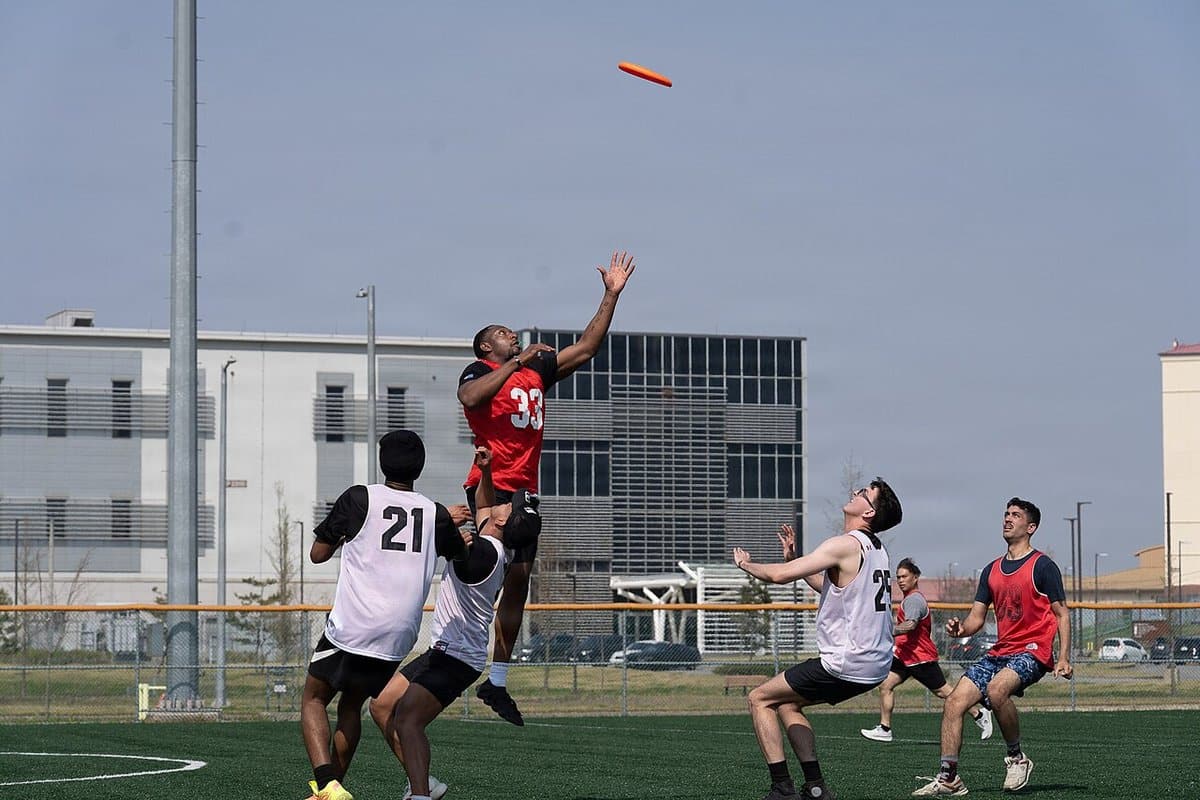
Ultimate mixes the passing of football with the flow of soccer and basketball. Two teams of seven move a flying disc up the field by throwing it to each other, and a point is scored every time a player catches the disc in the end zone they are attacking.
What makes ultimate unusual is that most games have no referees. Players call their own fouls, guided by a principle called Spirit of the Game. This guide explains the rules in the order they come up: the field, the pull, throwing and catching, the stall count, turnovers, fouls and how games are scored. It follows the USA Ultimate and WFDF rules, with notes on mixed and professional play.
Jump to:
- Ultimate Frisbee Rules in 60 Seconds
- The Field
- Starting a Point: The Pull
- Throwing, Catching and the Pivot
- The Mark and the Stall Count
- Turnovers
- Fouls and Spirit of the Game
- Scoring, Halftime and Game Length
- Club vs College vs Pro vs Mixed
- Tips for Your First Game

Ultimate Frisbee Rules in 60 Seconds
- Seven players per side on a rectangular field with an end zone at each end.
- Catch it in the end zone. A completed pass into the end zone you are attacking scores one point.
- No running with the disc. The thrower has to stop and keep a pivot foot, like in basketball.
- Ten seconds to throw. The defender marking the thrower counts out loud, and the disc has to be gone before ten.
- Any incompletion is a turnover. A drop, an interception, a throw out of bounds or a disc hitting the ground gives the other team possession on the spot.
The Field
Under USA Ultimate rules, the playing field proper is 70 yards long and 40 yards wide, with an end zone 20 yards deep at each end. WFDF uses metric measurements of the same idea: a central zone 64 by 37 meters with end zones 18 meters deep. Many pickup games simply use a soccer field and mark the end zones with cones.
The field, the end zones and the brick marks are listed in our guide to ultimate frisbee field dimensions.
Starting a Point: The Pull
Every point begins with both teams lined up on their own end zone lines. The defending team throws the disc deep to the offense, which is called the pull, a lot like a kickoff. The offense may catch the pull or let it land. If the pull goes out of bounds without being touched, the offense can take the disc at the spot where it crossed the sideline or at the brick mark, a point inside the field in front of the end zone, by calling “brick”.
Throwing, Catching and the Pivot
- A player who catches the disc while running has to slow down and stop as quickly as possible. Taking extra steps to gain ground is a travel.
- Once stopped, the thrower must keep one foot, the pivot foot, in place until the disc is released.
- Throws can go in any direction, forward, sideways or backward.
- A player may not hand the disc to a teammate. It has to fly through the air.
- A player may not throw the disc to himself or herself. Tipping it to a teammate is allowed.
The Mark and the Stall Count
One defender, the marker, guards the thrower. The marker must stay at least one disc diameter away, may not touch the thrower and may not block the thrower’s view or throwing arm with their body. Only one defender may guard the thrower at a time, so double teams are not allowed.
The marker counts “stalling one, stalling two” up to ten. If the disc has not been released by the time the marker says “ten”, the offense loses possession. That keeps the game moving and forces throwers to make quick decisions.
Turnovers
| Turnover | What happens |
|---|---|
| Drop or incompletion | The disc touches the ground before it is caught |
| Interception or block | A defender catches the disc or knocks it down |
| Out of bounds | The disc lands out, or a receiver catches it with a foot out of bounds |
| Stall | The thrower still holds the disc at the end of the stall count |
| Hand-over or self pass | The disc is handed to a teammate or thrown to oneself |
After a turnover, the team that now has the disc puts it in play from the spot where it stopped or went out, and the teams switch roles immediately. There is no break between offense and defense.
Fouls and Spirit of the Game
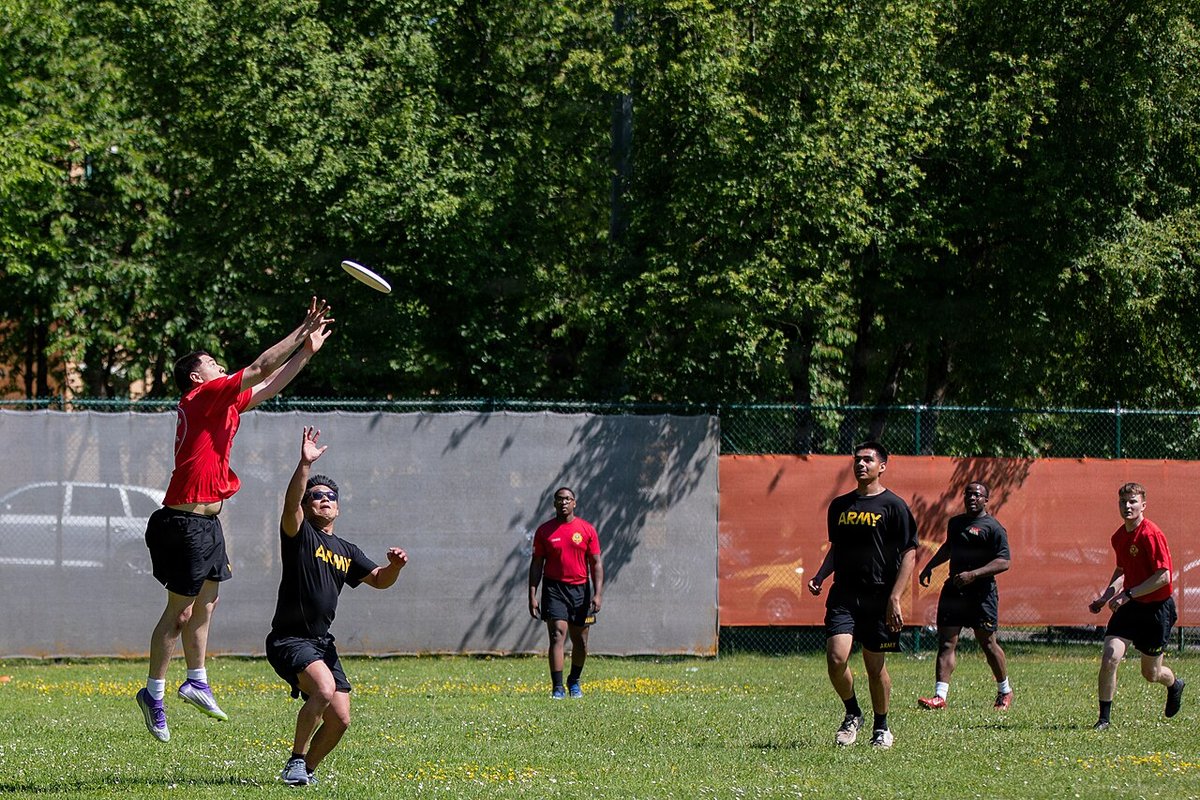
Ultimate is a non-contact sport. Pushing, holding, tripping or hitting a player’s arm while they throw is a foul. When a player calls a foul, play stops. If the opponent agrees, the fouled player gets the disc, or keeps it. If the opponent contests the call, the disc goes back to the thrower, and play restarts as if the pass had not happened.
Spirit of the Game is the idea behind self officiating: players know the rules, call fouls honestly, never foul on purpose and treat opponents with respect. Many tournaments give a spirit award, and at the top levels of USA Ultimate, observers can rule on disputes and on line calls.
Scoring, Halftime and Game Length
A standard game is played to 15 points, and halftime comes when the first team reaches 8. Tournaments add time caps, after which the target score is lowered so the game ends. After every point, the teams switch directions, and the team that just scored pulls to the other team.
Club vs College vs Pro vs Mixed
| Rule | USA Ultimate club and college | UFA pro league | Mixed division |
|---|---|---|---|
| Players | 7 v 7 | 7 v 7 | 7 v 7, ratio of 4 to 3 |
| Field | 70 x 40 yd, 20 yd end zones | Football field size, 80 x 53 1/3 yd, 20 yd end zones | Same as club |
| Game length | To 15 points with time caps | Four timed quarters | To 15 points with time caps |
| Officiating | Self officiated, observers at top events | Referees | Self officiated |
| Stall count | 10, counted out loud by the marker | 7, kept silently by an official | 10 |
In mixed ultimate, the gender ratio on the field changes during the game, either by a fixed pattern or by the offense choosing, depending on the rules in use.
Tips for Your First Game
- Learn a backhand throw first. It is the easiest to control.
- On offense, keep moving and run into open space. Standing still makes you easy to guard.
- On defense, stay between your player and the end zone, and do not try to block a throw by reaching over the thrower.
- Pick up some ultimate terms like hammer, layout and callahan.
More Reading
- Ultimate Frisbee positions explained
- Ultimate Frisbee lingo and slang
- Ultimate Frisbee equipment list
- History of ultimate frisbee
- Common ultimate frisbee injuries
- Ultimate Frisbee quiz

FAQ
What are the basic rules of Ultimate Frisbee?
Two teams of seven pass a disc up the field and score a point by catching it in the end zone. Players may not run with the disc, have ten seconds to throw, and any incomplete pass is a turnover.
Can you run with the frisbee in ultimate?
No. A player who catches the disc has to stop and keep a pivot foot in place until throwing it.
How long is an ultimate frisbee game?
Usually to 15 points, with halftime at 8. Tournaments add time caps, and the pro league uses four timed quarters.
What is a stall count in ultimate?
The marker counts to ten out loud. If the thrower has not released the disc by ten, it is a turnover.
Are there referees in ultimate?
Mostly not. Players call their own fouls under Spirit of the Game. Top events use observers, and the professional league uses referees.
Is ultimate frisbee a contact sport?
No. Ultimate is non-contact, and contact that affects play is a foul.
What is the pull in ultimate?
The throw that starts every point. The defending team throws the disc deep to the offense, similar to a kickoff.
How many players are on an ultimate team?
Seven on the field per side. Rosters are larger, and players substitute between points.



No comments yet
What's your take?
What's your opinion, or think we got something wrong? Tell us and other readers.
Our editors read every comment.