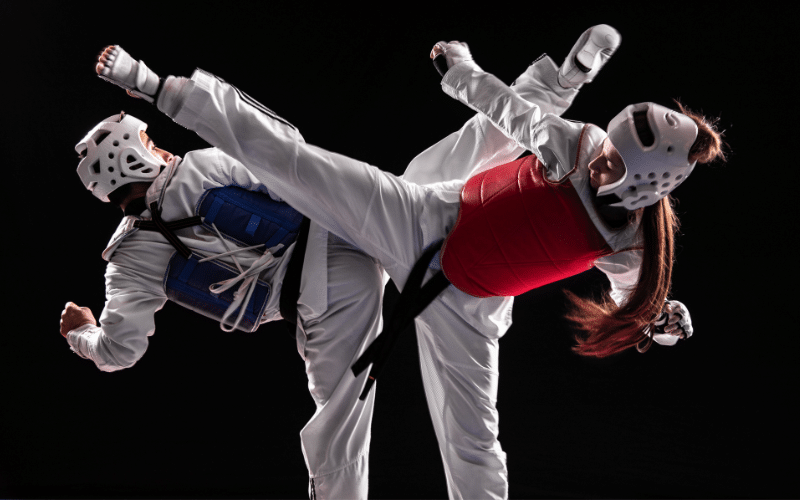
Taekwondo equipment list with all 16 items: the dobok, rank belt, full sparring gear with headguard and chest protector, foot pads and a towel.
Six items belong to the student, starting with the dobok and the rank belt and ending with the sparring set that has to be worn before anyone is allowed to make contact. The school adds five, from kick paddles to the first aid kit, and the dojang itself supplies the last five, above all the matted floor. The table below lists all sixteen with what each one does and who pays for it.
- What equipment do you need for taekwondo?
- A dobok and a rank belt for the first months, then the sparring set once contact work starts. Everything else, the mats, the mirrors and the kick paddles, belongs to the school.
- What protective equipment is used in taekwondo sparring?
- Headguard, chest protector, forearm guards, shin guards, hand protectors, foot protectors, a groin guard and a mouthguard. Full sets are sold as one boxed kit because federations expect all of it at once.
- What is the taekwondo uniform called?
- The dobok, a jacket and pants with a V-neck collar, worn with the belt of the current rank. A white collar marks a color belt, a black collar marks a black belt.
- What equipment do you need to train kicks?
- Handheld kick paddles for the coach, a wall mounted or freestanding target for solo work, and foot protectors so neither side gets hurt when the kick lands.

Taekwondo Equipment at a Glance
A first lesson needs the dobok and nothing more. The protective gear follows once the school clears the student for sparring, and the rest of the list is what the dojang already owns.
| Item | What it does | Who supplies it |
|---|---|---|
| Doboktaekwondo uniform | Jacket and pants cut wide enough for a head-height kick | Player |
| Beltaccording to rank | Shows the current grade and holds the jacket closed | Player |
| Sparring gearheadguard, chest protector, guards, gloves | Absorbs the contact, required before anyone spars | Player |
| Foot pads | Padding over instep and ankle, protects both kicker and partner | Player |
| Water bottle | Sessions run long and warm, drinking happens between rounds | Player |
| Towel | Keeps sweat off the mat, where it turns into a slipping hazard | Player |
| Target pads | A moving target for kicks, held by the coach at any height | Coach |
| Electronic scoring system | Registers valid contact through sensors in hogu and socks | Coach |
| First aid kit | Bruises, jammed toes and split lips are the everyday injuries | Coach |
| Instructional materials | Books and video on poomsae, terminology and grading standards | Coach |
| Team uniforms | One club look for competitions and demonstrations | Coach |
| Training dojangthe hall | The training hall itself, with room for lines of students | Facility |
| Matsmartial arts flooring | Cushions falls and takes the load off knees and ankles | Facility |
| Mirrors | Lets students check stance and form while they hold it | Facility |
| Seating areafor spectators | Space for parents and for judges at a grading | Facility |
| Equipment storage | Racks for pads and gear so the floor stays clear | Facility |
Equipment for Taekwondo Athletes
#1 Dobok (Taekwondo Uniform)
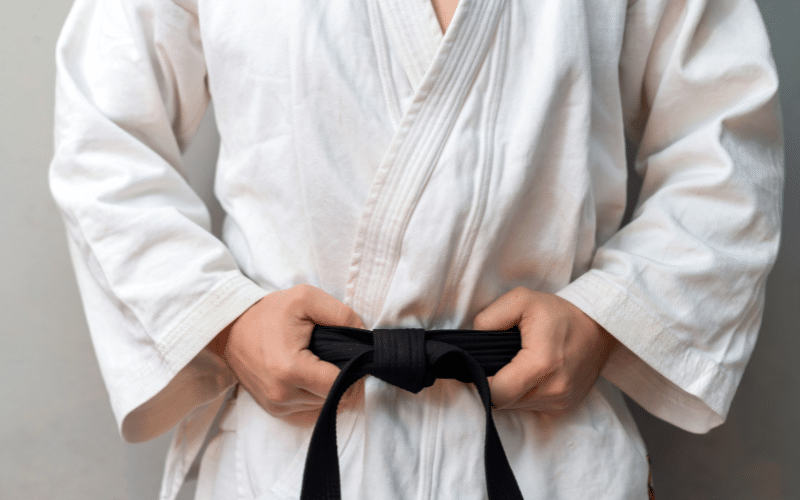
The dobok is the traditional Taekwondo uniform, symbolizing the art's discipline and culture. It facilitates freedom of movement for a range of kicks and strikes and is designed to withstand rigorous training, making it an essential garment for all practitioners.
Elite Classic Taekwondo Dobok
White collar, belt included
- Contentsjacket, pants and a white belt
- Fabricribbed weave, 35 percent cotton and 65 percent polyester
- Collarclassic white collar for color belt grades
- Pantsdrawstring and elastic waist, gusseted crotch and full inseam panel
- Cutbuilt for range of motion on high kicks
#2 Belt
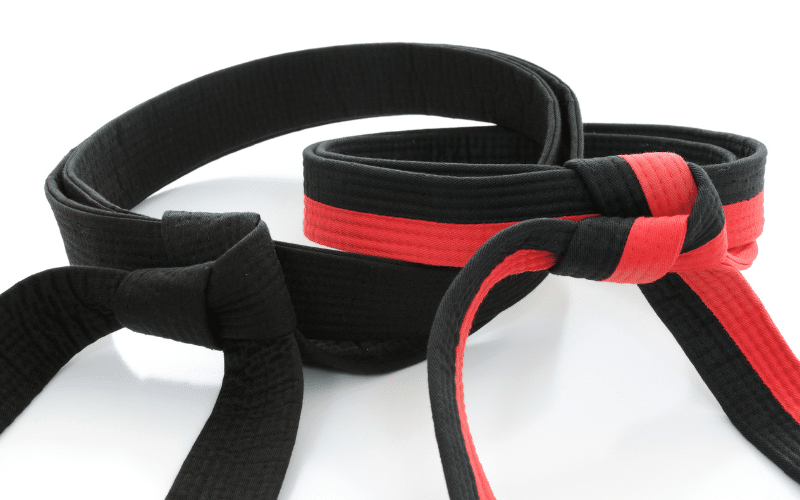
Belts in Taekwondo signify a practitioner's rank and progression through the martial art. Each color represents a different level of knowledge and skill, serving as a motivational tool and a method for instructors to quickly assess the experience of their students.
Twister Fight Wear Rank Belt
Cotton, nine rows of stitching
- Materialwoven cotton
- Width1.5 inches, the standard for martial arts grades
- Stitching9 rows plus a black patch at the tip
- Colorssold in the full range of grade colors
- Carecolor holds through repeated washing
#3 Sparring Gear

Sparring gear is integral to safely practicing Taekwondo's combative elements. It includes a headguard, chest protector, forearm guards, shin guards, gloves, a mouthguard, and a groin guard, all of which help prevent injuries during sparring by absorbing impacts and protecting vital areas of the body.
HXRROO Sparring Gear Set
Thirteen pieces in one box
- Contentshead guard, removable face mask, chest protector, 2 forearm guards, 2 shin guards, groin guard, 2 hand guards, 2 foot guards and a backpack
- Headgearthree quarter inch vinyl covered NBR foam
- Maskremovable ABS, light and clear
- Groinhard plastic inner shell
- Ventilationvents through the armor to release heat
#4 Foot Pads
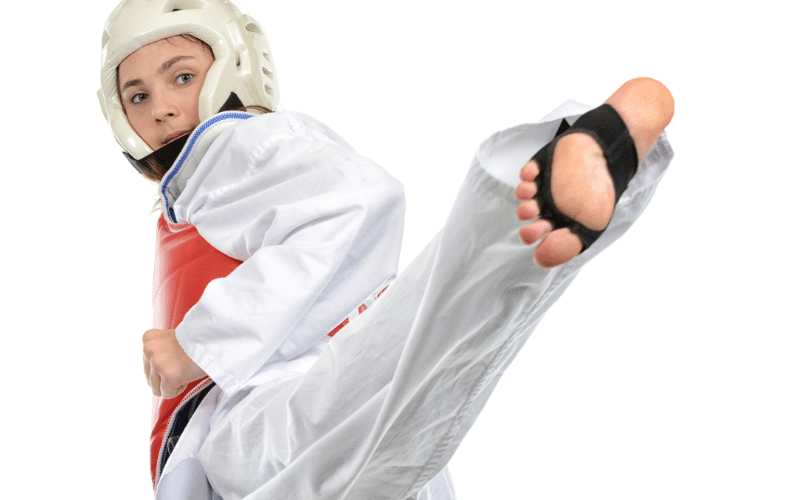
Foot pads are essential for protecting the feet during kicks in both practice and competition. They cushion impact and reduce the risk of injury to the practitioner's feet as well as their sparring partner, making them a vital piece of protective equipment.
LangRay Taekwondo Foot Protector
EVA padding over the instep
- PaddingEVA pads over instep and toes
- Closurevelcro with a double fixing point around the ankle
- Uppersynthetic leather, wear resistant
- Ventilationmesh panels and an open sole
- Fitadjustable, elastic strap over the arch
#5 Water Bottle
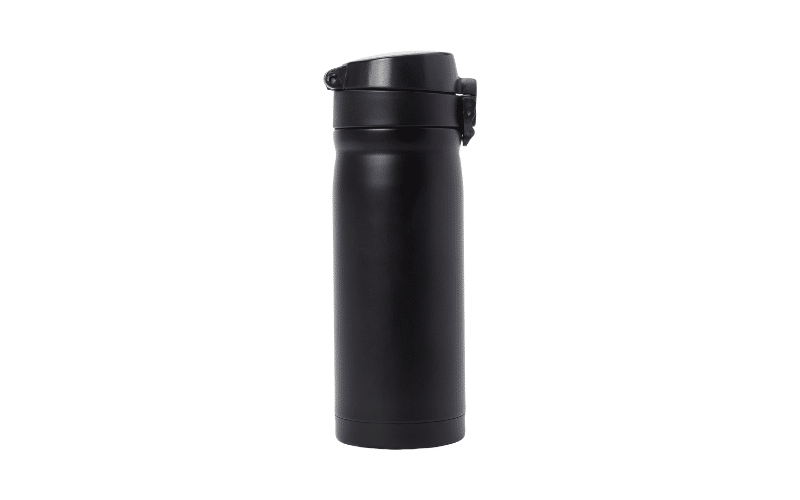
Staying hydrated is fundamental for Taekwondo practitioners, who must maintain endurance and concentration through long training sessions. A personal water bottle ensures that water is readily available, supporting hydration, performance, and overall health.
#6 Towel
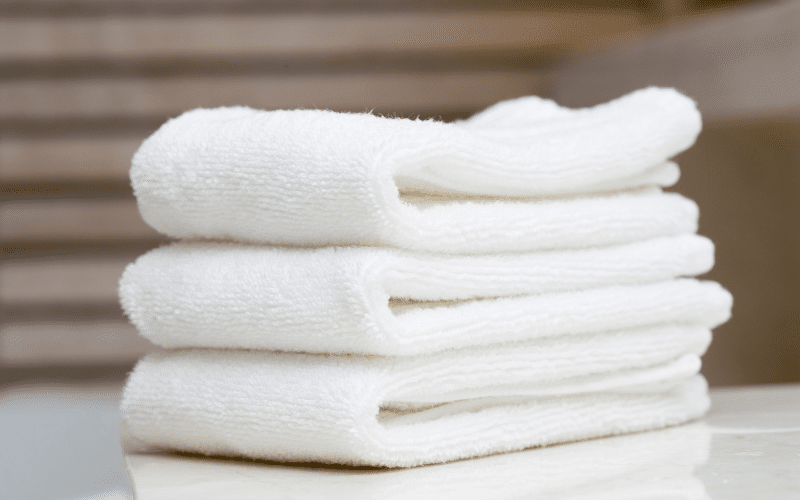
A towel is a simple yet essential item for Taekwondo practitioners. It serves multiple purposes, from wiping off sweat to keeping the practitioner dry and comfortable, ultimately allowing them to maintain focus and prevent slipping due to excess moisture.
Equipment for Coaches and Teams
#1 Target Pads
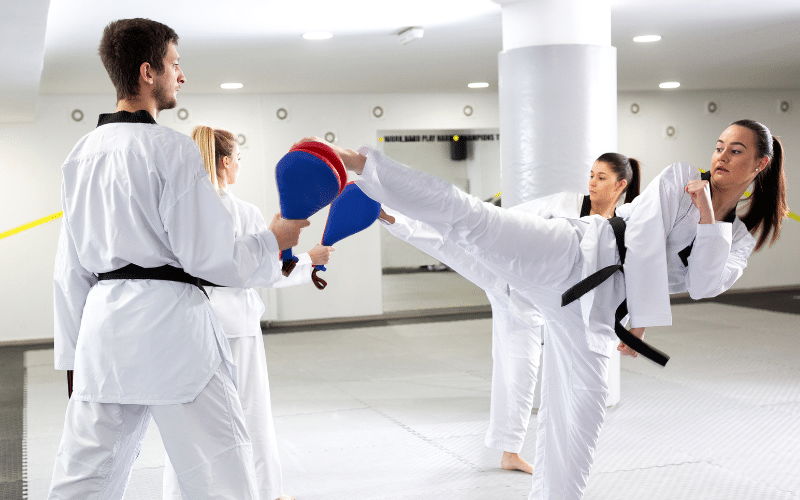
Target pads are crucial for honing accuracy, speed, and power in striking techniques. They allow practitioners to practice hitting a moving target safely and give coaches a tool to help develop their students' striking abilities effectively.
Nicunom Taekwondo Kick Pads
Two paddles, loud report
- Contents2 kick pads
- Size15 by 7.5 by 2.5 inches each
- OutsidePU leather
- Insidehigh elasticity compression sponge with a board
- Handlingwrist strap so the pad is not knocked away
- Feedbackthe board gives a loud crack on a clean strike
#2 Electronic Scoring System
An electronic scoring system provides accurate, real-time scoring for sparring competitions. It enhances the fairness and excitement of the matches, ensures transparency in scoring, and assists in training by providing immediate feedback to practitioners and coaches.
#3 First Aid Kit

In any sport, a first aid kit is a must-have for coaches and teams to address minor injuries immediately. It's essential for handling accidents promptly and ensuring the safety and well-being of all participants, allowing the team to respond effectively to any medical situations.
#4 Instructional Materials

Instructional materials, such as books and videos, are an invaluable resource for coaches and teams. They serve as reference guides for technique, strategy, and the philosophical aspects of Taekwondo, contributing to the continuous learning and improvement of practitioners.
#5 Team Uniforms

Team uniforms promote unity and team identity, making them essential for teams participating in competitions. They foster a sense of belonging and pride among team members, as well as making them easily identifiable in the eyes of spectators and judges.
Equipment for Taekwondo Facilities
#1 Training Dojang (Hall)

A dojang, the Korean term for a training hall, is a designated space for practicing Taekwondo. It is the heart of training, providing a safe and appropriate environment for learning techniques, forms, and sparring, essential to the art of Taekwondo.
#2 Mats

Martial arts mats offer a safe training surface that protects practitioners from injury. They provide cushioning for falls and reduce the impact on joints during rigorous training, making them an indispensable feature of any Taekwondo facility.
Meister Interlocking Foam Mats
40 square feet, 1.5 inches thick
- Contents10 tiles covering 40 square feet
- Tile size24 by 24 inches, 4 square feet each
- Thickness1.5 inches EVA foam
- Surfaceanti-slip T-pattern, waterproof and wipeable
- Edgesborder pieces included for a finished floor
- Materialnon-recycled, non-toxic EVA
#3 Mirrors
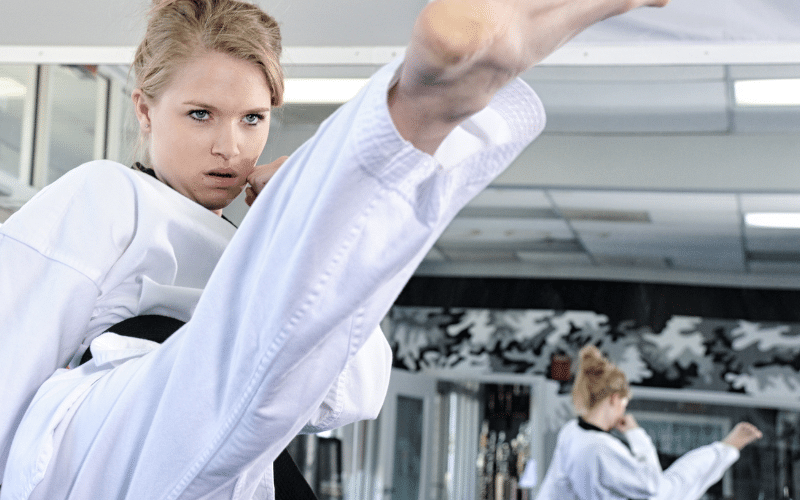
Mirrors are a critical tool for self-assessment and correction in Taekwondo. They allow practitioners to visually monitor their form and technique in real-time, supporting proper body mechanics and helping prevent the development of incorrect habits.
#4 Seating Area for Spectators
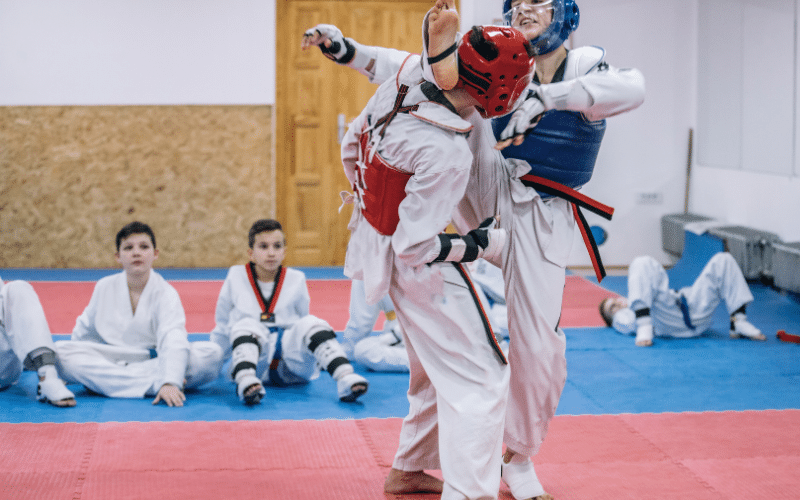
A seating area for spectators is important for hosting competitions and allowing family and friends to view practice sessions. It encourages a supportive environment, enables public engagement, and provides a space for audiences to appreciate the skill and discipline of the practitioners.
#5 Equipment Storage
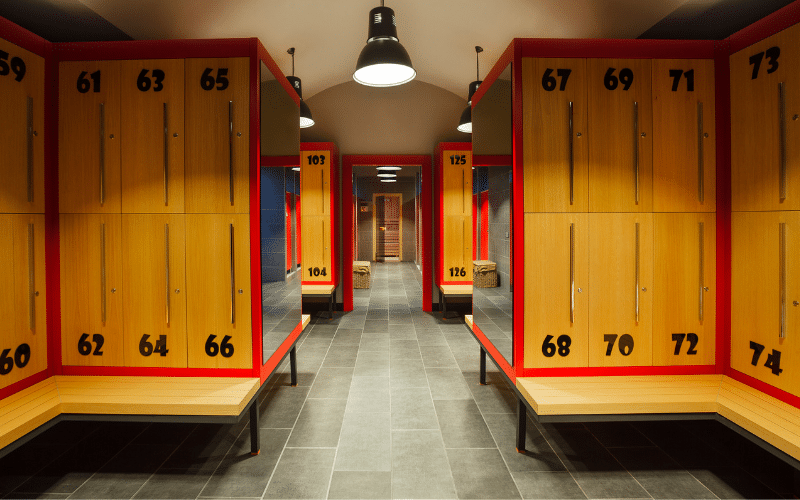
Proper equipment storage helps maintain the longevity of Taekwondo gear and keeps the training area organized and safe. Adequate storage solutions ensure that equipment is easy to access and that the dojang remains clutter-free, preventing accidents and promoting an efficient training environment.

FAQ
What is the equipment you need to play Taekwondo?
Dobok (Taekwondo uniform), belt, mouthguard, headgear, chest protector, forearm guards, shin guards, groin guard, and gloves are the equipment you need to play Taekwondo. Proper gear ensures safety and follows the sport's etiquette.
What is the most important equipment in Taekwondo?
The Dobok and belt combination is the most important equipment in Taekwondo, symbolizing discipline and level of expertise, while protective gear is crucial for safety during sparring sessions.
What is a recommended list of Taekwondo equipment for beginners?
Here's a recommended list of Taekwondo equipment for beginners: a Dobok, a white belt, mouthguard, headgear, chest protector, forearm and shin guards, and a groin guard. These items provide a solid foundation for safe training and learning Taekwondo fundamentals.