

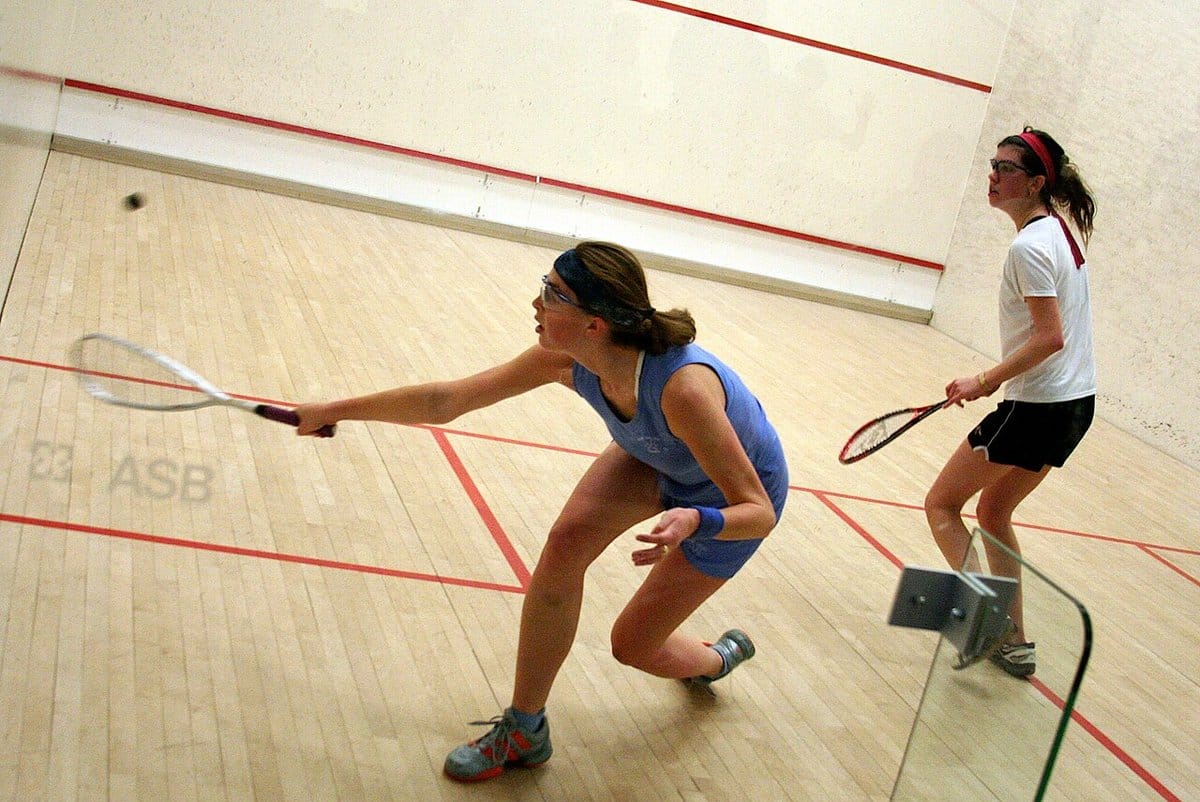
Squash rules explained: the court lines, scoring to 11, the serve, a good return, lets and strokes, interference, and singles vs doubles squash.
Squash is a fast racket sport played in a closed room, with both players sharing the same space. That makes it unique: you are allowed to hit the ball off any wall, and much of the rulebook deals with what happens when you get in each other’s way.
This guide explains the rules in the order you need them: the court and its lines, scoring, the serve, what makes a good return, and the let and stroke rules that decide interference. It follows the World Squash singles rules, which are used in club and professional play.
Jump to:
- Squash Rules in 60 Seconds
- The Court and the Lines
- Scoring
- The Serve
- A Good Return
- Lets, Strokes and Interference
- Other Lets and Conduct
- Singles vs Doubles Squash
- Tips for Your First Match

Squash Rules in 60 Seconds
- Hit the front wall. Every shot must reach the front wall above the tin before it touches the floor.
- One bounce. The ball may bounce on the floor at most once before you hit it.
- Any wall is fine. The ball may hit the side and back walls on the way, as long as it stays below the out lines.
- Games to 11. Every rally scores, and a game must be won by two points.
- Best of five. Most matches go to three games won.
The Court and the Lines
A singles squash court is 9.75 meters long and 6.4 meters wide. The front wall has three lines: the out line at the top, 4.57 meters high, the service line at 1.78 meters, and the tin at the bottom, 48 cm high, which works like a net. The out line continues down the side walls to the back wall, where it is 2.13 meters high. On the floor, a short line and a half court line divide the back of the court into two service boxes and two receiving quarters.
A ball that touches an out line is out, while the lines on the floor only matter on the serve. Our comparison of a squash court and a racquetball court shows how the two courts differ.
The front wall lines, the tin and the service boxes are listed in our guide to squash court dimensions.
Scoring
- Every rally scores a point, whoever served. This is called point a rally, or PAR.
- A game goes to 11. At 10 all, a player must win by two points.
- Matches are usually best of five games, sometimes best of three in club play.
- Players have up to 2 minutes between games.
The Serve
The first server is decided by spinning a racket. The server must have at least one foot on the floor inside a service box, not touching its lines, and hit the ball directly onto the front wall between the service line and the out line. The ball must land in the opposite back quarter of the court without touching a line, unless the receiver volleys it first. It may hit the side or back wall on the way.
The server keeps serving as long as he or she wins rallies, alternating service boxes after each point. A player who wins the serve back may choose which box to start from. A faulty serve loses the rally immediately, and there is no second serve.
A Good Return
To keep a rally going, a return must be hit before the ball bounces twice, must reach the front wall above the tin and below the out line, and may hit any number of side and back walls on the way. The player may only hit the ball once, with the racket, and may not carry or sling it. A ball that hits the tin, the floor before the front wall, or a wall above the out lines loses the rally.
Lets, Strokes and Interference
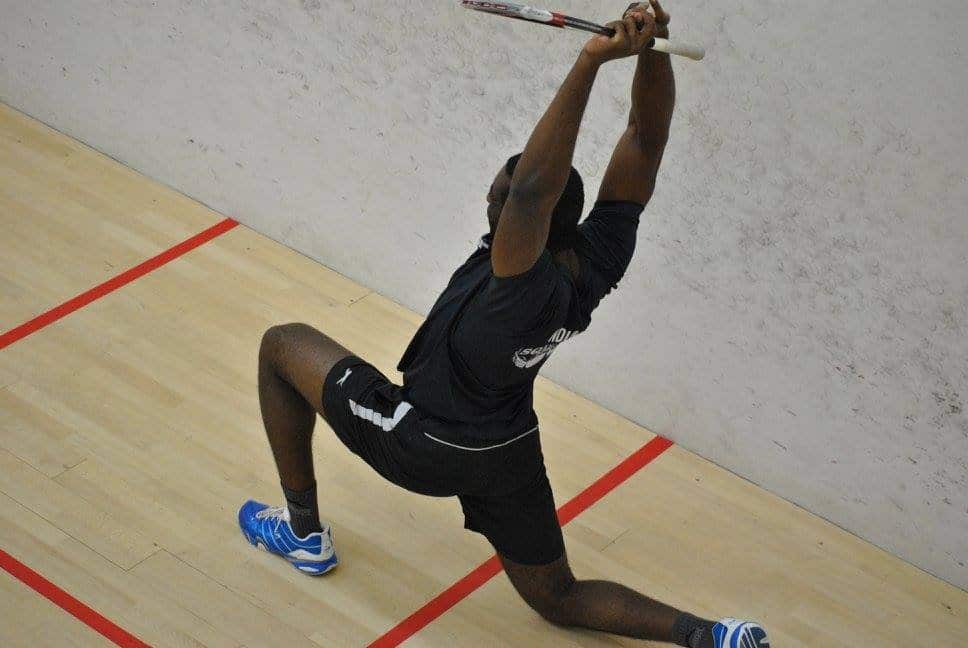
In squash, the striker is entitled to a clear view of the ball, a direct path to it, enough room to swing, and a free shot to any part of the front wall. When the opponent gets in the way, the striker can stop and ask for a let. The referee then decides:
| Decision | When | Result |
|---|---|---|
| Let | There was interference, and the opponent made every effort to avoid it | The rally is replayed |
| Stroke | The opponent did not make every effort to clear, or the striker would have hit a winning shot | The striker wins the point |
| No let | There was no real interference, or the striker could not have made a good return | The opponent wins the point |
A player hit by the ball also matters. If the ball would have gone straight to the front wall and hits the opponent, the striker usually wins a stroke. If it would have hit a side wall first, it is usually a let. A striker who turned and hit the ball around the body loses the point if it hits the opponent.
Other Lets and Conduct
- A let is also played when the ball breaks, a player is distracted by something outside the game, or the receiver was not ready for the serve.
- Players may not deliberately stop or slow play, change equipment without asking, or argue with the referee.
- Misconduct can be punished with a warning, a conduct stroke, a conduct game or the loss of the match.
- Protective eyewear is mandatory in World Squash junior and doubles events, and recommended for everyone else.
Singles vs Doubles Squash
| Rule | Singles | Doubles |
|---|---|---|
| Court | 9.75 x 6.4 m | Wider court, about 7.6 m or more |
| Games | Best of five, to 11 | To 11 internationally, some US leagues play to 15 |
| Serve | Alternate boxes after each point | Fixed order, with each team keeping its sides |
| Eyewear | Recommended, required in junior events | Required in sanctioned events |
Tips for Your First Match
- Return to the T, the spot where the short line meets the half court line, after every shot.
- Hit the ball deep and close to the side walls. Loose balls in the middle are easy to attack.
- Call a let instead of playing through when your opponent is in the way. It is safer.
- Learn some squash terms like boast, nick and drop shot.
More Reading
- Squash lingo and slang
- Squash equipment list
- History of squash
- Squash court vs racquetball court
- Common squash injuries
- Squash quiz

FAQ
What are the basic rules of squash?
Two players take turns hitting the ball onto the front wall above the tin, letting it bounce at most once. The ball may touch the side and back walls, every rally scores, and games go to 11 with a two point lead.
How many points is a squash game?
11 points, won by two. Most matches are best of five games.
Can the ball hit the side wall in squash?
Yes, as long as it reaches the front wall before touching the floor and stays below the out lines.
Is the line in or out in squash?
Out lines and the tin are out. The floor lines only count on the serve, where touching one is a fault. During a rally, a ball landing on a floor line is good.
What is a let in squash?
A replayed rally, usually because the opponent got in the way despite trying to clear.
What is a stroke in squash?
A point awarded to the striker when the opponent did not make every effort to clear the way, or blocked a winning shot.
Do you get two serves in squash?
No. A faulty serve loses the rally.
What is the tin in squash?
The strip at the bottom of the front wall, 48 cm high. Hitting it loses the rally.


No comments yet
What's your take?
What's your opinion, or think we got something wrong? Tell us and other readers.
Our editors read every comment.