

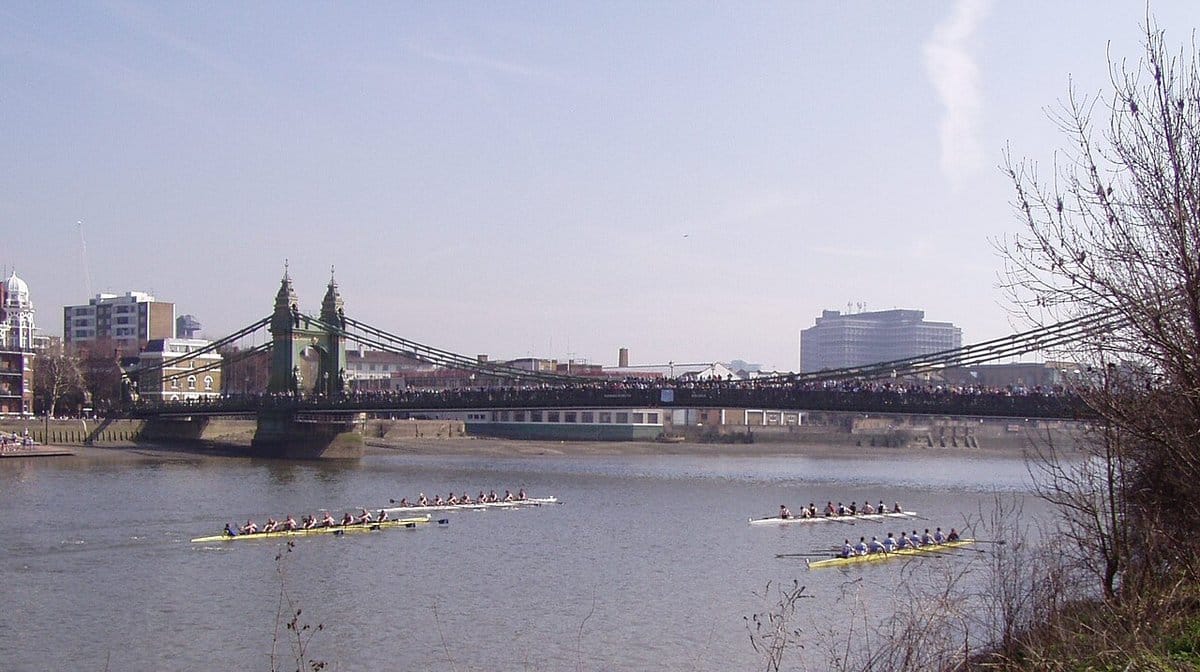
Rowing rules explained: sculling vs sweep, boat classes, the 2000 meter race, lanes and false starts, the coxswain, head races, and lightweight rules.
Rowing looks calm from the riverbank, but a race over 2000 meters is one of the hardest efforts in sport. The rules decide which boats race each other, how a fair start works, what happens when crews clash, and who wins when two bows cross the line almost together.
This guide follows the rules of World Rowing, which USRowing largely uses for sprint racing, and explains how head races in the fall work differently.
Jump to:
- Rowing Rules in 60 Seconds
- Sculling vs Sweep
- The Race Course
- The Start
- Steering and the Coxswain
- The Finish
- Lightweight and Weight Rules
- Sprint vs Head Races
- Tips for Your First Regatta

Rowing Rules in 60 Seconds
- 2000 meters. Olympic sprint races are 2000 meters on a straight course.
- Stay in your lane. Crews race side by side, usually six at a time.
- One false start. A second false start by the same crew can disqualify it.
- The bow decides. The first boat whose bow crosses the line wins.
- Head races. In the fall, crews start one by one and race the clock.
Sculling vs Sweep
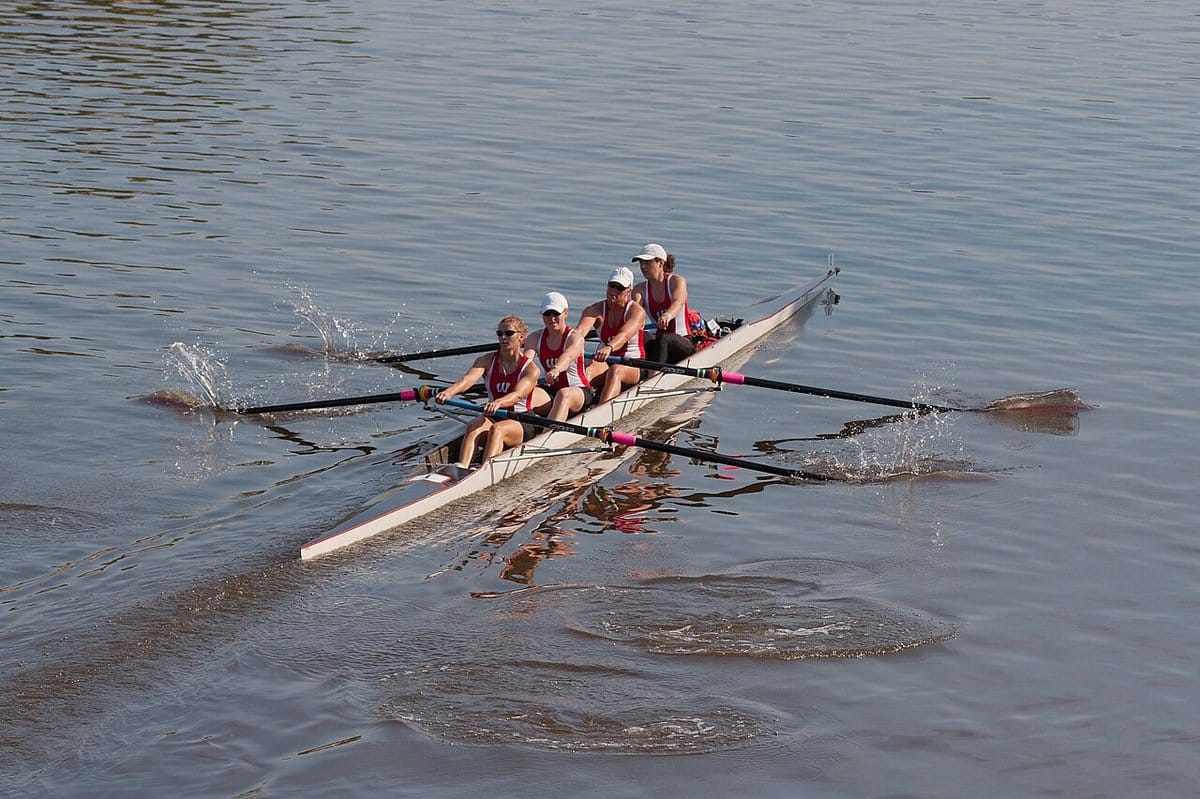
In sculling, each rower holds two oars, one in each hand. In sweep rowing, each rower holds a single oar with both hands, and the crew alternates sides. Boat names show the type: an x means sculling, a plus or minus sign shows whether there is a coxswain.
| Boat | Rowers | Type | Coxswain |
|---|---|---|---|
| Single scull (1x) | 1 | Sculling | No |
| Double scull (2x) | 2 | Sculling | No |
| Pair (2-) | 2 | Sweep | No |
| Quadruple scull (4x) | 4 | Sculling | No |
| Four (4-) | 4 | Sweep | No |
| Eight (8+) | 8 | Sweep | Yes |
The Race Course
An international course is 2000 meters long with six buoyed lanes of about 13.5 meters each, sometimes more. Crews must stay in their lane. A boat that leaves its lane and gains an advantage or hinders another crew can be penalized or excluded.
The Start
Boats are held at the start by stake boats or automatic start pontoons. Once all crews are aligned, the starter calls “attention” and raises a red flag or turns on a red light, then starts the race with “go”. A crew that moves before the start gets a yellow card, and a second yellow card for the same crew in that race leads to a red card and exclusion.
Steering and the Coxswain
The coxswain steers the boat, calls the race plan and motivates the crew. In boats without a coxswain, one rower steers with a foot operated rudder. The umpire follows the race in a launch and can warn a crew with a white flag and its lane name if it drifts toward another lane.
The Finish
A crew finishes when its bow reaches the finish line. Photo finish cameras decide close races. A dead heat for a place that matters can lead to a re-row.
Lightweight and Weight Rules
| Rule | Men | Women |
|---|---|---|
| Lightweight crew average | 70 kg | 57 kg |
| Lightweight single rower max | 72.5 kg | 59 kg |
| Minimum coxswain weight | 55 kg | 55 kg |
Coxswains below the minimum weight carry extra weight in the boat, up to a limit.
Sprint vs Head Races
| Rule | Sprint racing (spring and summer) | Head racing (fall) |
|---|---|---|
| Distance | 2000 m, 1500 m for juniors in some events | About 3 miles, varies by course |
| Start | Side by side | One by one, at intervals |
| Winner | First across the line | Fastest time |
| Famous race | Olympic regatta | Head of the Charles in Boston |
Tips for Your First Regatta
- Watch the last 500 meters. Most races are decided in the sprint finish.
- Look at the stroke rate. A higher rate does not always mean a faster boat.
- Learn the boat names. 2x, 4- and 8+ tell you how many rowers and whether there is a coxswain.
- Learn some rowing terms like catch, erg and power ten.
More Reading
- Rowing positions explained
- Rowing lingo and slang
- Rowing equipment list
- History of rowing
- Common rowing injuries
- Rowing quiz

FAQ
What are the basic rules of rowing?
Crews race side by side in lanes over 2000 meters, and the first bow across the line wins. Two false starts by the same crew lead to exclusion, and crews must stay in their lane.
How long is a rowing race?
2000 meters in Olympic and most college sprint racing. Fall head races are about 3 miles.
What is the difference between sculling and sweep rowing?
Scullers hold two oars, sweep rowers one oar with both hands.
What does the coxswain do?
Steers the boat, calls the race plan and motivates the crew.
What is a head race?
A long distance race in which crews start one by one and the fastest time wins.
What is a lightweight rower?
A rower under a weight limit. In crews, men must average 70 kilograms and women 57 kilograms.
How is a rowing race won?
The first boat whose bow crosses the finish line wins.
What happens after a false start in rowing?
The crew gets a yellow card. A second false start in the same race brings a red card and exclusion.


No comments yet
What's your take?
What's your opinion, or think we got something wrong? Tell us and other readers.
Our editors read every comment.