

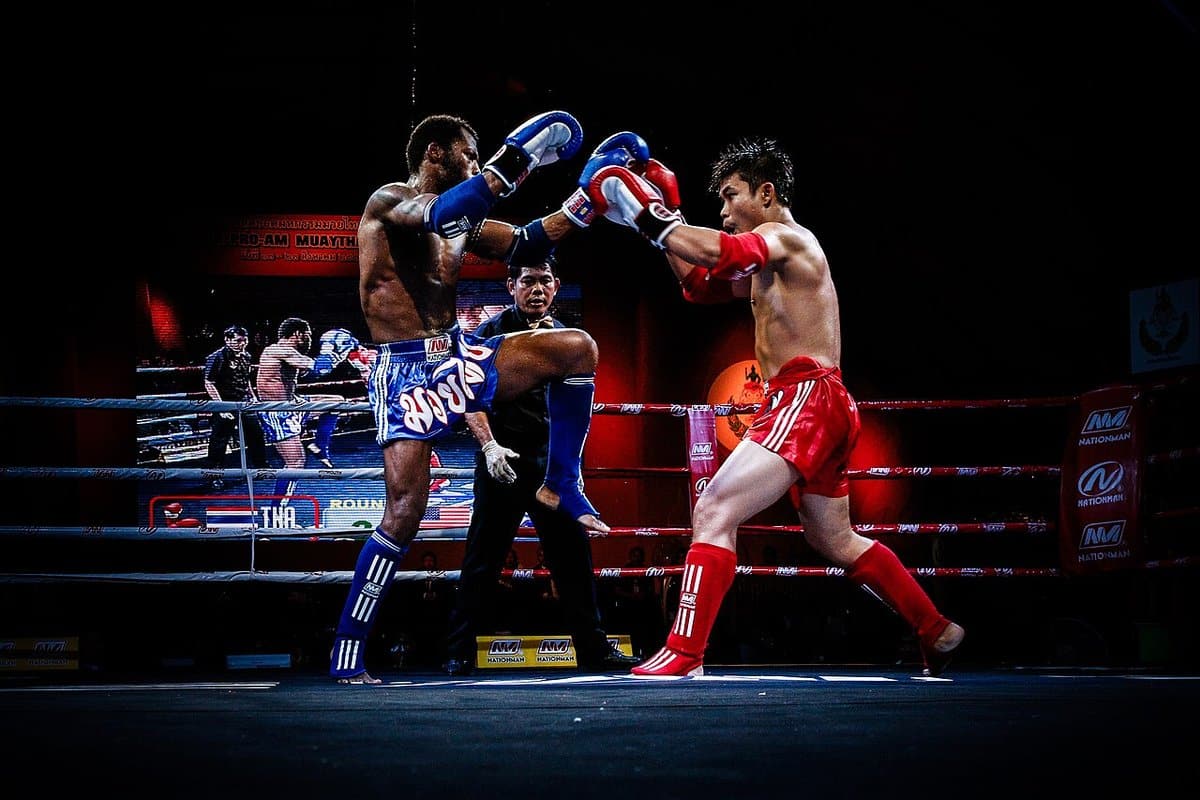
Muay Thai rules explained: the eight limbs, rounds, how judges score, the clinch, legal and illegal strikes, the wai kru, and pro vs amateur fights.
Muay Thai is called the art of eight limbs because fighters strike with fists, elbows, knees and shins. It is the national sport of Thailand and the base of most striking in MMA, and its scoring works differently from boxing or kickboxing.
This guide explains the rules of professional Muay Thai as fought in the big Thai stadiums and the amateur rules of IFMA, the international federation. It covers rounds, scoring, the clinch, fouls and the ritual before each fight.
Jump to:
- Muay Thai Rules in 60 Seconds
- The Ring, Gear and the Wai Kru
- Rounds and Fight Length
- How Judges Score
- The Clinch
- Ways to Win
- Fouls
- Pro vs Amateur Muay Thai
- Tips for Watching Your First Fight

Muay Thai Rules in 60 Seconds
- Eight limbs. Punches, kicks, knees and elbows are all legal.
- Five rounds. Pro fights have five rounds of three minutes.
- The clinch is legal. Fighters can hold each other and knee or throw.
- 10-point must scoring. Clean, powerful strikes and balance count most.
- No groin shots, headbutts or biting. These are fouls.
The Ring, Gear and the Wai Kru
Fights take place in a boxing style ring. Pro fighters wear gloves, shorts, a groin protector and a mouthguard, and many wear the mongkol headband and pra jiad armbands for the ritual. Amateurs under IFMA rules always wear headgear, elbow pads and shin guards, and youth and U23 fighters also a body protector.
Before the first round, fighters perform the wai kru ram muay, a dance that pays respect to their teachers, while traditional music plays. The music continues during the fight and speeds up as the action picks up.
Rounds and Fight Length
| Fight | Rounds | Length |
|---|---|---|
| Pro, Thai stadium | 5 | 3 min each, 2 min rest |
| Pro, outside Thailand | 3 or 5 | 3 min each |
| IFMA senior amateur | 3 | 3 min each |
| Juniors and novices | 3 | 1 to 2 min each |
How Judges Score
Judges score every round 10 to 9 or wider, like in boxing, but they look for different things. Clean, powerful strikes that unbalance the opponent count most, followed by control, balance, ring generalship and dominance in the clinch. Kicks and knees count more than punches, and a strike that the opponent blocks scores little.
- Early rounds: in traditional Thai scoring, the first round and often the second are feeling out rounds and are rarely decisive.
- Middle rounds: rounds three and four usually decide the fight.
- Last round: a fighter clearly ahead often coasts, and judges accept that.
- Visible damage: a knockdown or a strike that clearly hurts counts heavily.
The Clinch
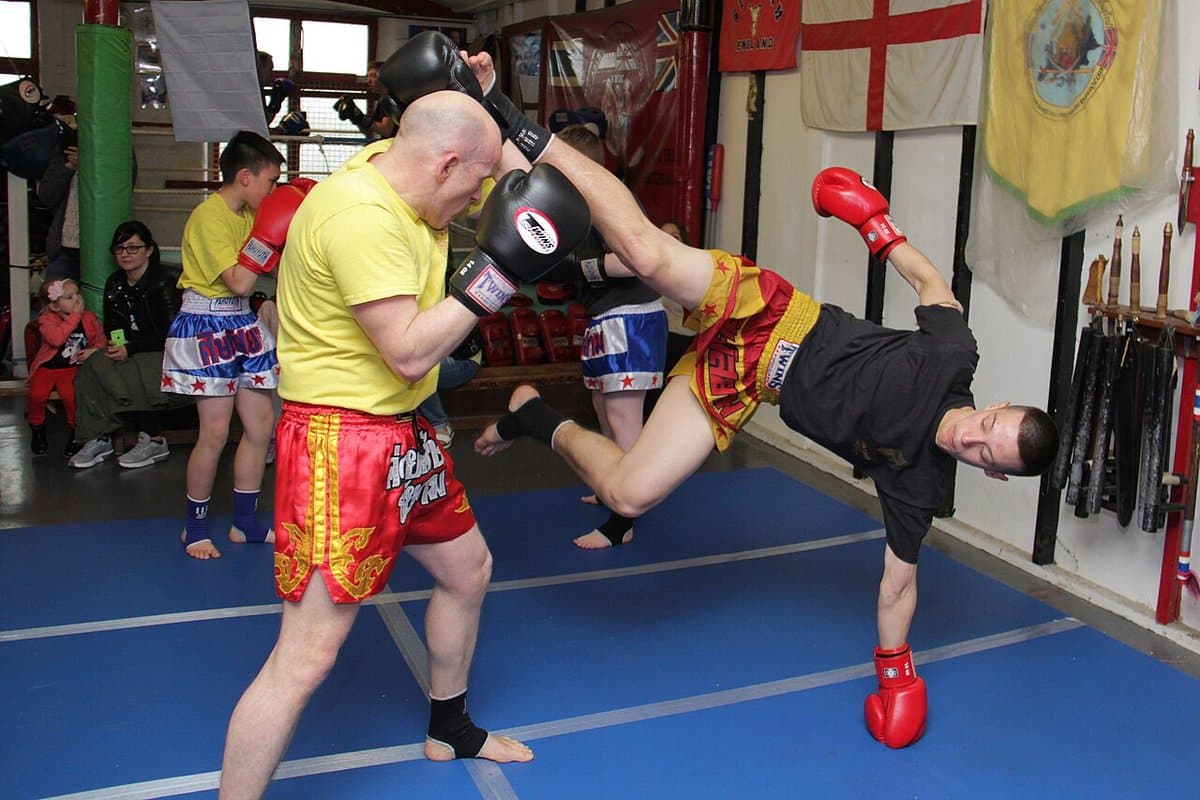
The clinch is where Muay Thai differs most from other striking sports. Fighters lock up, control the head and neck, and throw knees to the body and head. Sweeps and off balancing throws are legal, but judo style hip throws and joint locks are not. The referee breaks the clinch when nothing is happening.
Ways to Win
- Knockout (KO): the fighter cannot continue after a count of ten.
- Technical knockout (TKO): the referee or doctor stops the fight.
- Decision: the judges’ scorecards after the last round.
- Disqualification: after serious or repeated fouls.
Fouls
| Foul | Details |
|---|---|
| Groin strikes | Any strike to the groin |
| Headbutts | Striking with the head |
| Biting and eye gouging | Always illegal |
| Joint locks and judo throws | Not allowed, only sweeps and trips |
| Holding the ropes | Grabbing the ropes to attack or avoid |
| Striking a downed fighter | No strikes once the opponent is down |
| Spitting out the mouthguard | Can lead to a warning or point deduction |
Pro vs Amateur Muay Thai
| Rule | Pro (Thai stadium) | IFMA amateur |
|---|---|---|
| Rounds | 5 of 3 min | 3 of 3 min |
| Elbows | Allowed | Allowed for seniors, often banned for juniors |
| Protective gear | Gloves, groin guard | Headgear, shin and elbow pads, body protector for youth |
| Scoring style | Traditional, later rounds matter more | Every round scored evenly |
Tips for Watching Your First Fight
- Watch the reaction, not just the strike. A kick that knocks the opponent off balance scores more than one that lands without effect.
- Pay attention to the clinch. Many fights are won there.
- Listen to the music. It tells you when the fight is heating up.
- Learn some Muay Thai terms like teep, plum and wai kru.
More Reading
- Muay Thai lingo and slang
- Muay Thai equipment list
- History of muay thai
- Common muay thai injuries
- Muay Thai quiz

FAQ
What are the basic rules of Muay Thai?
Fighters may strike with fists, elbows, knees and shins and fight in the clinch. Pro fights have five rounds of three minutes, and judges score each round 10 to 9 or wider.
How many rounds are in a Muay Thai fight?
Five rounds of three minutes in Thai pro fights, three rounds in IFMA amateur bouts and many fights outside Thailand.
How is Muay Thai scored?
Judges reward clean, powerful strikes that unbalance the opponent, along with control and balance. Kicks and knees count more than punches.
Are elbows allowed in Muay Thai?
Yes, in pro fights and for senior amateurs. Many junior and novice divisions ban them.
Can you throw someone in Muay Thai?
Sweeps and off balancing throws from the clinch are legal. Judo style hip throws and joint locks are not.
What is the wai kru?
A ritual dance before the fight that honors the fighter’s teachers and gym.
Is Muay Thai the same as kickboxing?
No. Kickboxing usually bans elbows and limits the clinch, while Muay Thai allows both.
Do Muay Thai fighters wear headgear?
Not in pro fights. IFMA amateurs must wear headgear.


No comments yet
What's your take?
What's your opinion, or think we got something wrong? Tell us and other readers.
Our editors read every comment.