

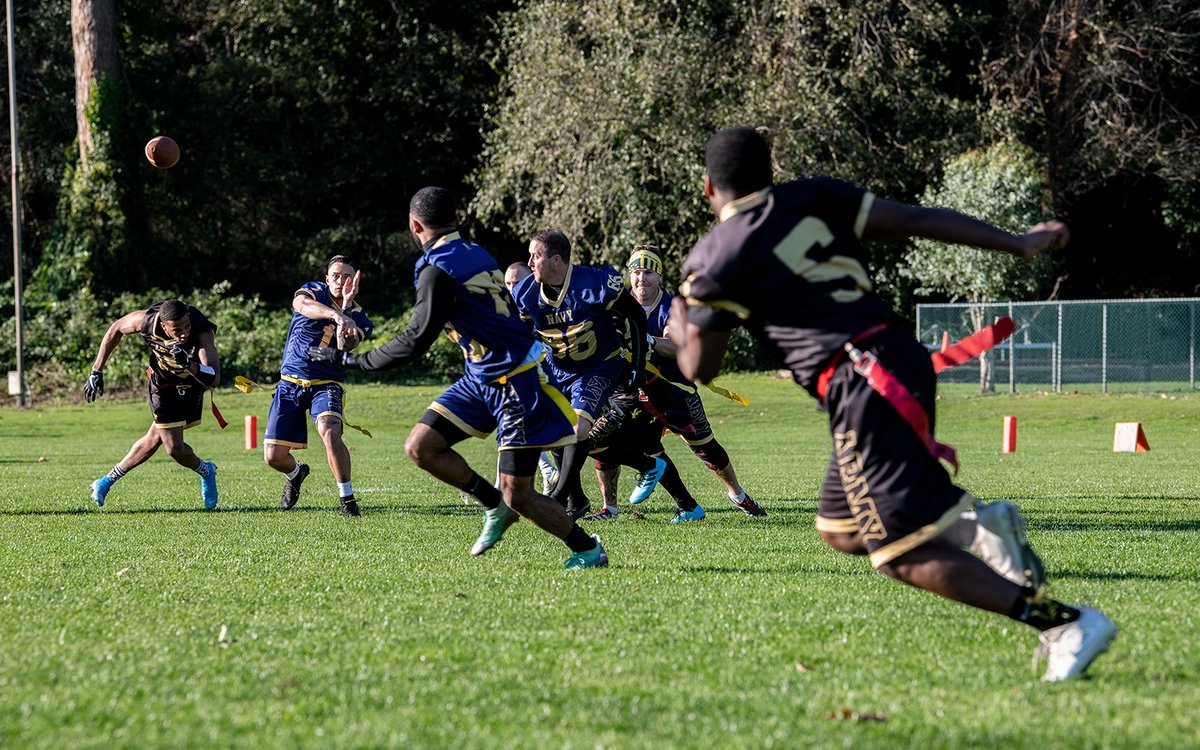
12 common flag football injuries in one place: sprains and strains, knee and ACL injuries, finger injuries, concussions, fractures and more.
Flag football removes tackling, but it does not remove sprinting, cutting, diving for flags and collisions. Emergency department data show that injuries do happen, mostly sprains, strains, fractures and finger and head injuries.
Dive in to learn what each injury feels like, how long it can keep you off the field and what helps you play on safely.

Injury Rates and Numbers
The figures below come from national injury surveillance data and peer reviewed studies. Each row names the population it was measured in, because emergency department data and surveys of elite players are not comparable.
| Finding | Measured in | Source |
|---|---|---|
| 2,508 flag football injuries were recorded, a national estimate of 86,443. 78.2 percent were in male players and there was no significant yearly trend. | US emergency departments, 2013 to 2022 | Locke et al., Sports Health, 2025 (NEISS) |
| Player to player collision was the most common mechanism (35.7 percent). Players aged 11 to 13 made up 20.8 percent of injuries and those aged 14 to 18 made up 23.7 percent. | US emergency departments, 2013 to 2022 | Locke et al., Sports Health, 2025 (NEISS) |
| 605 female patients were seen, a national estimate of 22,666 injuries. The most common diagnosis was strain or sprain (30.2 percent), the most common mechanism was a fall (19.1 percent) and 98.2 percent were treated and released. | US emergency departments, female players, 2014 to 2023 | Balachandran et al., Orthopaedic Journal of Sports Medicine, 2025 (NEISS) |
| Of 24 girls aged 13 to 18 who had knee surgery, 21 had ACL tears and 21 of 24 injuries were noncontact. Game related injury risk rose from 0.17 to 0.64 per 1,000 athlete exposures between 2023 and 2024. | California girls flag football, first two CIF seasons | Grewal et al., Journal of Pediatric Orthopaedics, 2026 |
| Injury rate of 7.25 injuries per 1,000 exposure hours. | 98 participants (83 flag football players), female high school athletes, one season | Brna et al., Clinical Journal of Sport Medicine, 2026 |
| 62 percent of players reported an injury. | 108 national team players (34 women, 74 men) | Vazquez-Villarreal et al., Sports, 2026 |
These sources measure different things (emergency visits, surgeries, season rates and questionnaires), so the figures cannot be added up or compared directly.
Overview
| Injury | Body area | Typical time out |
|---|---|---|
| Sprains and Strains (ankles, knees, etc.) | Ankle and knee | 1 to 8 weeks, 3 months if complete |
| Knee Injuries (including ACL tears) | Knee | 2 weeks to 12 months by structure |
| Finger Injuries | Hand | Days to 6 weeks, longer if operated |
| Concussions and Head Injuries | Head | 2 to 4 weeks, longer if symptoms persist |
| Fractures (wrist, forearm and collarbone) | Arm, wrist and collarbone | 6 to 12 weeks, 3 to 6 months if operated |
| Hamstring and Groin Strains | Thigh and groin | 1 to 12 weeks, 3 months if complete |
| Shoulder Injuries | Shoulder | 2 to 12 weeks, longer if operated |
| Lower Back Pain | Lower back | A few days to 4 weeks |
| Facial and Dental Injuries | Face and teeth | Days to 2 weeks, longer for fractures |
| Calf and Achilles Injuries | Lower leg | 1 to 6 weeks, longer for Achilles rupture |
| Abrasions and Turf Burns | Skin | 0 to 5 days, longer if infected |
| Heat Illness | Whole body | A day or two |
Sprains and Strains (ankles, knees, etc.)
A sprain is an overstretch or tear of a ligament, most often on the outside of the ankle, while a strain is the same kind of damage in a muscle or its tendon. In flag football both happen when a player plants a foot to cut away from a defender, lands off balance after a catch or a flag grab, or collides with another player. Strain or sprain was the most common diagnosis in a national emergency department study of female players.
Symptoms
- Sudden pain at the moment of the cut or roll, sometimes with a pop.
- Swelling within hours, often with bruising.
- The joint feels loose or unreliable when changing direction.
- Pain when pressing on one specific spot.
- Limping or being unable to push off at full speed.
How serious it is: Graded 1 to 3: grade 1 is a mild stretch, grade 2 a partial tear and grade 3 a complete rupture with an unstable joint. A fracture can feel the same, so inability to bear weight needs an X-ray.
Typical time out: One to three weeks for a mild ankle sprain, three to eight weeks for a moderate one, and three months or more for a complete tear.
See a doctor if: you cannot take four steps, the joint looks deformed, bruising is extensive, or pain and instability persist after a week or two.
What helps
- Protect the area and avoid hard cutting for a few days.
- Use a compression bandage or taping if it helps comfort.
- Start gentle movement as soon as pain allows.
- Do balance exercises on one leg before returning to play.
- Return to sprinting and cutting in stages.
Knee Injuries (including ACL tears)
Flag football has no tackling, but it has constant sprinting, cutting, stopping and jumping. A study of California girls’ flag football found that most knee surgeries were for noncontact injuries during pivoting, changes of direction or sudden stops. The ACL, a ligament that stabilizes the knee, was the most commonly torn structure in that group.
Symptoms
- A pop or snap in the knee at the moment of injury.
- Rapid swelling within the first hour or two.
- The knee feels unstable and gives way.
- Pain on the inside or outside of the joint.
- Difficulty straightening or fully bending the knee.
How serious it is: Anything from a minor sprain to an ACL or meniscus tear. ACL tears are among the most serious sports knee injuries and often need surgery in young active athletes.
Typical time out: Two to six weeks for mild sprains, and nine to twelve months for an ACL reconstruction and rehabilitation.
See a doctor if: the knee swelled quickly, locks, gives way or you cannot put weight on the leg.
What helps
- Rest and protect the knee, and avoid twisting.
- Elevate and compress to limit swelling.
- Get an examination before returning if the knee felt unstable.
- Follow a structured rehabilitation program for strength and balance.
- Do not return to cutting and pivoting until a clinician clears you.
Finger Injuries
The finger was the most commonly injured body part in female players in a national study, and adults most frequently injured their fingers in another national study. Catching a fast pass, grabbing at a flag belt or a collision with another player can jam, sprain or break a finger.
Symptoms
- Pain and swelling at a finger joint.
- Bruising.
- Difficulty bending or straightening the finger.
- A visibly bent or crooked finger.
- Numbness at the fingertip.
How serious it is: Mild jams are common. A finger that looks crooked or cannot straighten can mean a fracture, dislocation or tendon injury.
Typical time out: Days to two weeks for a mild sprain, three to six weeks for a fracture, and longer if surgery is needed.
See a doctor if: the finger is deformed, cannot be straightened, the joint is very swollen, or the fingertip is numb.
What helps
- Rest the finger and avoid forced bending.
- Buddy tape to the neighboring finger for comfort.
- Elevate to reduce swelling.
- Practice catching with soft hands and the fingers pointing up for high balls.
- Remove rings before play.
Concussions and Head Injuries
Flag football is a non-contact game, but collisions happen. In a ten year national emergency department study, player to player collision was the most common mechanism of injury, and the head was the most commonly injured area in players under 18.
Symptoms
- Headache after a collision or fall.
- Dizziness or balance trouble.
- Confusion or feeling foggy.
- Nausea.
- Sensitivity to light or noise.
How serious it is: Any concussion is serious and needs medical assessment. Most people recover fully with proper rest and a stepwise return to activity.
Typical time out: Often two to four weeks, longer if symptoms persist.
See a doctor if: there is loss of consciousness, repeated vomiting, a worsening headache, a seizure or confusion. Anyone with a suspected concussion should be seen by a health professional.
What helps
- Remove the player from the game right away.
- Do not return to play on the same day.
- Rest for a short period, then return to school and activity gradually.
- Follow a stepwise return to play under medical guidance.
- Teach players to keep their heads up and avoid running into each other.
Fractures (wrist, forearm and collarbone)
A fall onto an outstretched hand was the most common mechanism of injury in female flag football players in a national study, and fractures were the most common injury type in players aged under 18 in another. A hard fall can break the wrist, forearm, elbow or collarbone.
Symptoms
- Intense pain right after a fall.
- Swelling and bruising.
- A deformity or unusual angle in the limb.
- Pain when moving or pressing on the bone.
- Inability to use or bear weight on the limb.
How serious it is: Fractures need medical assessment and imaging, and some need surgery.
Typical time out: Six to twelve weeks for many fractures, and three to six months if an operation is required.
See a doctor if: you suspect any broken bone, the limb is deformed, or you have numbness, pale skin or severe pain.
What helps
- Immobilize the limb and do not try to straighten it.
- Apply cold packs for comfort.
- Get an X-ray promptly.
- Follow the cast and rehabilitation plan.
- Learn to fall by rolling instead of bracing with the hand.
Hamstring and Groin Strains
Sprinting is a core part of flag football, and the hamstring muscles at the back of the thigh work hard at top speed. The groin muscles are strained by sudden changes of direction.
Symptoms
- Sudden sharp pain at the back of the thigh or inner thigh while running.
- Tenderness over the muscle.
- Bruising in more serious strains.
- Pain stretching the muscle.
- Reduced ability to sprint.
How serious it is: Mild strains settle quickly, while a full tear is serious.
Typical time out: One to three weeks for mild strains, three to eight weeks for moderate ones, and three months or longer for complete tears.
See a doctor if: there was a pop with severe pain, a visible gap or large bruise, or you cannot walk normally.
What helps
- Stop running as soon as you feel pain.
- Rest and then start gentle loading.
- Strengthen the hamstrings, including Nordic curls once cleared.
- Warm up with progressive sprints.
- Return gradually to sprinting.
Shoulder Injuries
Throwing the ball repeatedly, especially by the quarterback, loads the rotator cuff. A fall onto the shoulder or a collision can also dislocate or separate it.
Symptoms
- Dull ache in the shoulder with throwing.
- Pain lifting the arm.
- Night pain.
- Weakness or a catching feeling.
- A visibly out of place shoulder after a fall.
How serious it is: Tendon irritation is common and mild. A dislocation or a significant tear is more serious.
Typical time out: Two to eight weeks for irritation, six to twelve weeks after a first dislocation, and longer after surgery.
See a doctor if: the shoulder looks deformed, you cannot lift the arm, or pain keeps you awake at night for more than a few weeks.
What helps
- Limit throwing volume.
- Strengthen the rotator cuff and shoulder blade muscles.
- Warm up before throwing.
- Use your legs and trunk for power.
- Stop throwing if the shoulder is sore.
Lower Back Pain
Sprinting, twisting and landing can strain the muscles and joints of the lower back.
Symptoms
- Aching in the lower back.
- Pain bending or twisting.
- Stiffness after rest.
- Muscle spasm.
- Pain that eases with movement.
How serious it is: Most back pain is a muscle strain that improves on its own. Pain with leg weakness or numbness is more serious.
Typical time out: A few days to four weeks.
See a doctor if: pain spreads down the leg with numbness or weakness, bladder or bowel control is lost, or it follows a hard fall.
What helps
- Keep moving gently.
- Avoid long bed rest.
- Strengthen core and glutes.
- Warm up before play.
- Return to play when you move without pain.
Facial and Dental Injuries
Collisions, a ball to the face or a stray elbow can cause cuts, bruises, broken noses and chipped teeth.
Symptoms
- Pain and swelling in the face.
- A cut or bleeding nose.
- A chipped or loose tooth.
- Bruising around the eyes.
- Double vision or pain moving the eyes.
How serious it is: Most are minor, but eye injuries, a broken nose or damaged teeth need prompt care.
Typical time out: Days to two weeks for bruises, longer for fractures.
See a doctor if: a tooth is knocked out, vision changes, the nose looks crooked or bleeding does not stop after fifteen minutes of pressure.
What helps
- Control bleeding with firm pressure.
- Apply a cold pack.
- Keep a knocked out tooth moist in milk and see a dentist right away.
- Consider a mouthguard.
- Keep heads up in crowded areas.
Calf and Achilles Injuries
Quick acceleration and repeated pushing off can strain the calf muscle or irritate the Achilles tendon.
Symptoms
- Sudden pain in the calf during a sprint.
- Tightness.
- Pain at the back of the heel.
- Stiffness after rest.
- Difficulty rising on the toes.
How serious it is: A calf strain is usually moderate, while a complete Achilles rupture is a serious injury.
Typical time out: One to six weeks for strains, and six to twelve months after an Achilles rupture.
See a doctor if: you heard a snap at the back of the ankle or cannot rise on your toes.
What helps
- Rest from sprinting.
- Do gradual calf strengthening.
- Wear supportive shoes.
- Warm up the calves.
- Increase running slowly.
Abrasions and Turf Burns
Falls on artificial turf or hard ground can scrape the skin of the knees, hands and elbows.
Symptoms
- Raw red skin.
- Stinging.
- Minor bleeding.
- Embedded dirt.
- Swelling.
How serious it is: Usually minor, but dirty wounds can become infected.
Typical time out: Zero to five days, longer if infected.
See a doctor if: a wound is deep, dirty, red and increasingly painful or you develop a fever.
What helps
- Rinse with clean water.
- Cover with a clean dressing.
- Check your tetanus vaccination.
- Change dressings daily.
- Wear sleeves or pants on abrasive turf if needed.
Heat Illness
Flag football is often played in summer tournaments with little rest between games.
Symptoms
- Heavy sweating and thirst.
- Muscle cramps.
- Headache and dizziness.
- Nausea.
- Confusion in severe cases.
How serious it is: Heat cramps and exhaustion are common. Heat stroke is an emergency.
Typical time out: A day or two for mild cases.
See a doctor if: someone is confused, stops sweating, collapses or has a very high body temperature. Call emergency services.
What helps
- Drink fluids regularly.
- Rest in the shade between games.
- Wear light clothing.
- Acclimatize over several days.
- Stop play if someone shows signs of heat illness.
First Aid for Soft Tissue Injuries: PEACE and LOVE
Sports medicine has moved on from RICE. The current guidance, first published online in the British Journal of Sports Medicine in 2019, splits care into the first days after the injury and everything that follows.
PEACE, the first two to three days
- Protect: unload the area and limit movement that hurts, but only briefly.
- Elevate: keep the limb above heart level when you can.
- Avoid anti-inflammatories: they may blunt the healing you need.
- Compress: a bandage or taping limits swelling.
- Educate: your body heals this on its own; passive treatments rarely speed it up.
LOVE, from day three onward
- Load: return to movement as pain allows, early loading builds tissue.
- Optimism: expectations shape recovery more than most people assume.
- Vascularization: easy cardio that does not hurt brings blood to the area.
- Exercise: restore strength, mobility and balance before returning to play.
Ice still helps with pain in the first hours. What changed is the evidence that long icing and routine anti-inflammatory drugs slow tissue repair.
How to Lower Your Risk in Flag Football
- Do a structured warm up with jogging, dynamic stretches, cutting drills and landing practice before every game.
- Train for cutting and landing. Neuromuscular programs that teach players to land softly and keep knees aligned lower knee injury rates in cutting sports, and the California study found that few injured players had used one.
- Build strength in the hamstrings, glutes, calves and core during the season.
- Teach players to keep their heads up and call for the ball to avoid collisions.
- Wear appropriate footwear for the surface, and check that fields are in good condition.
- Drink water, rest between games in tournaments and take heat seriously.
When to Stop and Get Medical Help
Most of the injuries on this page are treated at home. These signs are not.
- Any suspected concussion: confusion, a headache building after a hit, dizziness or memory gaps. Come off and do not return the same day.
- Loss of consciousness, a seizure, repeated vomiting or a headache that keeps worsening after a head impact.
- A visible deformity in a limb or a joint that is clearly out of shape.
- Inability to bear weight for four steps after an ankle or knee injury.
- Numbness, tingling or a limb that turns pale and cold after an impact.
- A knee that swells within an hour, locks or gives way.
Sources
- Locke AR et al. Sex- and Age-Specific Review of Flag Football Injuries in the United States: A 10-Year Analysis of National Injury Data. Sports Health, 2025
- Balachandran U et al. The Current State of American Flag Football Injuries Among Female Athletes: A 10-Year Epidemiological Review of National Injury Data. Orthopaedic Journal of Sports Medicine, 2025
- Grewal RS et al. Raising Awareness: Addressing Knee and ACL Injury Risks in the Growing Sport of Female Flag Football. Journal of Pediatric Orthopaedics, 2026
- Brna ML et al. Pulling the Flag: The Physical and Mental Health Effects of High School Flag Football Among Female Adolescents. Clinical Journal of Sport Medicine, 2026
- Vazquez-Villarreal LG et al. The Role of Anthropometry in Decision-Making for Injury Prevention Among Elite Flag Football Players. Sports, 2026
- Dubois B, Esculier JF. Soft-tissue injuries simply need PEACE and LOVE. British Journal of Sports Medicine, 2020 (online 2019)
This article is general information, not medical advice. If you are hurt, a doctor or physiotherapist who can examine you is worth more than any web page. Last reviewed: October 2026.

Frequently Asked Questions
What is the most common injury in flag football?
In national emergency department data for female players, strain or sprain was the most common diagnosis, falls the most common mechanism and the finger the most commonly injured body part. Across all players, player to player collision was the most common mechanism, and younger players more often had head injuries and fractures.
Is flag football safer than tackle football?
Flag football removes tackling, and it is widely seen as lower risk, but it is not risk free. Collisions, falls and noncontact knee injuries still occur, and injuries have not fallen over the last decade in national data. The studies cited here do not compare it directly with tackle football, so we do not give a figure.
Do ACL tears happen in flag football?
Yes. In a study of California girls’ flag football, 21 of 24 teenagers who had knee surgery had ACL tears, and most were noncontact injuries from pivoting or sudden stops. Landing and cutting training can lower the risk.
Do flag football players get concussions?
Yes. Collisions are the most common cause of injury in national data, and head injuries were the most common injury site in players under 18. Anyone with a suspected concussion should stop playing and be assessed.
How long does a sprained ankle take to heal?
A mild sprain often takes one to three weeks and a moderate one three to eight weeks, but a complete tear can take three months or more. If you cannot take four steps, get an X-ray.
How can I lower my risk of injury in flag football?
Warm up properly, train landing and cutting, strengthen the legs and core, keep your head up to avoid collisions, and drink water in hot weather.


No comments yet
What's your take?
What's your opinion, or think we got something wrong? Tell us and other readers.
Our editors read every comment.