

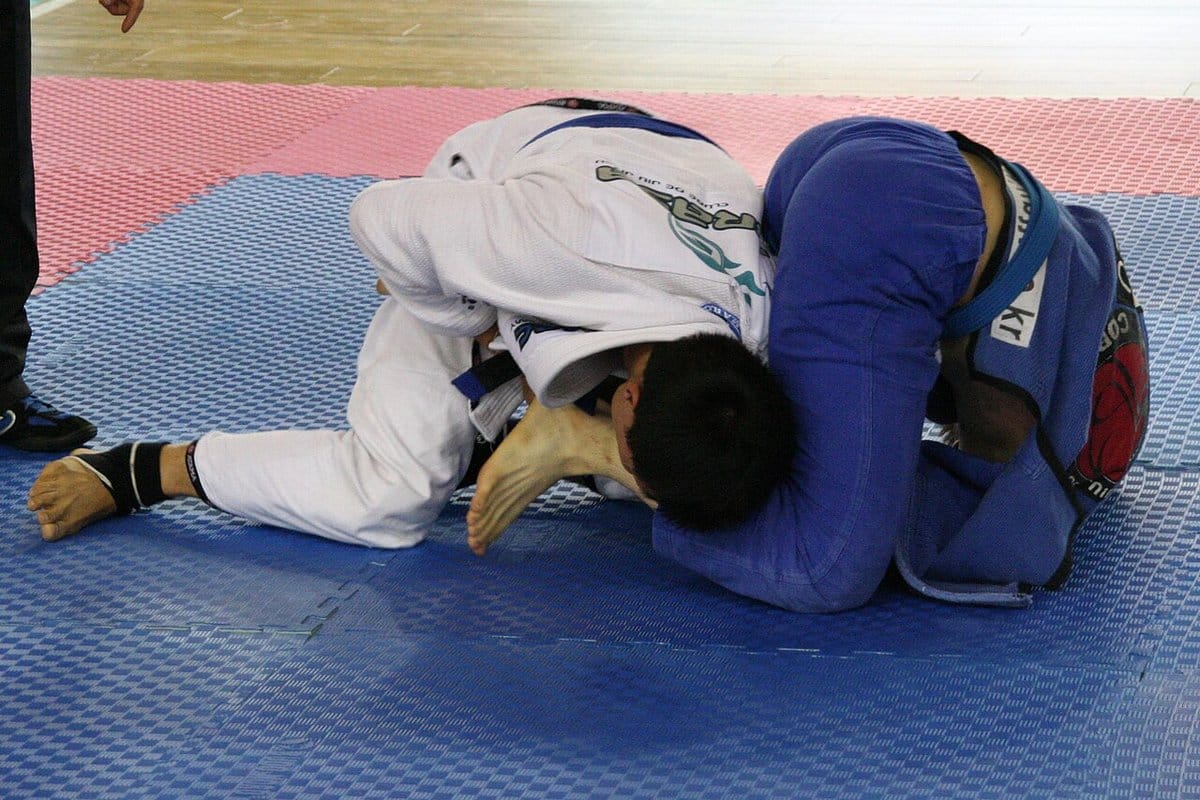
Brazilian jiu-jitsu rules explained: IBJJF points, advantages and penalties, match times by belt, illegal techniques, and gi vs no-gi vs ADCC rules.
Brazilian jiu-jitsu is about control on the ground. You win by making your opponent tap to a choke or joint lock, and if no one taps, the points decide. Those points reward the positions that lead to submissions: passing the guard, mounting and taking the back.
This guide follows the rules of the International Brazilian Jiu-Jitsu Federation (IBJJF), which most tournaments use, and explains how ADCC and other no-gi rulesets differ. It covers points, advantages, penalties, match times and the techniques that are illegal at each belt.
Jump to:
- BJJ Rules in 60 Seconds
- Points in IBJJF Matches
- Advantages and Penalties
- Match Times by Belt
- Illegal Techniques
- Gi vs No-Gi vs ADCC
- Tips for Your First Tournament

BJJ Rules in 60 Seconds
- Submit to win. A tap, a verbal tap or a referee stop for a choke or lock ends the match.
- Points for position. Takedowns, sweeps, guard passes, mount and back control score.
- Hold it for three seconds. A position must be stable to score.
- Ties go to advantages. Then to penalties, then to the referee.
- No striking. Slams and illegal techniques lead to disqualification.
Points in IBJJF Matches
| Position | Points |
|---|---|
| Takedown | 2 |
| Sweep (from guard to top) | 2 |
| Knee on belly | 2 |
| Guard pass | 3 |
| Mount | 4 |
| Back control (with hooks) | 4 |
To score, the position must be held for three seconds. A fighter who passes the guard straight into mount can collect both. Points for the same position are not given twice in a row without a change in between.
Advantages and Penalties
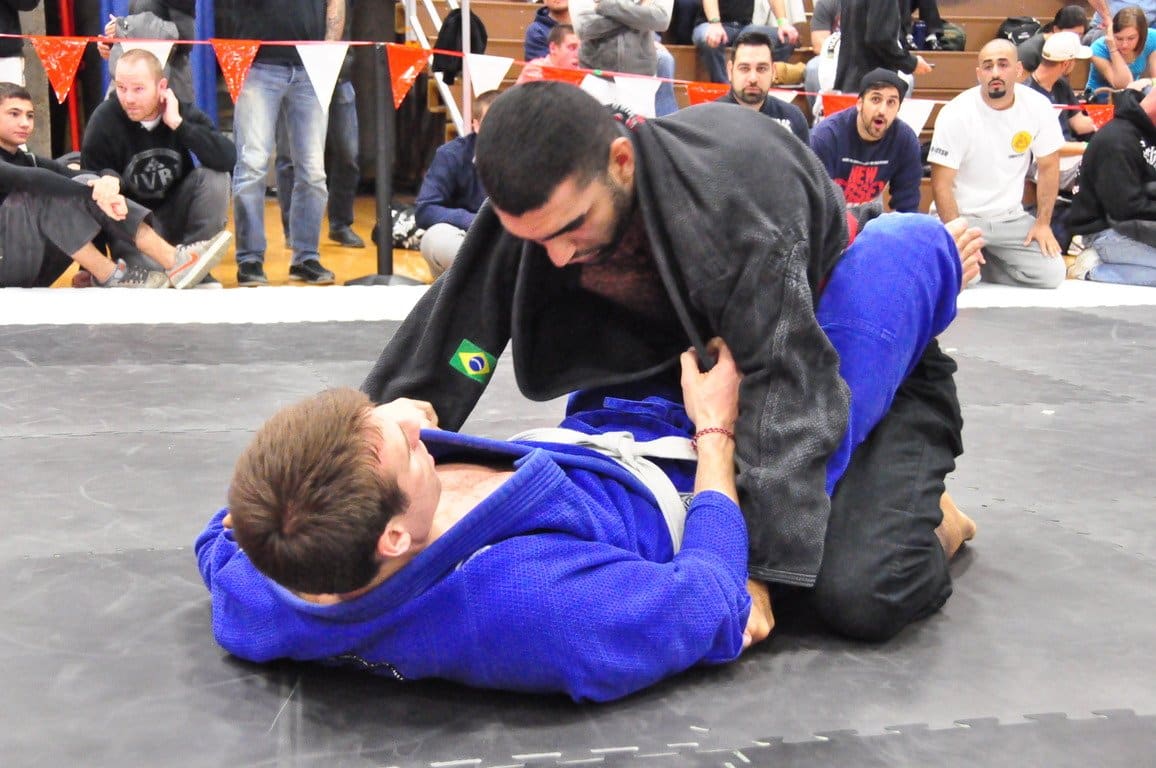
An advantage goes to a fighter who almost scored or almost finished, for example by nearly completing a sweep or locking in a deep submission attempt. Advantages only matter when the points are tied.
Penalties punish stalling, fleeing the mat and minor rule breaks. The first penalty is recorded, the second gives the opponent an advantage, the third gives the opponent 2 points, and the fourth leads to disqualification. Serious fouls lead to immediate disqualification.
Match Times by Belt
| Belt (adult) | Match length |
|---|---|
| White | 5 min |
| Blue | 6 min |
| Purple | 7 min |
| Brown | 8 min |
| Black | 10 min |
Juvenile, master and kids divisions have shorter matches. If points, advantages and penalties are all even when time runs out, the referee decides the winner.
Illegal Techniques
IBJJF rules limit dangerous techniques by age and belt. White belts may use the fewest attacks, black belts the most.
| Technique | Status in IBJJF adult divisions |
|---|---|
| Slamming | Illegal at all belts |
| Spinal locks without a choke | Illegal at all belts |
| Scissor takedown (kani basami) | Illegal at all belts |
| Straight ankle lock | Legal at all belts |
| Wrist locks | Legal from blue belt |
| Kneebars, toe holds, calf slicers | Legal for brown and black belts |
| Heel hooks | Legal only for brown and black belts in no-gi |
Gi vs No-Gi vs ADCC
| Rule | IBJJF gi | IBJJF no-gi | ADCC |
|---|---|---|---|
| Uniform | Gi with belt | Rash guard and shorts | Rash guard and shorts |
| Grips | Collar, sleeves and pants | No clothing grips | No clothing grips |
| Heel hooks | No | Brown and black belts | Yes |
| Points | From the start | From the start | Only in the second part of the match |
| Guard pulling | Allowed | Allowed | Costs a negative point |
Tips for Your First Tournament
- Check the illegal techniques for your belt before you compete.
- Tap early in competition. There is no prize for holding out in a joint lock.
- Keep your fingernails short and your gi within the size rules, or you may be sent to change.
- Learn some BJJ terms like guard, sweep and kimura.
More Reading

FAQ
What are the basic rules of BJJ?
Two fighters try to submit each other with chokes and joint locks. Without a submission, points for takedowns, sweeps, guard passes, mount and back control decide, then advantages, penalties and the referee.
How are points scored in BJJ?
Takedown, sweep and knee on belly 2 points, guard pass 3, mount and back control 4. Each position must be held for three seconds.
What is an advantage in BJJ?
A near score or near submission. It only decides the match when points are tied.
How long is a BJJ match?
In IBJJF adult divisions from 5 minutes for white belts to 10 minutes for black belts.
Are heel hooks legal in BJJ?
Under IBJJF rules only for brown and black belts in no-gi. ADCC and many other no-gi rulesets allow them for advanced divisions.
Is slamming allowed in BJJ?
No. Slamming leads to disqualification at every level.
What happens if the score is tied?
Advantages decide, then penalties, and if everything is even, the referee picks the winner.
What is the difference between gi and no-gi?
In gi matches, fighters may grip the uniform. In no-gi they wear rash guards and shorts, and grips on clothing are not allowed.


No comments yet
What's your take?
What's your opinion, or think we got something wrong? Tell us and other readers.
Our editors read every comment.