

Boxing rules explained: rounds, the 10-point must scoring system, knockdowns and stoppages, common fouls, weight classes, and pro vs amateur boxing.
Boxing looks simple from the outside: two fighters, gloved fists, and a ring. Underneath sit rules that decide everything from how a round is scored to what happens after a clash of heads, and they are the reason a fight can end in a knockout, a stoppage, a decision or a disqualification.
This guide explains the rules of professional boxing as practiced in the United States, where state athletic commissions sanction fights, and notes where Olympic style amateur boxing works differently. It covers the ring, rounds, scoring, knockdowns, fouls and weight classes.
Jump to:
- Boxing Rules in 60 Seconds
- The Ring and the Equipment
- Rounds and Fight Length
- Scoring: The 10-Point Must System
- Knockdowns, Knockouts and Stoppages
- Fouls
- Weight Classes
- Pro vs Amateur Boxing
- Tips for Watching Your First Fight

Boxing Rules in 60 Seconds
- Punches only. Fighters may only hit with the knuckle part of a closed, gloved fist, above the belt and on the front or sides of the body and head.
- Three minute rounds. Professional men’s rounds last three minutes with one minute of rest, over 4 to 12 rounds.
- Three judges score. Each round goes 10 points to the winner and 9 or less to the loser.
- A knockdown costs a point. The referee counts, and a fighter who cannot continue by ten is knocked out.
- Fouls cost points. Low blows, holding and hitting behind the head can lead to deductions or disqualification.
The Ring and the Equipment
A professional ring is a square, usually between 16 and 24 feet on each side inside the ropes, with four or more ropes and padded corner posts. Each fighter has a corner with a team of seconds, and the two neutral corners are where a fighter must go after knocking the opponent down.
- Gloves: professionals usually wear 8 ounce gloves in the lighter classes and 10 ounce gloves in the heavier ones. The exact limit is set by each commission.
- Hand wraps: fighters wrap their hands under the gloves, and an inspector signs off on them before the fight.
- Mouthguard and groin protector: both are required. A fighter who loses the mouthguard repeatedly can be penalized.
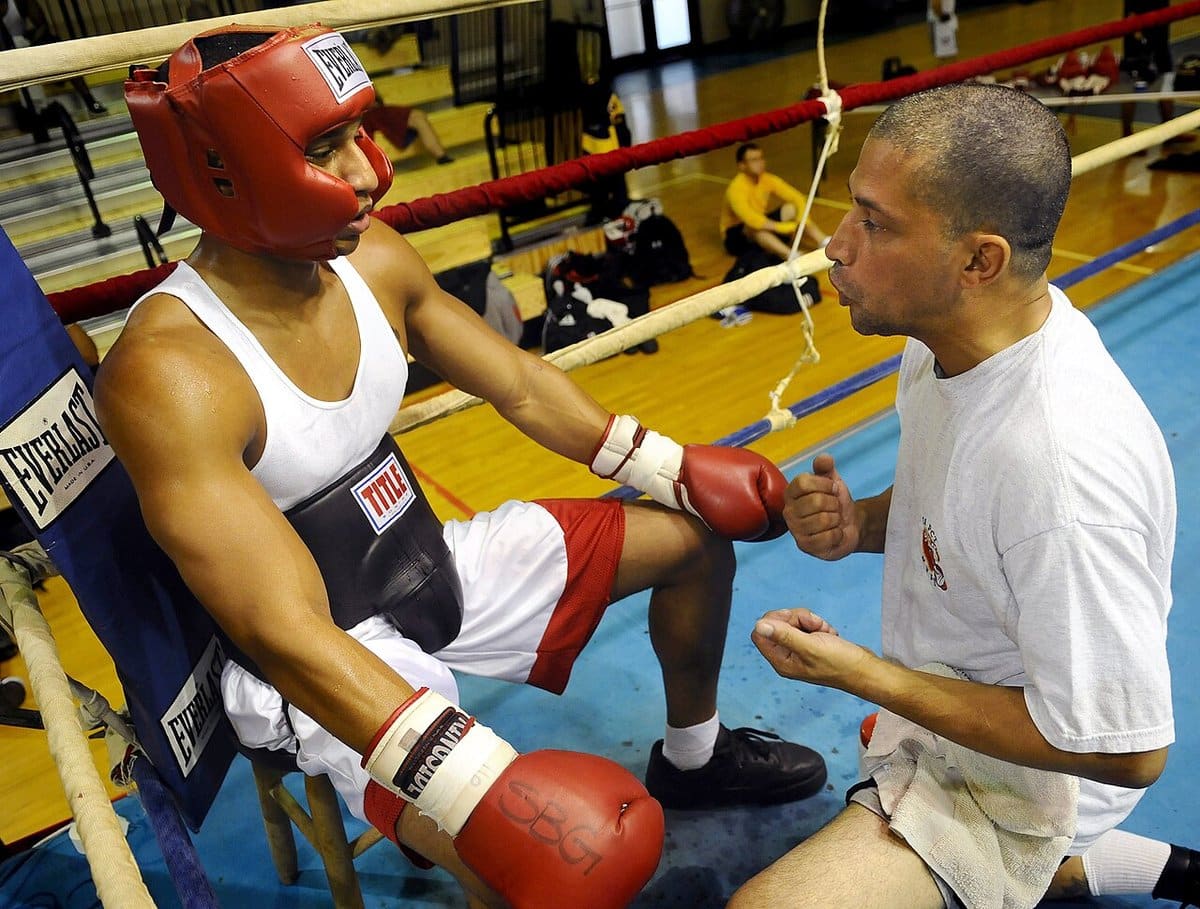
- Headgear: not worn in professional fights. Elite amateur men box without it, while youth and many amateur events require it.
Ring sizes, rope heights and the platform are listed in our guide to boxing ring dimensions.
Rounds and Fight Length
| Fight | Rounds | Round length |
|---|---|---|
| Pro debut and early fights | 4 or 6 | 3 min (often 2 min for women) |
| Pro undercard | 6 to 10 | 3 min |
| Pro championship, men | 12 | 3 min |
| Pro championship, women | 10 | 2 min |
| Olympic style amateur | 3 | 3 min |
Between rounds, fighters get one minute in their corner. Under the Unified Rules used by US commissions, the bell does not save a fighter who has been knocked down: the count continues even after the round has ended.
Scoring: The 10-Point Must System
Three judges sit at ringside and score every round independently. The fighter who wins the round must get 10 points, the loser 9. A knockdown usually makes it 10 to 8, two knockdowns 10 to 7, and a dominant round without a knockdown can also be scored 10 to 8. Judges look at clean, effective punches, defense, ring generalship and effective aggression.
| Result | What it means |
|---|---|
| Unanimous decision | All three judges have the same winner |
| Split decision | Two judges for one fighter, one for the other |
| Majority decision | Two judges for one fighter, one scores a draw |
| Draw | No winner on the scorecards, for example 1 to 1 with one even card |
| Technical decision | A fight stopped by an accidental foul after enough rounds goes to the cards |
Knockdowns, Knockouts and Stoppages
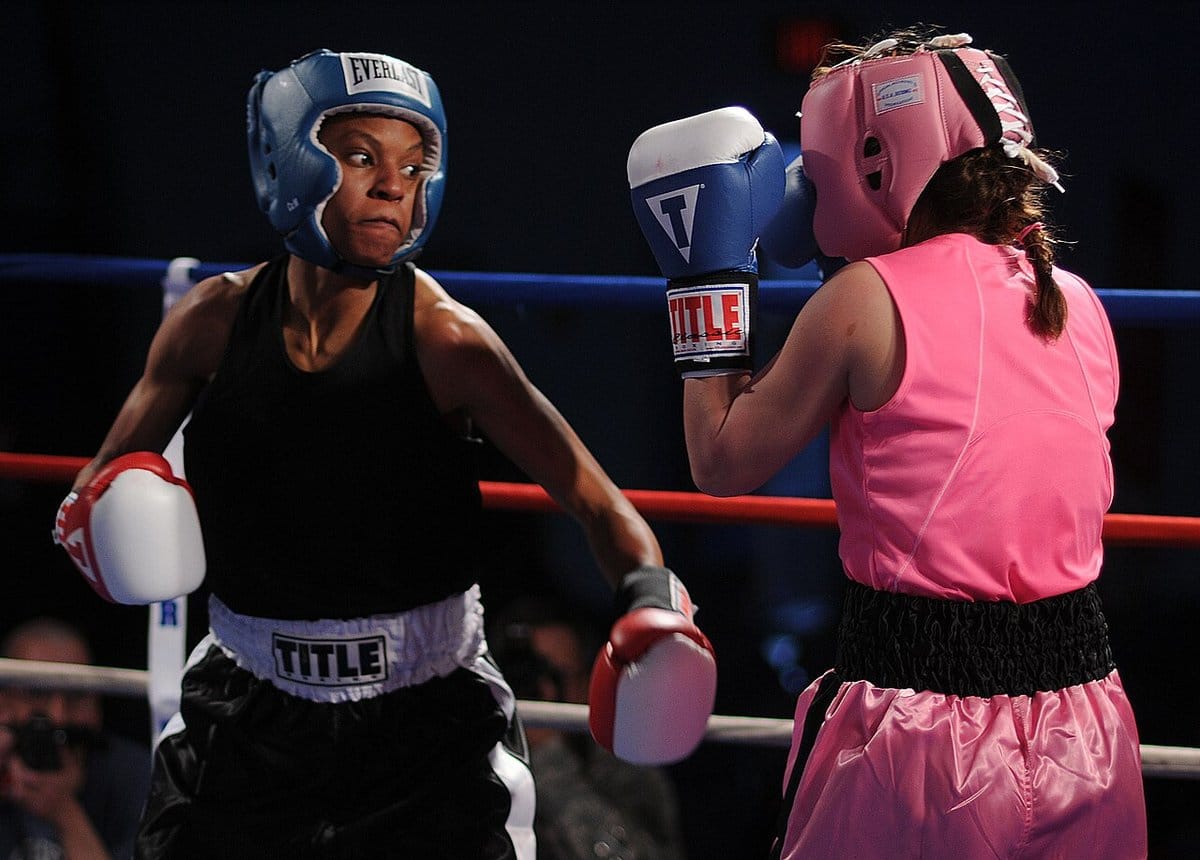
A knockdown happens when a fighter touches the canvas with anything other than the feet after a legal punch, or hangs helplessly on the ropes. The opponent goes to a neutral corner while the referee counts. Most commissions use a mandatory eight count, so the fighter has to wait until eight even if he or she gets up sooner.
- Knockout (KO): the fighter cannot continue before the count of ten.
- Technical knockout (TKO): the referee, the ringside doctor or the corner stops the fight because a fighter cannot defend himself or herself.
- Retirement (RTD): a fighter or the corner quits between rounds.
- Disqualification (DQ): the referee ends the fight after serious or repeated fouls.
Fouls
| Foul | What it is |
|---|---|
| Low blow | Any punch below the belt line |
| Rabbit punch | A punch to the back of the head or neck |
| Kidney punch | A punch to the back of the body |
| Holding | Grabbing the opponent or the ropes instead of breaking |
| Headbutt | Leading with or striking with the head |
| Hitting on the break | Punching when the referee has ordered both fighters apart |
| After the bell | Punching after the round has ended |
| Elbow, forearm, open glove | Striking with anything but the knuckle part of the glove |
The referee can warn, deduct a point or disqualify, depending on how bad the foul is and whether it was intentional. When an accidental headbutt opens a cut and the fight has to stop early, the result depends on how many rounds have been completed: early on it is usually a no decision or technical draw, later it goes to the scorecards.
Weight Classes
Professional boxing has 17 traditional weight classes, from minimumweight at 105 pounds to heavyweight with no upper limit. Fighters weigh in the day before the fight, and missing the limit can cost a title shot or part of the purse.
| Class | Limit |
|---|---|
| Flyweight | 112 lb |
| Bantamweight | 118 lb |
| Featherweight | 126 lb |
| Lightweight | 135 lb |
| Welterweight | 147 lb |
| Middleweight | 160 lb |
| Light heavyweight | 175 lb |
| Cruiserweight | 200 lb |
| Heavyweight | No limit |
Pro vs Amateur Boxing
| Rule | Professional | Olympic style amateur |
|---|---|---|
| Rounds | 4 to 12 of 3 min | 3 of 3 min |
| Scoring | 10-point must, three judges | 10-point must, five judges |
| Headgear | No | Not for elite men, often for others |
| Gloves | Usually 8 to 10 oz | Usually 10 to 12 oz |
| Goal | Damage and dominance count | Clean, scoring blows count most |
Tips for Watching Your First Fight
- Keep your own scorecard round by round. It shows why judges sometimes disagree.
- Watch the jab. The fighter who controls the jab usually controls the distance.
- Look at the body shots. They rarely end a fight at once but slow a fighter down.
- Learn some boxing terms like southpaw, clinch and counterpunch.
More Reading
- Boxing lingo and slang
- Boxing equipment list
- History of boxing
- Wrestling ring vs boxing ring vs MMA cage
- Common boxing injuries
- Boxing quiz

FAQ
What are the basic rules of boxing?
Two fighters hit each other only with closed, gloved fists above the belt. Rounds last three minutes in men’s pro boxing, three judges score each round 10 to 9, and a fight ends by knockout, stoppage, disqualification or decision.
How many rounds are in a boxing match?
Pro fights have 4 to 12 rounds, championship fights 12 for men and 10 for women. Olympic style amateur bouts have 3.
How does scoring work in boxing?
Each judge gives the winner of a round 10 points and the loser 9 or less. A knockdown usually makes the round 10 to 8.
What is a TKO in boxing?
A technical knockout: the referee, the doctor or the corner stops the fight because a fighter can no longer defend himself or herself.
Is it legal to hit below the belt?
No. A low blow is a foul and can cost a point or lead to disqualification.
What is a standing eight count?
A count the referee gives a fighter who is hurt but still on his or her feet. Many pro commissions do not use it, while some amateur events do.
How many weight classes are there in boxing?
Professional boxing has 17 traditional weight classes, from 105 pounds to heavyweight.
Can a boxer be saved by the bell?
Not under the Unified Rules used by US commissions. A fighter who has been knocked down keeps being counted even after the bell.


No comments yet
What's your take?
What's your opinion, or think we got something wrong? Tell us and other readers.
Our editors read every comment.