

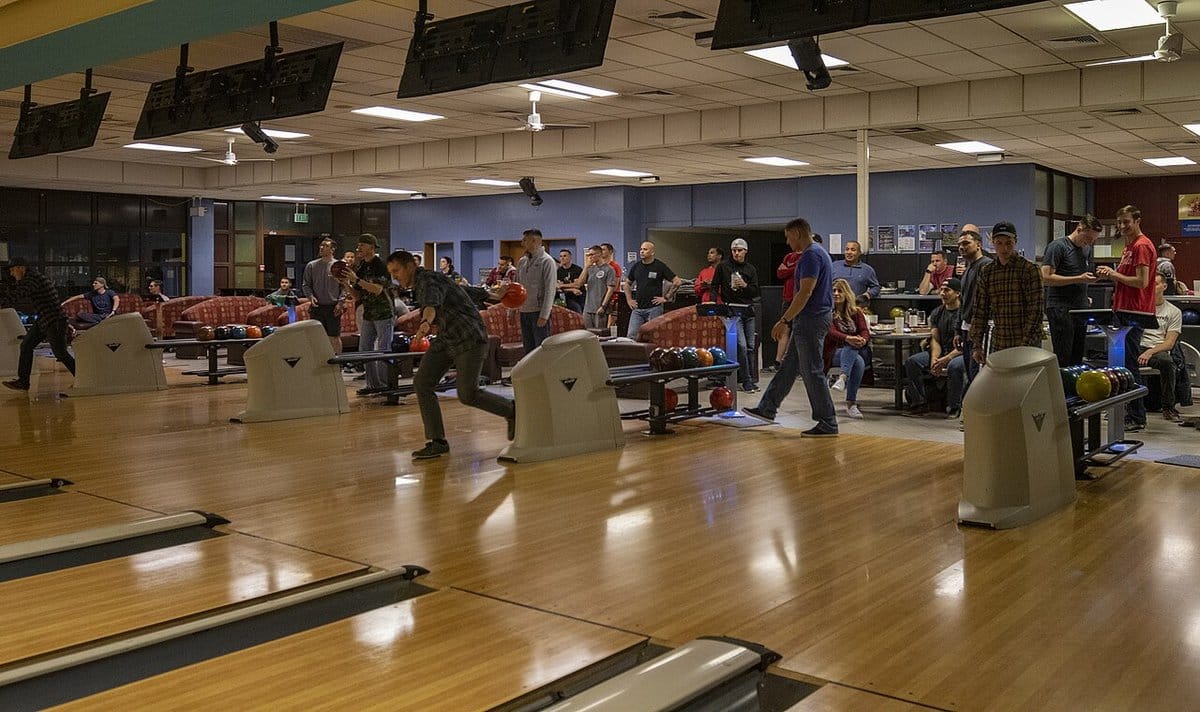
Bowling rules explained: frames and the tenth frame, strikes and spares, how scoring works with examples, the foul line, splits and league etiquette.
Most people learn bowling at a birthday party, and most never learn how the score actually works, because the computer above the lane does the math. The rules are simple once you see them laid out: ten frames, two balls per frame, and bonus points for strikes and spares.
This guide explains ten pin bowling as played in the US, following the rules of the United States Bowling Congress. It covers the lane, frames, strikes and spares, how to keep score with a worked example, fouls, and the etiquette regulars expect on league night.
Jump to:
- Bowling Rules in 60 Seconds
- The Lane and the Pins
- Frames, Strikes and Spares
- How to Keep Score: An Example
- Fouls and Dead Balls
- Splits and Common Leaves
- Handicap and League Play
- Etiquette on League Night

Bowling Rules in 60 Seconds
- Ten frames per game. Each bowler gets up to two balls per frame to knock down the ten pins.
- Strike: all ten pins with the first ball. It scores 10 plus the next two balls.
- Spare: all ten pins with two balls. It scores 10 plus the next ball.
- Do not cross the foul line. A foul counts as zero for that ball.
- A perfect game is 300: twelve strikes in a row.
The Lane and the Pins
A bowling lane is 60 feet from the foul line to the center of the head pin and about 41.5 inches wide, with gutters on each side. The ten pins stand in a triangle, 12 inches apart, numbered 1 to 10 from front to back. Bowlers start on the approach in front of the foul line and must release the ball before the foul line. Our comparison of a bowling alley and a billiards table puts the lane length in perspective.
Lane length and width, the approach and the pin spacing are listed in our guide to bowling lane dimensions.
Frames, Strikes and Spares
- Open frame: pins are left standing after two balls. The frame scores the number of pins knocked down.
- Spare: all pins down with two balls, marked with a slash. The frame scores 10 plus the pins from the next ball.
- Strike: all pins down with the first ball, marked with an X. The frame scores 10 plus the pins from the next two balls, and the bowler does not roll a second ball in that frame.
- Tenth frame: a strike in the tenth frame earns two more balls, a spare earns one more. That is why a perfect game needs twelve strikes.
How to Keep Score: An Example
The bonus is what makes bowling scores look strange. Here are the first five frames of a sample game:
| Frame | Balls | Frame score | Running total |
|---|---|---|---|
| 1 | Strike | 10 + 7 + 2 = 19 | 19 |
| 2 | 7, then 2 | 9 | 28 |
| 3 | 8, then spare | 10 + 10 = 20 | 48 |
| 4 | Strike | 10 + 9 + 0 = 19 | 67 |
| 5 | 9, then 0 | 9 | 76 |
In frame 3, the spare gets the 10 from the strike in frame 4 as its bonus. In frame 1, the strike gets the 7 and 2 from frame 2.
Fouls and Dead Balls
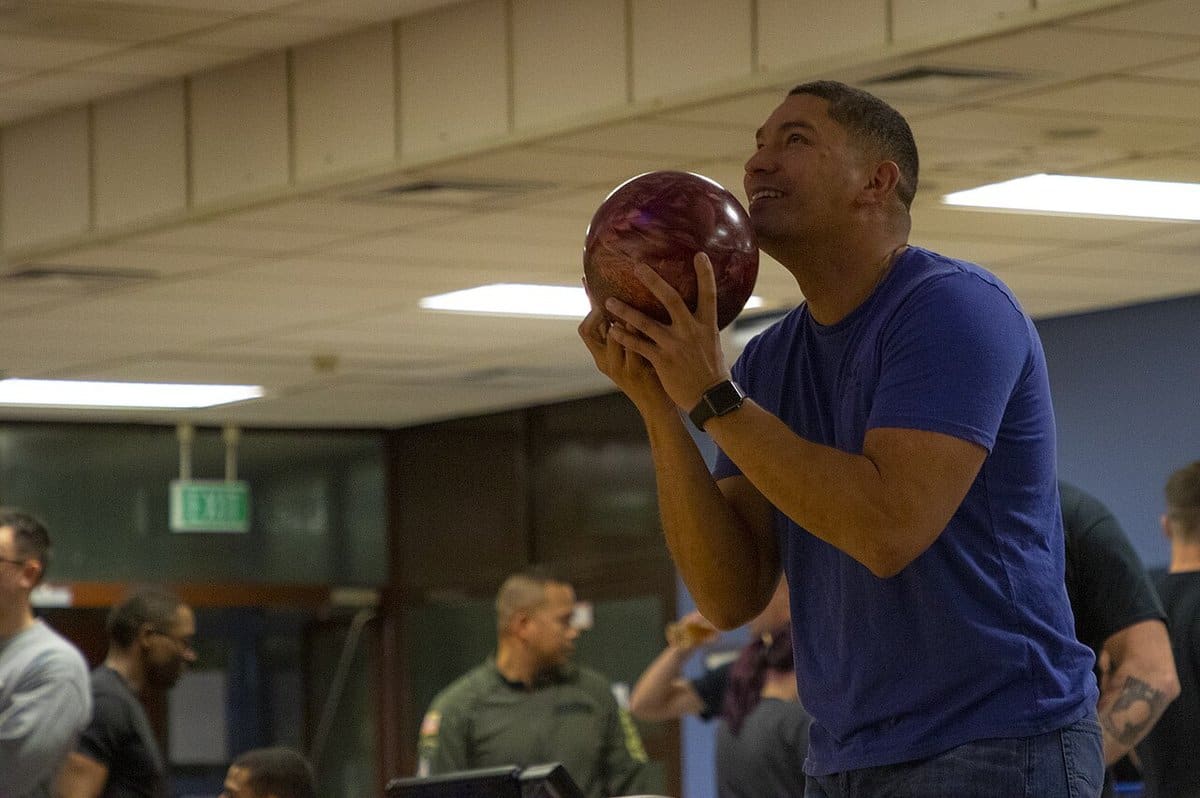
A foul is called when any part of the bowler’s body touches or crosses the foul line and touches the lane, equipment or building beyond it during or after the delivery. A fouled ball counts as zero pins, even if pins fall. If the foul happens on the first ball, the pins are reset and the bowler gets a second ball, which can still make a spare.
A dead ball is declared when something goes wrong that is not the bowler’s fault, such as a pin missing from the rack or interference from another bowler. The ball does not count and is rolled again. A ball that leaves the lane into the gutter and then knocks down pins counts zero for those pins.
Splits and Common Leaves
| Leave | Pins | Difficulty |
|---|---|---|
| Single pin spare | Any one pin, often the 10 pin for right handers | Easy to medium |
| Baby split | 2 and 7 or 3 and 10 | Medium |
| Big four | 4, 6, 7 and 10 | Very hard |
| 7-10 split | The two back corners | Close to impossible |
A split is a leave where the head pin is down and the remaining pins have a gap between them. Scoring sheets mark splits with a circle.
Handicap and League Play
| Format | How it works |
|---|---|
| Scratch | Actual pinfall only |
| Handicap | Bowlers receive extra pins based on their average, often 90 percent of the difference to a base score such as 220 |
| Baker format | Five team members bowl two frames each to make one team game |
| Candlepin and duckpin | Regional variants with smaller balls, three balls per frame and different pins |
Etiquette on League Night
- The bowler on the right goes first when two bowlers on neighboring lanes are ready at the same time.
- Stay off the approach unless it is your turn, and wear bowling shoes only.
- Do not talk to a bowler who is on the approach.
- Learn some bowling terms like turkey, brooklyn and pocket.
More Reading
- Bowling lingo and slang
- Bowling equipment list
- History of bowling
- Bowling alley vs billiards table
- Common bowling injuries
- Bowling quiz

FAQ
What are the basic rules of bowling?
Each bowler rolls up to two balls per frame to knock down ten pins, over ten frames. A strike scores 10 plus the next two balls, a spare 10 plus the next ball, and stepping over the foul line counts as zero.
How does scoring work in bowling?
An open frame scores the pins knocked down. A spare scores 10 plus the next ball, a strike 10 plus the next two balls, and the totals are added frame by frame.
What is a perfect score in bowling?
300, which takes twelve strikes in a row.
What happens in the tenth frame?
A strike earns two more balls, a spare earns one more. Otherwise the game ends after two balls.
What is a foul in bowling?
Touching or crossing the foul line during the delivery. The ball scores zero.
How long is a bowling lane?
60 feet from the foul line to the head pin.
What is a turkey in bowling?
Three strikes in a row.
What is the hardest split in bowling?
The 7-10 split, with only the two back corner pins left standing.


No comments yet
What's your take?
What's your opinion, or think we got something wrong? Tell us and other readers.
Our editors read every comment.