

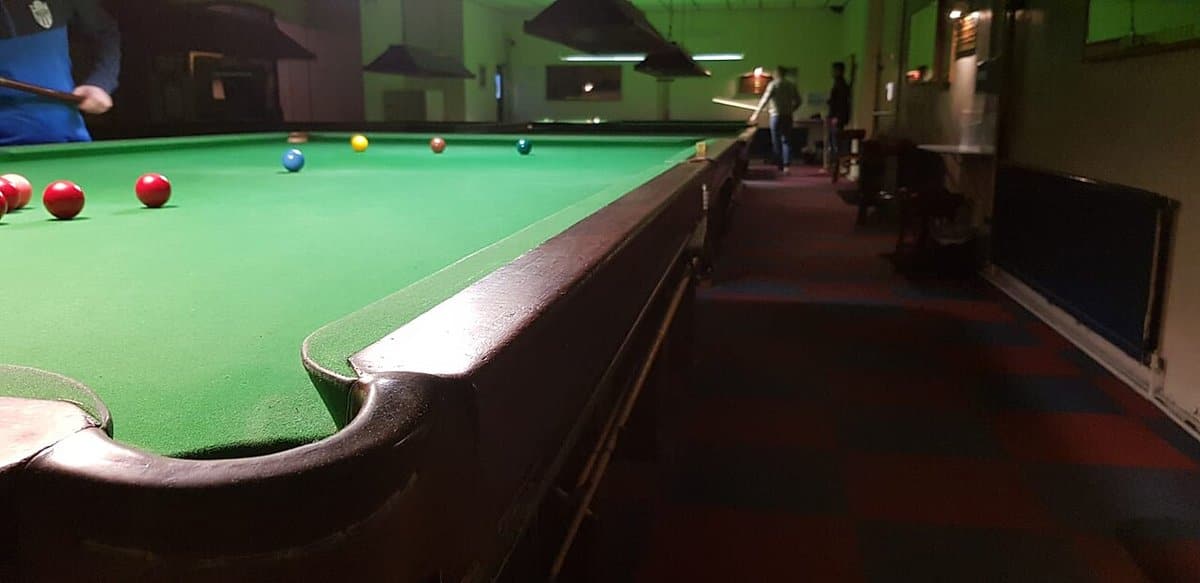
Billiards rules explained: how to play 8-ball and 9-ball pool, the break, legal shots, fouls and ball in hand, how you win and lose, plus snooker in brief.
Billiards is the umbrella term for cue sports, and in the US it mostly means pool. Every game uses the same basic idea: hit the white cue ball with the cue so that it strikes other balls and sends them into the pockets. What changes from game to game is which balls you may hit and in which order.
This guide explains the two most popular pool games, 8-ball and 9-ball, following the World Standardized Rules of the World Pool Association. Bar and house rules often differ, and we point out the most common differences, then finish with a short look at snooker.
Jump to:
- Billiards Rules in 60 Seconds
- The Table and the Balls
- The Break
- 8-Ball Rules
- 9-Ball Rules
- Fouls
- Pool vs Snooker vs Carom
- Tips for Your First Game

Billiards Rules in 60 Seconds
- Only hit the cue ball with the cue tip, and only once per shot.
- Hit the right ball first. In 8-ball that is a ball from your group, in 9-ball the lowest numbered ball on the table.
- Pocket a ball or reach a rail. After contact, a ball must go into a pocket or any ball must hit a cushion.
- Pocket a ball, keep shooting. Your turn continues until you miss or foul.
- A foul gives ball in hand. Your opponent may place the cue ball anywhere on the table.
The Table and the Balls
Pool tables come in three common sizes: 9 foot tables for tournaments, 8 foot tables for homes, and 7 foot bar boxes. All have six pockets. A set of pool balls has the white cue ball plus 15 numbered balls: 1 to 7 are solid colors, 9 to 15 are striped, and the 8 is black. Our comparison of a bowling alley and a billiards table puts the table size in perspective.
Table sizes, pocket openings and the room a table needs are listed in our guide to pool table dimensions.
The Break
For 8-ball, all 15 balls are racked in a triangle with the 8 in the middle. For 9-ball, the 1 to 9 are racked in a diamond with the 1 at the front and the 9 in the center. The breaker shoots from behind the head string, the line across the first quarter of the table.
- A legal break in 8-ball must pocket a ball or drive at least four balls to a cushion. In 9-ball, the cue ball must hit the 1 first, and a ball must be pocketed or at least four balls must reach a cushion.
- If the break is illegal, the opponent may accept the table or have it re-racked.
- If the cue ball goes into a pocket on the break, it is a foul.
8-Ball Rules
After the break, the table is open: neither player has a group yet. The first player to legally pocket a called ball after the break takes that group, solids or stripes, and the opponent gets the other. You have to pocket all seven balls of your group and then the 8 ball.
- Call your shot: name the ball and the pocket, unless it is obvious. Bank shots and combinations are never considered obvious, so call them.
- Legal shot: the cue ball must hit a ball of your group first, then a ball must be pocketed or any ball must touch a cushion.
- Winning: you win by legally pocketing the 8 ball in the called pocket after clearing your group.
- 8 ball on the break: under WPA rules this is not a loss. The breaker may have the balls re-racked or spot the 8 and continue.
You lose the game if you pocket the 8 ball before your group is cleared, pocket it in a pocket you did not call, foul while pocketing it, or knock it off the table.
9-Ball Rules
- On every shot, the cue ball must hit the lowest numbered ball on the table first.
- Any ball may be pocketed along the way. Combinations are allowed, and shots do not have to be called.
- The player who legally pockets the 9 ball wins, at any point in the game, even on the break.
- After the break, the shooter may play a push out: a shot that does not have to hit any ball. The opponent then chooses whether to shoot or to hand the turn back.
- Three fouls in a row by the same player lose the game, as long as the player was warned after the second.
Fouls
| Foul | What happened |
|---|---|
| Scratch | The cue ball goes into a pocket |
| Wrong ball first | The cue ball first hits a ball you were not allowed to hit, or no ball at all |
| No rail | After contact, no ball is pocketed and no ball touches a cushion |
| Ball off the table | A ball jumps off the table |
| Double hit | The cue tip touches the cue ball more than once on a stroke |
| Touched ball | You touch a ball with your hand, clothing or cue other than the cue tip on the cue ball |
| No foot on floor | You shoot without at least one foot touching the floor |
After a foul, the opponent gets ball in hand anywhere on the table. Many bar rules limit this to placing the cue ball behind the head string after a scratch.
Pool vs Snooker vs Carom
| Game | Table | Balls | Object |
|---|---|---|---|
| 8-ball | 7 to 9 ft, six pockets | Cue ball and 15 numbered balls | Clear your group, then pocket the 8 |
| 9-ball | 7 to 9 ft, six pockets | Cue ball and balls 1 to 9 | Pocket the 9 legally, always hitting the lowest ball first |
| Snooker | 12 ft, six narrower pockets | 15 reds, 6 colors, cue ball | Score more points by alternating reds and colors |
| Three cushion | 10 ft, no pockets | Two cue balls and one red | Hit both other balls, touching three cushions before the second |
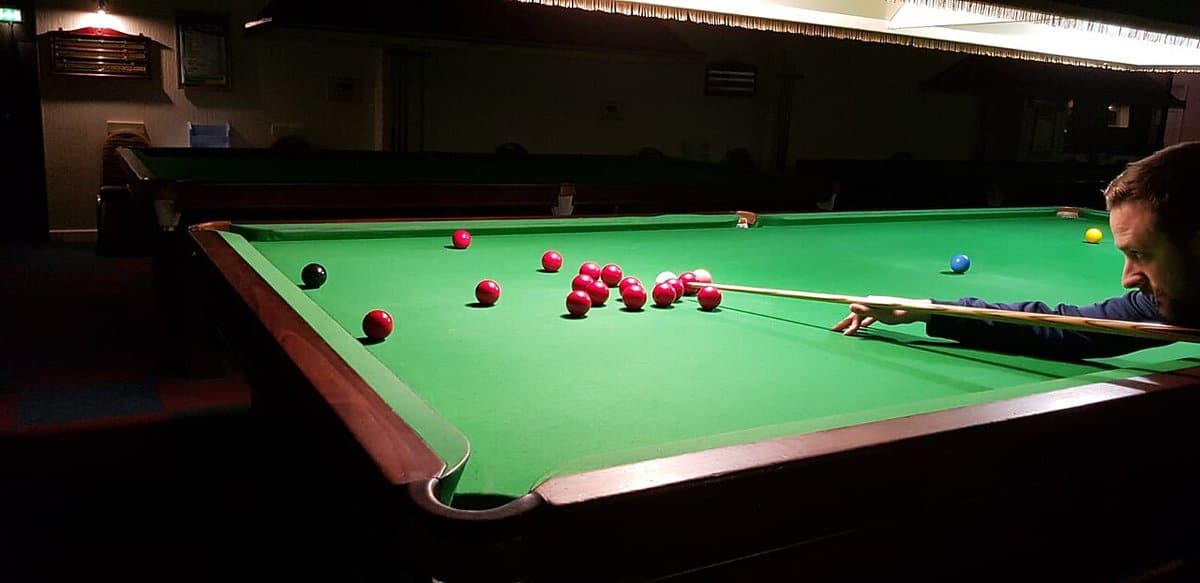
In snooker, a red is worth one point, the colors from yellow to black two to seven. A player pots a red, then a color, which is put back on its spot, until all reds are gone. Then the colors are potted in order of value.
Tips for Your First Game
- Agree on house rules before the break, especially on calling shots and ball in hand.
- Keep your head still and follow through straight. Most misses come from moving.
- Think one shot ahead. Where the cue ball stops matters as much as the ball you sink.
- Learn some billiards terms like English, kiss and safety.
More Reading
- Billiards lingo and slang
- Billiards equipment list
- History of billiards
- Bowling alley vs billiards table
- Common billiards injuries
- Billiards quiz

FAQ
What are the basic rules of pool?
Hit only the cue ball with the cue, strike a legal object ball first, and after contact pocket a ball or make any ball touch a cushion. You keep shooting while you pocket balls, and a foul gives your opponent ball in hand.
What happens if you scratch in pool?
It is a foul. Under WPA rules, the opponent gets ball in hand anywhere on the table. Many bar rules restrict it to behind the head string.
Is it a loss if you sink the 8 ball on the break?
Not under WPA rules. The breaker may re-rack or spot the 8 and keep shooting. Some bar rules count it as a win instead.
Do you have to call your shots in 8-ball?
Yes, the ball and the pocket, unless the shot is obvious. In 9-ball, shots do not need to be called.
What is ball in hand?
After a foul, the incoming player may place the cue ball anywhere on the table before shooting.
Can you win 9-ball on the break?
Yes. Pocketing the 9 on a legal break wins the game.
What is the difference between billiards and pool?
Billiards is the general term for all cue sports. Pool is the family of pocket games like 8-ball and 9-ball. Carom billiards is played on a table without pockets.
How many balls are in a pool set?
Sixteen: the cue ball and 15 numbered balls, seven solids, seven stripes and the black 8 ball.


No comments yet
What's your take?
What's your opinion, or think we got something wrong? Tell us and other readers.
Our editors read every comment.