Ten life vests for paddle boarding compared on fit, freedom of movement and how well each one suits time on a board.
Every vest in this list is in stock on Amazon right now, and every figure below comes from the manufacturer. The field runs from a 25 dollar inflatable snorkel vest to a fishing PFD with tackle pockets, so the first question is not which one is best but whether you want foam on your chest all day or something that stays flat until you need it.
Life vests for paddle boarding: the ten picks at a glance
What separates a life vest for paddle boarding from a general boating jacket is the cut around the arms and the back. Paddling means a full rotation of the shoulder on every stroke, so large armholes, a thin or mesh back panel and straps that stop the vest riding up matter more than the buoyancy number, which is fixed by the approval anyway.
Below you get the short version first: three picks for the most common cases, then the full table with all ten, then every vest in detail with specs, strengths and weaknesses.
- The paddle vest most boarders should buyOnyx MoveVent Dynamic
- Nothing on your chest at allOnyx M-16 inflatable belt pack
- The cheap foam vest that still worksStearns Adult Classic Series
- Pocket money and a mesh bagOMOUBOI Inflatable Snorkel Vest


| Vest | Type | Approval | Fit | Best for |
|---|---|---|---|---|
| Onyx MoveVent Dynamicbest overall | Foam paddle vest | USCG and Transport Canada | Adjustable side belts and shoulder straps | All-day paddling in warm weather |
| Onyx General Purpose Boating Vestcheapest approved vest | Foam, open sided | US Coast Guard approved | Universal, adjustable belts and chest strap | A spare vest for passengers |
| Onyx M-16 Belt Packleast bulk | Manual inflatable belt pack | USCG approved, age 16 and up | Universal body belt, front buckle | Paddlers who will not wear foam |
| Onyx Kayak Fishing Life Jacketmost storage | High-back foam fishing PFD | US Coast Guard approved | Adjustable straps, high-back cut | Fishing from a board or kayak |
| Stearns Adult Classic Seriesbest value | Foam, open sided | USCG approved Type III | Standard and oversized, adults over 90 lb | Guests and rental use |
| Stohlquist FITlightest foam vest | Sculpted foam panels | USCG and Transport Canada Type III | Three front buckles, 30 to 52 inch chest | Paddlers who hate ride-up |
| Hardcore Paddle Vestcheap and bright | Polyester Cordura foam vest | UL listed, USCG approved Type III | Sizes for kids and adults | A second vest in the bag |
| OMOUBOI Inflatable Snorkel Vestpacks smallest | Blow-up snorkel vest | Not a USCG approved PFD | Adjustable, rated to 220 lb load | Flat warm water and travel |
| O Neill SuperLiteleast restrictive | Minimal bulk foam vest | USCG approved | Relaxed fit, sized by chest measurement | Full shoulder rotation |
| Connelly Teen Nylon Vestfor teens | Nylon foam vest, hidden belts | US Coast Guard approved | 90 to 120 lb wearers | Younger paddlers |
The ten life vests in detail
- Typefoam paddle vest, sculpted soft foam
- ApprovalUS Coast Guard and Transport Canada
- Ventilationmesh panels front and back
- Fitadjustable side belts and shoulder straps, neoprene fabric
- Storageexpandable zippered pocket
- Extrasbuilt-in whistle, SOLAS-grade reflective accents
Best for: Anyone who paddles for hours in warm weather and wants one vest that does everything
This is the vest to buy if you do not want to think about vests. Onyx built the MoveVent Dynamic around the two complaints paddlers have about foam: it is hot and it gets in the way of the stroke. The answer here is mesh ventilation panels front and back and large armhole openings with open sides, so air moves and the shoulder rotates.
The details are the reason it stays at the top. Dual US Coast Guard and Transport Canada approval, adjustable side belts and shoulder straps to stop ride-up, a sculpted soft foam shape that follows the body, an expandable zippered pocket for keys or a bar, and SOLAS-grade reflective accents for low light. The back mesh panel also means it does not fight a seat back, which matters if the same vest goes in a kayak on other days.
Pros
- Mesh panels front and back move air through the vest instead of trapping it against your back
- The back mesh panel clears a canoe or kayak seat, so the same vest works on a board and in a boat
- Large armhole openings leave the shoulder free through a full stroke
- SOLAS-grade reflective accents and a built-in whistle are both there without buying extras
Cons
- At around 85 dollars it sits at the top of this list on price
- The zippered pocket is small, so this is not the fishing vest
- Neoprene at the shoulders holds water and stays damp longer than plain nylon
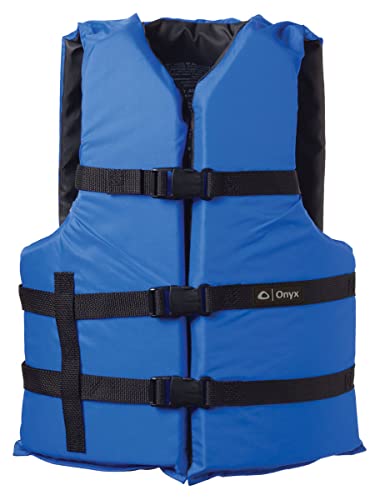
- Typegeneral purpose foam vest, open sided
- ApprovalUS Coast Guard approved
- Flotationlightweight durable flotation foam
- Fitadjustable belts and chest strap
- Cutlarge armholes, open-sided styling
- Visibilitybright colors
Best for: A spare vest to keep in the car for whoever shows up wanting to paddle
The Onyx General Purpose is the vest that makes the case for buying two. It is a plain foam boating jacket: flotation foam, a nylon shell, adjustable belts, a chest strap and large armholes, US Coast Guard approved and nothing more.
That is enough for a lot of paddling. If you go out for an hour on flat water, or you need a vest for a friend who owns no gear, the difference between this and a dedicated paddle vest is comfort rather than safety. Where it falls behind is heat and stroke length: no ventilation panels, no sculpted foam, so on a hot afternoon you feel it against your back long before the MoveVent wearer does.
Pros
- Around 26 dollars, the cheapest approved vest in this list by a wide margin
- The chest strap plus adjustable belts stop the ride-up that makes cheap vests useless
- Large armholes and open sides keep the arms free despite the basic cut
- Bright colors do the visibility job that reflective tape does on pricier vests
Cons
- No mesh back panel, so it sits hot against the spine on a long paddle
- No pockets at all
- A general purpose shape rather than a paddling cut, which shows on long sessions
- Typemanual inflatable belt pack
- ApprovalUS Coast Guard approved, users 16 and up, over 80 lb
- Buoyancy17 lb from a 16 gram CO2 charge
- Backuporal inflation up to 26.5 lb
- Weightunder 1 pound
- Fituniversal body belt with front buckle closure
Best for: Paddlers who will not wear a foam vest and would otherwise leave it strapped to the board
The M-16 solves a different problem than every foam vest here: the vest you actually wear. It is a belt pack, so it sits at your waist, weighs less than a pound and leaves your chest and shoulders completely clear. On a board, where the reason people skip a PFD is bulk and heat, that is the whole argument.
The trade is that inflation is manual. Pull the handle and a 16 gram CO2 charge gives 17 pounds of buoyancy, and a back-up oral tube takes it to 26.5 pounds if you need more. Nothing happens on its own, so this is a vest for competent swimmers on water where a swim to shore is realistic, not for cold water or surf. It is approved for users 16 and older and over 80 pounds, and it can be rearmed and reused after each inflation.
Pros
- Under a pound at the waist, so nothing touches your shoulders or your stroke
- 17 lb of buoyancy on the CO2 charge, and oral inflation takes it to 26.5 lb
- The inflation handle clips to the jacket, which removes the usual snag hazard
- Rearmable after every use, so a false pull costs a rearming kit rather than the vest
Cons
- Manual only, which means it does nothing if you are unconscious in the water
- Not approved for under 16s or anyone under 80 lb
- You have to buy and store rearming kits, and check the charge before every season
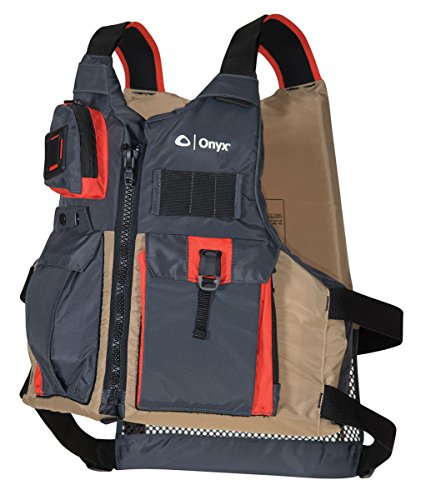
- Typehigh-back foam fishing PFD
- ApprovalUS Coast Guard approved
- Storagemultiple zippered pockets, tool holders, D-ring attachments
- Backhigh-back design plus mesh lower back
- Shellheavy-duty nylon
- Fitadjustable straps
Best for: Anyone who fishes from a board or a kayak and wants pliers and tackle within reach
This is a fishing PFD that happens to work on a paddle board, and if you fish it is the obvious pick. The pockets are the point: zippered storage, tool holders and D-ring attachment points put pliers, a radio and tackle where you can reach them one-handed while the board drifts.
Onyx kept the paddling basics under the storage. The high-back design sits above a kayak seat back, mesh through the lower back and shoulders keeps some airflow, adjustable straps pull it tight, and the shell is heavy-duty nylon rather than the thin fabric on the cheap vests. If you never fish, skip it and save 40 dollars; the extra pockets are dead weight on a plain paddle.
Pros
- Multiple pockets, tool holders and D-rings mean the gear rides on you, not in a bag on the nose of the board
- The high-back cut clears a raised kayak seat, which most paddle vests do not
- Mesh in the lower back and shoulders keeps the ventilation despite all the extra fabric
- Heavy-duty nylon holds up to hooks and rod handles better than a thin shell
Cons
- The most expensive vest here at around 89 dollars
- All that storage adds bulk you do not want if you are not fishing
- Loaded pockets change how the vest sits, so it needs re-adjusting once packed
- Typeopen-sided foam vest
- ApprovalUSCG approved Type III
- Flotationlightweight PE flotation foam
- Shellsoft durable nylon
- Fitthree adjustable buckles, standard and oversized fits
- Weareradults 90 lb and up
Best for: A dependable second vest, or a first vest for someone paddling a handful of times a year
The Stearns Classic is what most people picture when they think life jacket, and it is priced accordingly. A soft nylon shell over lightweight PE flotation foam, three adjustable buckles, open sides, USCG approved Type III, rated for adults over 90 pounds, in standard and oversized fits.
For paddle boarding it is a sensible compromise rather than a specialist. The open-sided design does most of what a paddle cut does for the arms, and the three buckles keep it from riding up when you fall. What you give up is the mesh back, the sculpted foam and the pockets. Buy it as the vest that lives in the car, and buy the MoveVent for yourself.
Pros
- Around 40 dollars for a Type III with a nylon shell and PE foam, which is the sweet spot in this list
- Three adjustable buckles hold the fit better than a single-belt budget vest
- Open-sided design lets air through and keeps the arms clear
- Standard and oversized fits, so one model covers most adult bodies
Cons
- No mesh back panel and no pockets
- A general watersports shape rather than a paddling-specific cut
- Foam sits higher on the chest than a sculpted paddle vest, so it can nudge a PFD-mounted leash
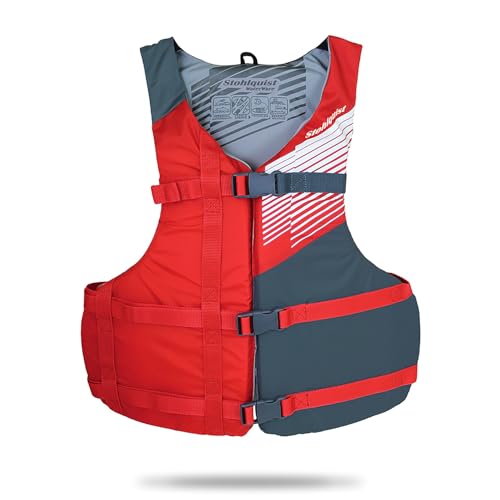
- Typesculpted foam panel Type III PFD
- ApprovalUSCG and Transport Canada, adults 90 lb and up
- Weight0.7 lb
- Shell200D nylon with box-stitched webbing
- Fitthree front buckles plus side straps, 30 to 52 inch chest
- Backlow-profile back panel
Best for: Paddlers who keep pushing a vest back down after every fall
Stohlquist has been building paddling PFDs since 1977, and the FIT is their answer to the vest people take off after an hour. It weighs 0.7 pounds, the foam is cut into sculpted panels rather than one slab, and the back panel is deliberately thin so it clears a seat back and does not push you forward.
The construction detail worth knowing is the webbing. Box-stitched webbing holds better under load than the bar-tack stitching common on economy vests, which is what usually fails first on a cheap PFD. Three front buckles and side straps cover a 30 to 52 inch chest, and it is USCG and Transport Canada approved for adults 90 pounds and up. This replaced the older FIT listing, which is no longer available.
Pros
- 0.7 lb, the lightest foam vest in this list by a clear margin
- Sculpted foam panels and a low-profile back give unrestricted shoulder movement
- Box-stitched webbing lasts longer than the bar-tack stitching on economy PFDs
- The low back panel clears a kayak seat as well as a board
Cons
- No pockets and no mesh ventilation panels
- A universal size covering 30 to 52 inches will not fit narrow or very broad chests as well as a sized vest
- The plain nylon shell scuffs where it meets a hard board rail
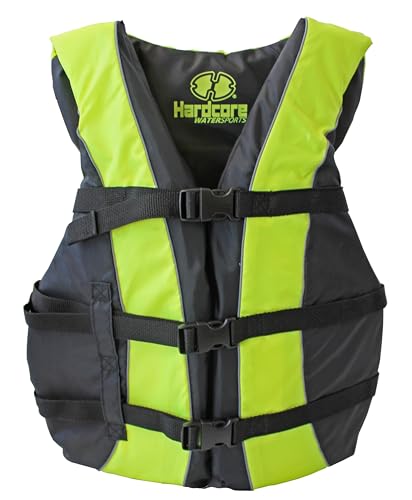
- Typefoam paddle vest
- ApprovalUL listed, US Coast Guard approved Type III
- Shellpolyester Cordura fabric
- Flotationclosed cell PE foam
- Straps1 inch adjustable webbing with quick-release buckles
- Sizeskids and adults
Best for: A second or third vest for a household that paddles together
The Hardcore Paddle Vest is the workhorse of this list. It is a Type III PFD in closed cell PE foam with a polyester Cordura shell, UL listed and US Coast Guard approved, with 1 inch adjustable webbing and quick-release buckles.
What makes it worth including over the other cheap vests is the shell. Cordura is the fabric used where abrasion matters, and on a board that means dragging the vest over a rail or a roof rack without fraying it. It is designed to hold a wearer face-up in calm water with the head tilted back, which is the standard Type III behavior, and it comes in sizes down to kids. Buy it as the spare, not as the vest you wear all summer.
Pros
- Around 34 dollars for a UL listed Type III, which undercuts most paddle-cut vests
- Cordura polyester is a tougher shell fabric than the plain nylon on vests at this price
- Quick-release buckles on 1 inch webbing come off fast when you are cold and wet
- Sizes run from kids to adults, so one model covers the whole family
Cons
- No mesh back panel and no ventilation cut
- No pockets or attachment points
- The sizing runs by t-shirt size rather than a chest measurement, so returns are common

- Typeblow-up snorkel and buoyancy vest
- Approvalnot a USCG approved PFD
- Materialhigh density polyester with PVC
- Loadrated to a 220 lb maximum
- Weight11 oz
- Packed sizefolds to about the size of a book
Best for: Warm flat water and travel, where a foam vest will not fit in the bag
This is the only vest here that is not an approved PFD, and that has to be said first. Where the law requires a USCG approved device on board, this does not count. It is a snorkel vest: a polyester and PVC bladder you blow up by mouth in about ten seconds through the original valve.
What it does well is travel. At 11 ounces and folded to about the size of a book, it goes into a bag you already packed, and it inflates only when you want it. The zippered closure and grid back sit better than the pullover snorkel vests it competes with, and the maximum load is 220 pounds. Treat it as warm flat water gear that replaced the discontinued Rrtizan swim vest in this list, and keep an approved vest on the board.
Pros
- 11 oz and book-sized when deflated, so it goes in hand luggage with the paddle leash
- Inflates in about 10 seconds by mouth through the original valve
- A zipper closure and grid back are more comfortable than a pullover snorkel vest
- Around 25 dollars, the cheapest way to have flotation on the board
Cons
- Not a US Coast Guard approved PFD, so it does not satisfy the legal requirement on most water
- A punctured bladder means no flotation at all, unlike foam
- Rated to a 220 lb load, so heavier paddlers are outside the specification

- Typeminimal bulk foam vest
- ApprovalUSCG approved personal flotation device
- Flotationlightweight polyethylene foam
- Shelldurable coated polyester
- Bucklesquick-release Delrin
- Fitrelaxed cut, sized by chest measurement
Best for: Paddlers who want full shoulder movement and find unisex vests cut too straight
O Neill built the SuperLite around one idea: the vest you forget you are wearing. Lightweight polyethylene foam in a minimal bulk shape with a coated polyester shell, quick-release Delrin buckles and the most relaxed fit in the range, which the company points at a wide variety of body types.
For paddle boarding the relevant part is mobility. The cut leaves the shoulder alone, which is what decides whether you still have the vest on after two hours. It is a US Coast Guard approved personal flotation device, so it satisfies the same requirement as the foam vests higher up. Sizing runs by chest measurement, for example a small covering a 30 to 33 inch chest, so measure before ordering.
Pros
- A minimal bulk design that allows full mobility, which is the point on a board
- Quick-release Delrin buckles do not corrode the way cheap metal hardware does
- The most relaxed fitting vest in O Neill range, so it suits a wide variety of body types
- Coated polyester shell holds up better to sun than an uncoated fabric
Cons
- Around 50 dollars for a vest with no pockets and no mesh panels
- Sized by chest measurement, so ordering the wrong size means a return
- A women specific cut, so it is not the vest to buy as a shared spare

- Typenylon foam vest
- ApprovalUS Coast Guard approved
- Wearer90 to 120 lb
- Beltshidden belts for increased mobility
- Bucklesquick-release with adjustable straps
- Shellnylon
Best for: A teenage paddler who has outgrown a child vest but swims in an adult vest
Fit is what makes a life jacket work, and a teenager between child and adult sizing is the case where most households get it wrong. An adult vest on a 100 pound paddler rides up over the ears in the water, which is exactly what a vest must not do.
The Connelly Teen is built for that window: nylon shell, foam flotation, US Coast Guard approved, rated for 90 to 120 pounds. The hidden belts keep the outside smooth and the arms clear, and quick-release buckles with adjustable straps mean it can be re-fitted as the wearer grows through the range. Once they pass 120 pounds, move them to one of the adult vests above.
Pros
- Sized for the 90 to 120 lb gap that adult and child vests both miss
- Hidden belts keep the profile clean and leave the arms free
- Quick-release buckles and adjustable straps let a growing wearer re-fit it each season
- A US Coast Guard approved vest at around 50 dollars from a watersports brand
Cons
- The narrow 90 to 120 lb window means it is outgrown in a year or two
- No pockets, no mesh back, no paddling-specific ventilation
- Useless as a shared vest, because nobody outside that weight range should wear it
Checklist: What Makes a Great Life Vest for Paddle Boarding
- USCG Approval: Confirm the life vest is U.S. Coast Guard approved, ensuring it meets safety performance standards for buoyancy and is designed to keep you safe on the water.
- Size and Fit: Choose a life vest that offers size options suited to your body type. A proper fit is crucial for both comfort and safety, with adjustable straps for a snug and secure feeling.
- Comfort and Mobility: Look for features like lightweight foam, neoprene shoulder pads, and large armholes, which offer unrestricted movement and enhance comfort during paddling.
- Material Durability: Surviving the outdoor elements is key, so select a vest made from robust materials like nylon oxford fabric, which withstand repeated exposure to sun and water.
- Visibility: Opt for life vests that feature bright colors or SOLAS-grade reflective material to enhance visibility in different water conditions and aid quick rescue, if necessary.
- Additional Features: Consider vests with added benefits such as cooling mesh backs, zippered pockets for gear storage, and attachment points for accessories, which can improve your overall paddling experience.

FAQ
Is a life vest necessary for paddle boarding?
Yes, wearing a life vest is crucial for safety when paddle boarding as it provides buoyancy and helps prevent drowning in case of accidents.
How do I choose the right size life vest for paddle boarding?
Select a life vest in a size that fits your body type snugly, with adjustable straps to ensure comfort and security while allowing free movement during paddle boarding.
What features are important in a life vest for paddle boarding?
Important features in a life vest for paddle boarding include USCG approval, size and fit customization, comfort, mobility, durable materials, high visibility, and additional functionalities like gear storage.