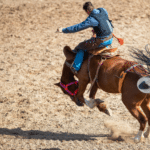
Horse racing was in the ancient Olympic Games from 680 BCE, and every thoroughbred alive descends from three stallions brought to England around 1700.
The timeline covers the Byerley Turk, the Darley Arabian and the Godolphin Arabian, the General Stud Book begun in 1791, the American Triple Crown that only thirteen horses have won, and the split between flat, jump and harness racing.

Key Facts
| How old is horse racing? | Chariot and mounted racing were part of the ancient Olympic Games from 680 BCE and of Roman circus programmes for centuries. |
| Where does the thoroughbred come from? | Three stallions imported to England around 1700, the Byerley Turk, the Darley Arabian and the Godolphin Arabian, sires of every thoroughbred alive. |
| What is the General Stud Book? | The breed register begun in 1791, which is why thoroughbred pedigrees can be traced further than almost any other animal’s. |
| What is the Triple Crown? | The Kentucky Derby, Preakness Stakes and Belmont Stakes in America. Only thirteen horses have won all three. |
| Who governs it? | National authorities such as the Jockey Club and the BHA, coordinated by the International Federation of Horseracing Authorities. |
| What are the main codes? | Flat racing, jump racing over hurdles and fences, and harness racing with a sulky, which are separate sports in practice. |
Horse Racing History Summary
- ⏳ Origins and Evolution: Horse racing’s origins trace back to ancient civilizations, with organized races taking place in Greece, Rome, and beyond. The sport evolved over centuries, with landmark events like the establishment of thoroughbred bloodlines and iconic racecourses shaping its development.
- 🚀 Rise to Prominence: The 18th and 19th centuries saw horse racing expand globally, thanks to the British Empire’s influence. Iconic races like the Kentucky Derby, the Grand National, and the Melbourne Cup emerged, cementing the sport’s prestige and allure.
- 🥇 Noteworthy Growth and Adaptation: Innovations in technology, broadcasting, and wagering contributed to horse racing’s continued popularity. Organizations like the International Federation of Horseracing Authorities foster global cooperation and support in maintaining the sport’s integrity and continued growth.
Timeline
| Year | What Happened |
|---|---|
| 680 BCE | Chariot racing enters the ancient Olympic Games, followed by mounted races soon after. |
| 12th century | English knights return from the Crusades with Arab horses and cross them with local stock. |
| 1600s | Newmarket is established under royal patronage and racing becomes the sport of kings in England. |
| 1750 | The Jockey Club is founded at Newmarket and gives racing its first central authority and rulebook. |
| 1791 | The General Stud Book is published and the thoroughbred becomes a closed and documented breed. |
| 1780 and 1839 | The Epsom Derby and the Grand National are founded, the two races that define flat and jump racing. |
| 1861 and 1875 | The Melbourne Cup and the Kentucky Derby begin, and racing becomes a national event in Australia and America. |
| 1900s | Photo finishes, starting gates and totalisator betting professionalise the sport. |
| 2000s to today | Medication rules, whip limits and track safety reforms reshape racing under public scrutiny. |
Every thoroughbred racing today descends from three stallions imported three centuries ago. No other sport has its participants defined by a closed genealogical record kept since 1791.
Racing is the best known horse sport but only one of many. See the full horse sports list for the others.
4500 BC to 40 AD
The early origins of horse racing date back to around 4500 BC, when nomadic tribesmen in Central Asia domesticated horses. Ancient civilizations such as Greece, Rome, and Egypt held horse racing events as part of religious ceremonies and celebrations. In the Roman Empire, chariot racing was a massively popular spectator sport, taking place in circuses and arenas.
The Greek Olympics held in 648 BC included equestrian events, showcasing both racing and chariot competitions. In Egypt, records dating back to 16 BC mention horse racing events organized by rulers to entertain their citizens and showcase their power.
12th Century
In the 12th century, English knights returned from the Crusades with Arab horses, breeding them with local stock to develop the thoroughbred horse. These horses became the foundation of modern horse racing due to their speed, stamina, and agility.
During this time, racing events began to be organized by English nobles, giving rise to the term “Sport of Kings.” The foundation of horse racing’s popularity and prestige in England started in this period, with the establishment and patronage of royal racecourses.
1600s to 1700s
In the 17th and 18th centuries, horse racing transformed from rough events held on village greens to organized, professional contests. Racecourses like Newmarket and Epsom Downs emerged, hosting major races that attracted spectators and bettors alike.
The General Stud Book was first published in 1791, tracking thoroughbred pedigrees and ensuring breeding integrity. Queen Anne established the Royal Ascot racecourse in 1711, a prestigious racing event that continues to be a highlight of the British social calendar to this day.
1800s
During the 19th century, horse racing spread globally, thanks to the influence of the British Empire. The United States, Australia, and other regions developed thriving racing scenes, giving rise to iconic races such as the Kentucky Derby, the Belmont Stakes, and the Melbourne Cup.
Jockey clubs emerged as key organizers of racing events and enforcers of racing standards, with the English Jockey Club and the American Jockey Club becoming prominent examples. Racecourses like Churchill Downs in the United States and Flemington in Australia further elevated the sport’s status and attracted international attention.
1900s
Throughout the 20th century, horse racing maintained its popularity, adapting to changing times with innovations like photo-finish technology and starting gates. In the United States, racecourses began to incorporate other entertainment options like casinos, solidifying the sport’s association with enjoyment and leisure.
Famous horses like Secretariat, Seattle Slew, and Affirmed captivated audiences with their incredible performances, breaking records and achieving unprecedented successes. Their legendary status further solidified horse racing’s position in global sports and popular culture.
1960s to 1980s
The introduction of off-track betting in the 1960s opened the door to wider accessibility for race wagering, engaging more people in the sport. The emergence of televised racing helped maintain horse racing’s popularity while expanding its audience, providing live broadcasts of major events like the Triple Crown races.
In the 1970s and 1980s, a few significant races were launched, such as the Arlington Million and the Breeders’ Cup, increasing opportunities for high-stakes competition and large purses for owners, trainers, and jockeys alike.
1990s to 2000s
Horse racing made significant strides in the late 20th and early 21st centuries, with advances in technology revolutionizing the industry. Betting evolved with the launch of internet wagering platforms, and simulcasting allowed races to be broadcast to different venues in real-time. This enabled the sport to be experienced by a broader audience, both in-person and remotely.
In addition, new initiatives and organizations like the International Federation of Horseracing Authorities were established to ensure cooperation, regulation, and integrity across global horse racing communities.

FAQ
Who invented Horse Racing?
Horse racing has an ancient origin and it is unknown who first invented it. The sport was a popular pastime for various nomadic tribes and civilizations, including the Greeks, who held horse racing events at the Olympic Games in 648 BC.
How did Horse Racing become so popular?
Horse Racing became popular due to its prominent positioning in global cultural traditions, its thrilling nature, and the betting aspect that adds extra excitement and allure for spectators.
Where did Horse Racing originate?
Horse Racing originated in Central Asia among prehistoric nomadic tribes which occupied the region more than 4500 years ago, before spreading globally with civilizations.